
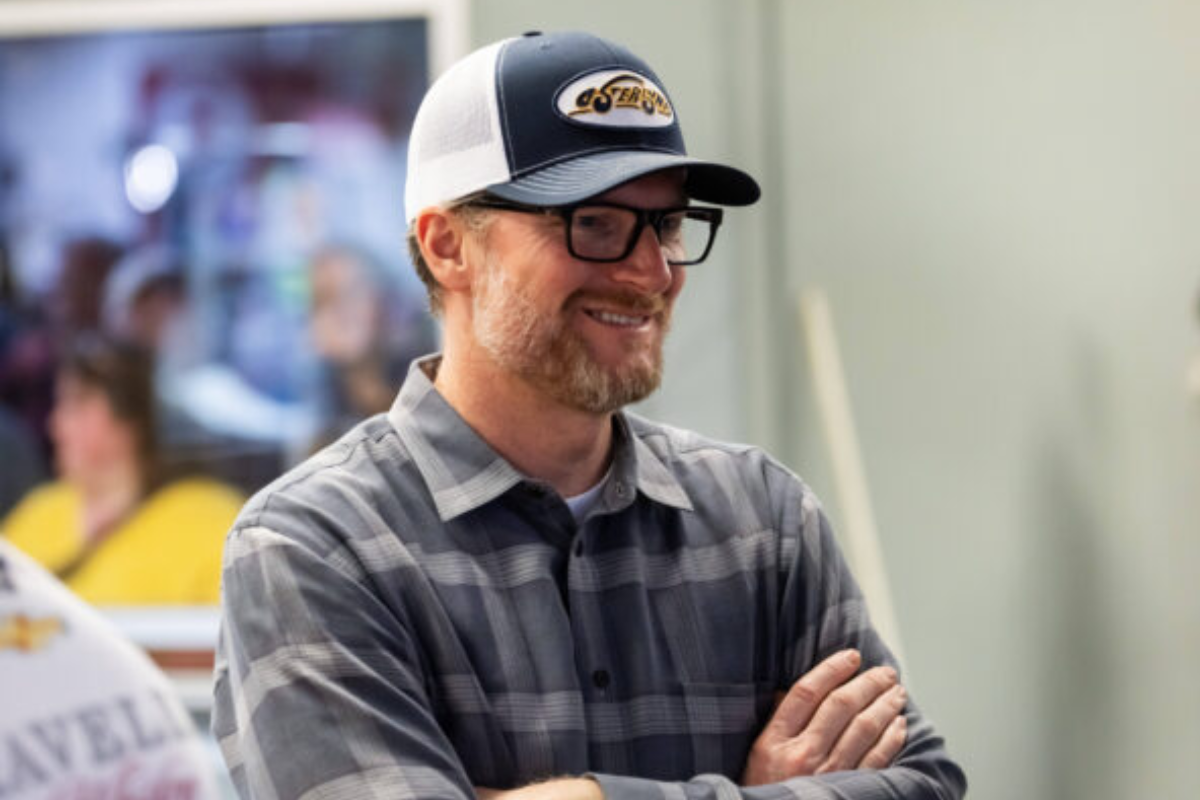
The NASCAR All-Star event is attracting a lot of attention, but for the wrong reasons, owing to its seeding and format. The question remains that if the same lot of drivers is going to participate in the race, then why make it an All-Star event? So to address those issues, Dale Jr. has suggested a master plan that is inspired by NASCAR’s sister series.
Watch What’s Trending Now!
Dale Jr. takes inspiration from 24 Hours of Daytona
The same governing bodies own NASCAR and IMSA. The difference between the two series is the way they operate. While talking about the NASCAR All-Star Race on his podcast, Dale Jr. Download, Jr. suggested a new strategy to bring back the excitement for the NASCAR All-Star Race, and this one is inspired by endurance racing events.
“When they said that they were going to take the All-Star Race to Dover, listen, no b–, everybody said, ‘Dover?! Dover is a 400-mile race, and it needs 400 miles to have some s– happen. How are you going to go over there and run an All-Star race and make it spectacular?’ The way you do that is you could tighten up the restrictions on how you get into the All-Star race, which would make the field size smaller,” Dale Jr. suggested.
“You could even have all three: Truck, O’Reilly, and Cup in the same event. You know, you’d have roughly 12 cars from each series. Now that would be interesting. It makes getting into the All-Star race a real challenge; it’s an invitation only, and you’ve got the moving chicane of slower cars that creates some unique situations and challenges.”

Dale Earnhardt Jr. wants NASCAR to completely rethink the All-Star Race with a new multi-class format featuring Cup, O'Reilly, and Truck Series drivers together on track. Find out more on The Daily Downforce dailydownforce.com/dale-earnhardt…

That is the same principle that endurance racing series work on. There are multiple car classes, and each class has its own advantages and performance. It is quite similar to NASCAR’s current national classification system. The Cup Series cars have the highest performance and are more suited to road courses. Meanwhile, the O’Reilly and Truck cars are slower and a generation behind the Next-Gen car.
With a smaller grid, the competition would be incredibly tough between the drivers, and when they are going up against a different class, they will undoubtedly try their best to come out as the superior driver. Not only that, but in pack racing and on oval tracks, drivers have to be mindful of their surroundings. Especially on tracks like Dover, where they can reach insane speeds.
So, when they are going up against slower car classes, they will actively need to swerve their cars around them and strategize the overtakes and defense accordingly. All in all, with this strategy, the All-Star race can undoubtedly become a race that truly assimilates all the stars of NASCAR racing on one single track.
What NASCAR does with this idea is up to them. But it does sound better and more feasible than their current idea of keeping the same grid and eliminating drivers by inverting the grid according to their performance.
Meanwhile, NASCAR has introduced another rule to the NASCAR All-Star Race that is not exactly in the spirit of competition.
NASCAR keeps making the All-Star race more complicated
In a recent appearance on the Hauler Talk podcast, Mike Forde, who is the Managing Director for Racing Communications in NASCAR, spoke about a new rule for the upcoming weekend. The way he frames it does not make any sense and raises questions about the race and its validity.
“Unlike a typical race where there are stages, if a car goes down a lap in one of the segments, they do not remain a lap down in the subsequent stage,” Forde said while talking about the All-Star Race. He is talking about the backmarker drivers who end up going a lap down during one of the stages and have to wait for a caution flag to rejoin the lead lap.
What Forde suggests is that at the end of any segment, all drivers will arbitrarily start the next segment on the lead lap. It does not add up correctly, as this means the 75-lap segments are working like separate races. So it does make the audience wonder if the three segments coming together to form a single race have any relevance at all.
NASCAR is trying its best not to lose this gamble, but just like Dale Jr. suggested, maybe the real solution is to keep it as simple as possible and let the fans enjoy racing.