Imago
NASCAR, Motorsport, USA Xfinity: NASCAR Xfinity Series Race at Dover Jul 19, 2025 Dover, Delaware, USA NASCAR Xfinity Series owner Dale Earnhardt Jr. looks on from pit road during the BetRivers 200 at Dover Motor Speedway. Dover Dover Motor Speedway Delaware USA, EDITORIAL USE ONLY PUBLICATIONxINxGERxSUIxAUTxONLY Copyright: xMatthewxO Harenx 20250719_tcs_bm2_067
Imago
NASCAR, Motorsport, USA Xfinity: NASCAR Xfinity Series Race at Dover Jul 19, 2025 Dover, Delaware, USA NASCAR Xfinity Series owner Dale Earnhardt Jr. looks on from pit road during the BetRivers 200 at Dover Motor Speedway. Dover Dover Motor Speedway Delaware USA, EDITORIAL USE ONLY PUBLICATIONxINxGERxSUIxAUTxONLY Copyright: xMatthewxO Harenx 20250719_tcs_bm2_067
As agonizing as the antitrust lawsuit was, its repercussions seem far darker. The courtroom buzzed last Monday as 23XI Racing and Front Row Motorsports squared off against NASCAR in the landmark trial. The spotlight was on one of the sport’s most contentious issues: the future of Charters. But as the teams and the organization shook hands on a permanent charter agreement, NASCAR veteran Dale Earnhardt Jr. delivered a stark warning that sent ripples through the NASCAR world and could change the sport forever.
Dale Jr. Gives a Harsh Reality Check amid NASCAR Settlement
Watch What’s Trending Now!
The NASCAR Hall of Famer didn’t hold back. On his Dale Jr. Download podcast, the 51-year-old veteran laid out the bare truth about the permanent charters.
“If that happens, there is no going back. Like, it changes the sport forever,” Junior said. “You’ll basically have 36 franchises — however many cars start a race — they’ll be the franchises, owned and valued, and they will sell and trade from one entity to another over the course of decades and centuries, however long this goes. There’ll be a gigantic barrier to entry.”
Dale Jr.’s blunt assessment painted a picture of a sport on the brink of a structural transformation, one that could permanently reshape who gets to compete at the highest level.
At the heart of the debate are NASCAR charter agreements, contracts guaranteeing teams’ entry into races and a share of revenue. For decades, these charters have been temporary, allowing teams to lease or adjust participation on a case-by-case basis.
Imago
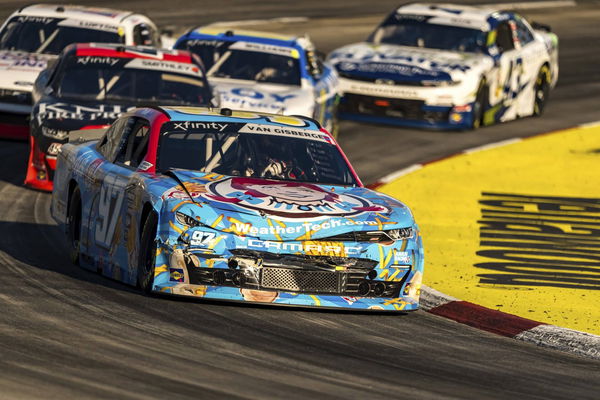
NASCAR Xfinity Series Fahrer SHANE VAN GISBERGEN 97 rast durch die Kurven während des National Debt Relief 250 auf dem Martinsville Speedway in Ridgeway, VA, Ridgeway, Vereinigte Staaten von Amerika, Nordamerika NASCAR Xfinity Series driver, SHANE VAN GISBERGEN 97, races through the turns during the National Debt Relief 250 at Martinsville Speedway in Ridgeway, VA, Ridgeway, United States of America Copyright: imageBROKER/GrindstonexMediaxGro ibxiqx12959683.jpg Bitte beachten Sie die gesetzlichen Bestimmungen des deutschen Urheberrechtes hinsichtlich der Namensnennung des Fotografen im direkten Umfeld der Veröffentlichung
Under the settlement reached in December, all existing charters will become evergreen, granting permanent, franchise-style rights to compete.
“What the teams have recognized is that if those charters were to become permanent and therefore basically a franchise, the values are well north of $150 million. So, you’re sitting there with a worth charter, let’s say $25 million, and by the stroke of Jim France’s pen, it will now be $150 million.”
This benefits only the charter owners, as they were repeatedly buying and returning charters to one another. What was once a temporary privilege has now become a multi-billion-dollar asset.
Further, Junior warned that this shift could create a nearly insurmountable barrier for new entrants.
In essence, the sport consolidates into a self-contained ecosystem by charter, circulating among existing owners, making it nearly impossible for outsiders to break into the cup series.
The permanent charter system doesn’t just affect economics; it changes NASCAR’s competitive ladder. Drivers and teams in Xfinity, Trucks, ARCA, and local series may see the pathway to come forward narrowed.
This serves as a reminder that the new model may limit innovation and accessibility, concentrating power and resources in the hands of a select few.
But as the 51-year-old veteran laid down his thoughts on the result of the trial, Junior was far more surprised by another issue brought up during the case.
Dale Jr. was left shocked with NASCAR feeling threatened by SRX
Right before the lawsuit was resolved, Junior used his podcast to unpack several revelations that surfaced during the trial. One that stood out most to him was NASCAR’s apparent concern over the short-lived Superstar Racing Experience and the steps the sanctioning body took to protect its territory.
The veteran admitted he was caught off guard by how seriously NASCAR viewed SRX. From his perspective, the series was never positioned as a rival.
“I gotta be honest, this shocked me,” he said. “To hear that they were even remotely the least bit threatened is so surprising to me because they’re this giant that’s NASCAR and SRX is just this little thing.”
What surprised him most was learning that NASCAR leadership had even discussed SRX as a potential threat. He viewed the comparison as lopsided. NASCAR is a well-established organization, and SRX is a modest operation struggling to stay financially viable.
“They had no idea they were gonna tear up so much s—-. In the end, they couldn’t make the money work. SRX went away because it’s expensive to operate, and the viewership numbers didn’t justify the TV contract, and the TV contract couldn’t afford the series, so it just financially didn’t really work,” he added.
Trial testimony later revealed that NASCAR’s legal team examined whether SRX crossed any lines by having Cup drivers and their sponsors appear in races, but no action was ultimately taken.
They say that the antitrust lawsuit was a whirlwind, to say the least, but for Dale Jr., the concern lies deeper than the veterans series. And now, with the renewed focus on the charter system, it can be said with considerable certainty that the veteran will keep a close eye on it.
Related Newsletters