
Essentials Inside The Story
- Kyle Petty spoke about how his father, Richard Petty, would drive around civilians.
- Over a career that redefined stock car racing, Richard collected a record 200 NASCAR Cup Series victories.
- He also won seven championships in the famous blue No. 43.
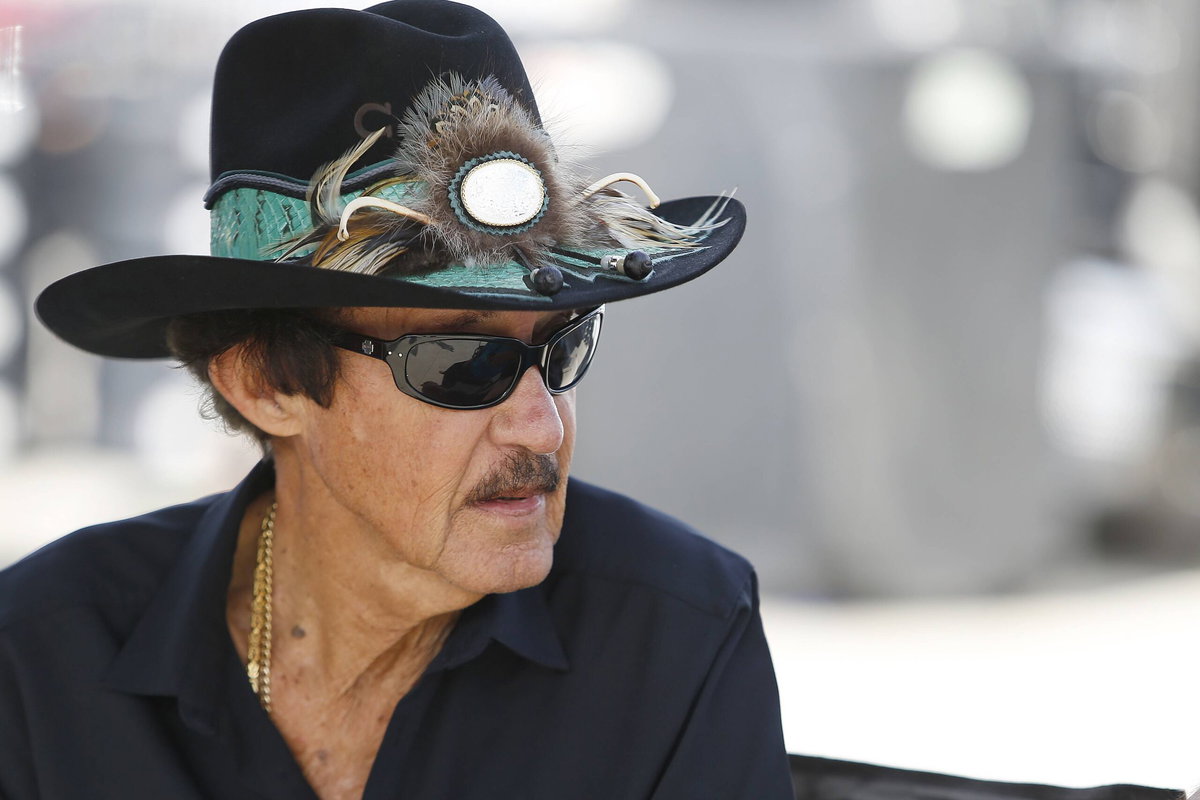
Richard Petty’s legacy was created by his unwavering refusal to budge. The King battled wheel-to-wheel and bumper-to-bumper for decades with the straightforward motto, “I just wanted to win.” But apparently, what spectators witnessed on NASCAR courses persisted even after the helmet was off. According to his son, Kyle Petty, Richard showed the same competitive instincts even on everyday roads.
Watch What’s Trending Now!
“He really didn’t have to say anything,” Kyle Petty revealed on the Charlie & Debbie Show. “He kind of let the car do the talking. I can’t tell you how many people he’d run three inches from their bumper just daring them to slow up because he was going to send them out through the median somewhere.
“Or he would pull up beside of them and just let his car drift left, left, left until they slowed down and he had the lane.”
That description of Richard Petty from Kyle Petty sounds less like a NASCAR legend and more like every driver’s worst nightmare in the rearview mirror. But then again, Richard Petty didn’t become ‘The King’ by asking politely.
Over a career that redefined stock car racing, Petty collected a record 200 NASCAR Cup Series victories and seven championships in the famous blue No. 43. And his fame was not built on fiery interviews, public disputes, or complex mind games. Petty rarely needed to discuss his abilities, in contrast to many modern stars.
There was something that Richard Petty would always do: position his car mere inches behind the rear bumper of the car in the lead. This would result in an aerodynamic disturbance, which would deprive the car ahead of fresh air in the area. The lead driver’s car would become unstable, especially when approaching corners.
Simply put, Petty didn’t just follow. He applied pressure. The driver in front knew precisely where he was, what he was up to, and the price for making a single mistake would be a loss.
Therefore, even while driving on the roads, Richard Petty did not have to quarrel, beep, or shout at anyone. All he needed were the three P’s he had mastered throughout his life – position, pressure, and patience. In many ways, it was a lesson he had learned from the very beginning.
One of Richard Petty’s earliest lessons about letting the car do the talking came directly from his father, NASCAR pioneer Lee Petty.
It wasn’t quite a dream start when Richard made his Cup debut in 1958. After competing at Columbia Speedway and finishing sixth, five laps behind, the Pettys made their way to Canada. At the Canadian National Exposition Speedway, Lee Petty dominated, but Richard, who was competing against his father, couldn’t complete the race. Why?
Well, in an attempt to get around Richard, Lee collided with his vehicle on Lap 55, spinning his son and essentially spoiling his day. As a result, in a field of nineteen cars, Richard came in seventeenth.
The message was clear: respect wasn’t given. It was earned behind the wheel. That competitive streak occasionally followed Petty beyond the confines of NASCAR as well.
Richard Petty: the 1996 incident
In 1996, while campaigning for North Carolina Secretary of State, Petty found himself in legal trouble after being charged with reckless driving and hit-and-run following an incident on Interstate 85. Authorities said at the time that Petty tried to pass another car and bumped it from behind before continuing to drive after the collision happened.
Due in large part to the incident’s peculiar consistency with the hard-nosed racer spectators had been seeing for decades, it made headlines.
Needless to say, rather than criticizing him, Kyle Petty recalls all of those incidents with a smile and a sense of nostalgia. This also brings out another side of NASCAR’s old school generation of drivers, people who saw driving as a way of expressing themselves.
It was never necessary for Richard Petty to yell to make people hear what he had to say. He simply devoted a lifetime to proving the point that sometimes silence speaks louder than words.