Imago
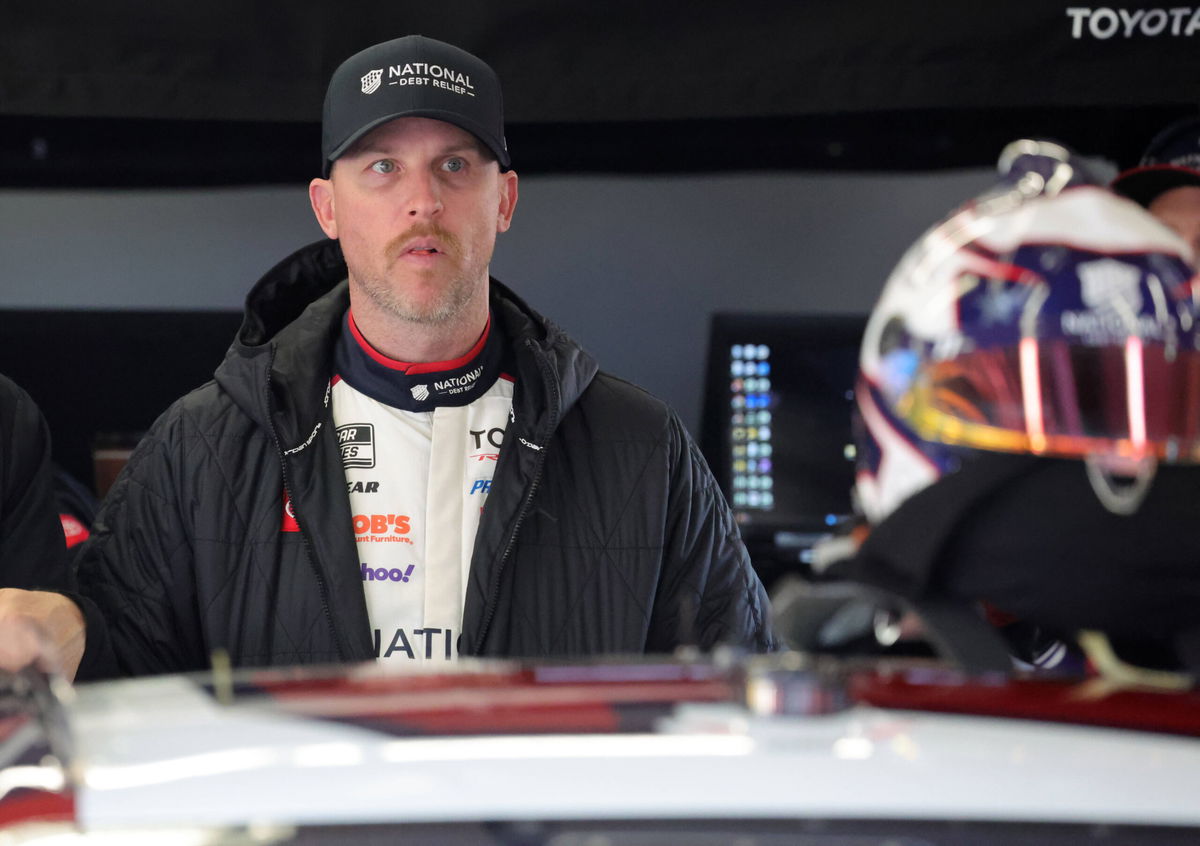
NASCAR, Motorsport, USA Cup Practice Feb 13, 2026 Daytona Beach, Florida, USA NASCAR Cup Series driver Denny Hamlin 11 during NASCAR Cup Series practice at Daytona International Speedway. Daytona Beach Daytona International Speedway Florida USA, EDITORIAL USE ONLY PUBLICATIONxINxGERxSUIxAUTxONLY Copyright: xMikexDinovox 20260213_jhp_ad4_0035
Imago
NASCAR, Motorsport, USA Cup Practice Feb 13, 2026 Daytona Beach, Florida, USA NASCAR Cup Series driver Denny Hamlin 11 during NASCAR Cup Series practice at Daytona International Speedway. Daytona Beach Daytona International Speedway Florida USA, EDITORIAL USE ONLY PUBLICATIONxINxGERxSUIxAUTxONLY Copyright: xMikexDinovox 20260213_jhp_ad4_0035
The margin for error at Darlington is always razor-thin. One misjudgment is enough to flip a race, and on Sunday, Denny Hamlin found that out the hard way. However, what stood out was not just the contact itself. It was how quickly Hamlin moved to defuse the situation in a garage that has been on edge for weeks.


That moment came on Lap 111 during Stage 2 of the Goodyear 400 on March 22. Hamlin made contact with Erik Jones in traffic, sending the No. 43 car hard into the outside wall and collecting Bubba Wallace in the process. Within hours, the conversation had already shifted from the incident to the response.
Watch What’s Trending Now!
And that response was immediate. Jones did not hold back when describing what happened, even as he confirmed that Hamlin owned up to the mistake right away. “Yeah, I mean he talked after the race and I assumed it was a mistake, which he said it was.”
“It’s an unfortunate mistake for us, but he let me go in 1 and 2 and then I went to run the bottom and he said he just wanted to run the bottom as well and just clean me out. So he said sorry, felt bad. It’s all you can do. It’s definitely a bummer.”
“I assumed it was a mistake, which he said it was. … I went to the bottom, and he said he wanted to run the bottom, and he just cleaned me out. He said sorry.”@Erik_Jones said he and @dennyhamlin talked after the race today about their lap 111 incident. #NASCAR #Goodyear400 pic.twitter.com/YVAFIUFnGc
— Dalton Hopkins (@PitLaneCPT) March 22, 2026
That explanation matters because it establishes intent. This was not retaliation. It was a misjudgment at one of NASCAR’s toughest tracks. However, the impact was still significant.
Jones had shown strong pace at Darlington, a track where he has historically performed well. Because of that, the contact likely cost him a shot at a higher finish, even though he recovered to 10th by the end of the race. Meanwhile, Wallace was forced to pit for repairs after being caught in the aftermath, turning a single mistake into a multi-car issue.
At a track where track position defines outcomes, that kind of incident carries weight beyond the final results. While the contact itself was clear, the reaction to it requires more context.
Over the past week, tensions in the NASCAR garage have been building. The Ross Chastain and Daniel Suarez incident at Las Vegas came close to escalating beyond words, but stopped short.
That restraint is not accidental. Ricky Stenhouse Jr. provided the clearest explanation, referencing the financial consequences drivers now have to consider before letting emotions take over. “You can’t manipulate the other car nearly as much as you could with the old car.”
“But you can still put drivers in bad spots. You will continue to do that, week in and week out. Not give an inch to them, for weeks on end.” That mindset is shaped by precedent.
In 2024, Stenhouse Jr. was fined $75,000 after a physical altercation with Kyle Busch. It remains one of the largest penalties handed out by NASCAR for fighting, and it has since become a reference point across the garage.
Because of that, conflicts today play out differently. Drivers still race aggressively. They still push limits. However, post-race confrontations have become more calculated, with the risk of a five-figure fine acting as a constant deterrent. Hamlin’s quick apology fits directly into that environment.
There is no evidence he was forced to apologize. However, given the current climate, it is reasonable to interpret the response as both accountability and awareness of what escalation could lead to.
What this moment reveals about NASCAR’s current landscape
The Darlington incident highlights more than just a single mistake. It reflects how the sport is evolving in real time. Aggression has not disappeared. If anything, it remains central to how drivers compete week after week. At the same time, the consequences tied to that aggression have become more defined.
As a result, drivers are adapting. Similar situations in the past often spilled into pit road confrontations. Now, they are more likely to end with conversations and acknowledgments, even when frustration remains.
Hamlin’s situation followed that pattern. Jones accepted the explanation, even if it did not change the outcome. There was no escalation. No confrontation. Just a reset before the next race. That does not eliminate tension. It just shifts where it shows up.
For Hamlin, the immediate damage was limited. He finished 11th, just behind Jones, and avoided a situation that could have spiraled beyond the track. However, the broader takeaway remains.
Darlington reinforced how quickly races can change and how important driver decisions have become in a more tightly regulated environment. One mistake can still alter outcomes. One reaction can still define narratives.
At the same time, the response matters just as much as the incident itself. Because in today’s NASCAR, avoiding escalation is not just about sportsmanship. It is also about understanding the cost of crossing that line. And with the $75,000 precedent still fresh, that line is clearer than ever.