
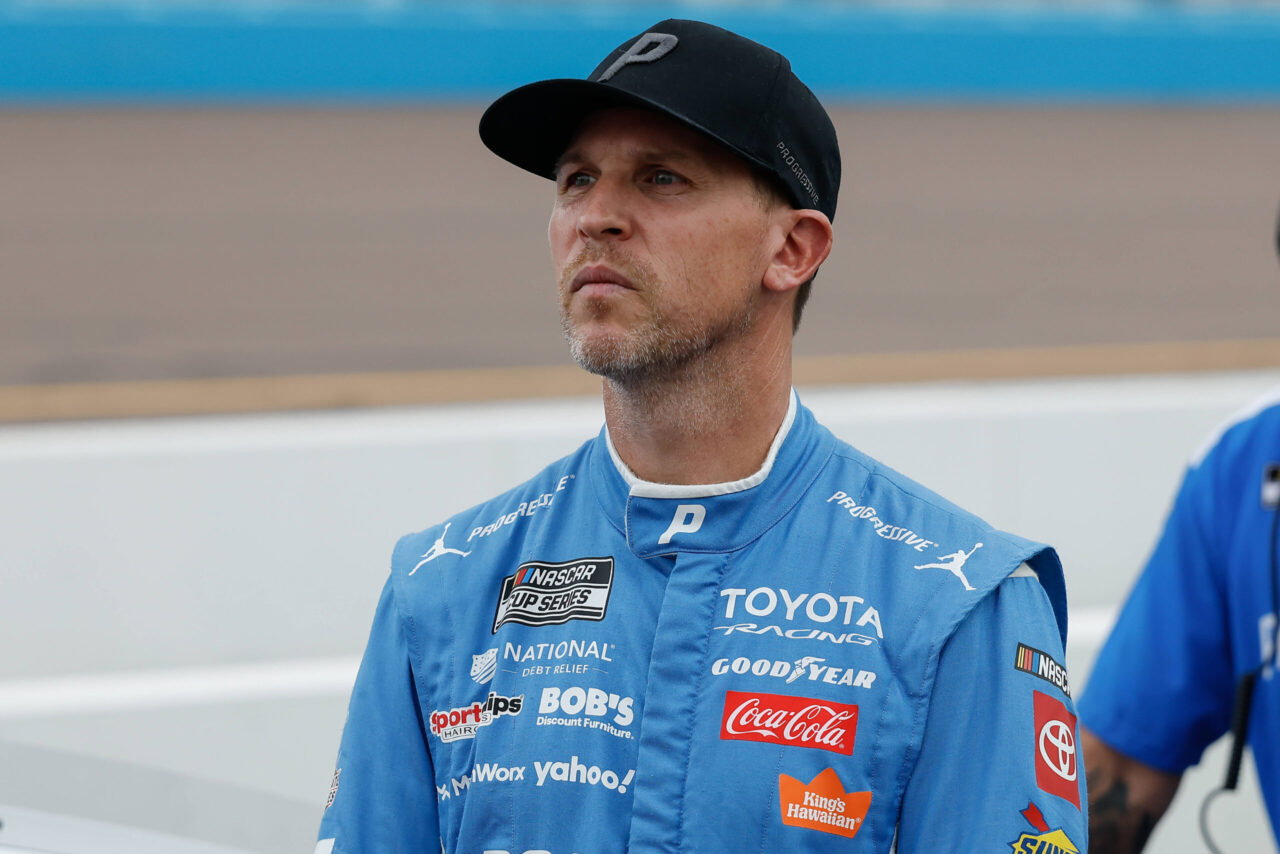
When NASCAR introduced the Next Gen car in 2022, one of its biggest selling points was the promise of making Cup Series competition more affordable for teams. The standardized platform was designed to reduce expensive research and development while creating a more level playing field. Five seasons later, however, the financial picture has not turned out quite as expected. Teams continue to face significant expenses, and questions about the car’s long-term sustainability have resurfaced. Now, Denny Hamlin believes the solution could involve giving teams a much bigger role in building the cars.
Watch What’s Trending Now!
Denny Hamlin has proposed an unconventional way to bring down the cost of NASCAR’s Next Gen cars, as reported by 5 GOATs. He wants the teams to manufacture more of the components themselves, with Hendrick Motorsports potentially building the chassis and distributing them through a random warehouse lottery.
Speaking about the future of the Cup Series car, the 23XI Racing co-owner made it clear that he does not believe NASCAR needs to introduce an entirely new generation in the immediate future. But he is far from convinced that the current model has delivered the savings promised when it was introduced.
“I would love to see the teams get more involved in building out this car,” Hamlin said. “Like, say Hendrick Motorsports builds all the chassis, and then they go in a warehouse, and you pick a number, and that’s yours. You can make it fair.”
The idea is relatively straightforward. Instead of relying so heavily on outside suppliers to manufacture and distribute standardized components, NASCAR could use the existing manufacturing infrastructure within its top teams. Hamlin specifically pointed to Hendrick’s capabilities, including its 3D printers and manufacturing operations, as resources that could be put to wider use.
Should NASCAR Stop Sharing SMT Data to Protect Elite Drivers’ Secrets?
The lottery element is central to making the proposal work. If one team manufactures the chassis, allowing it to keep the best examples for its own cars would create an obvious competitive advantage. Hamlin’s suggestion is to place the finished products together and let teams draw numbers to determine which ones they receive. That way, the manufacturer would not automatically benefit from the parts it produces.
He also believes the arrangement could reduce costs because teams would not need to pay the same profit margins charged by secondary suppliers. Hamlin compared the distribution concept to the system Greg Fornelli operates through SRI, which serves as a distributor of NASCAR parts.
The proposal comes from a driver who has experienced the financial demands of the Next Gen era from both sides of the garage. Hamlin races for Joe Gibbs Racing but also co-owns 23XI Racing, giving him a direct view of the expenses involved in keeping a Cup operation competitive.
His frustration is not new. In 2023, Hamlin estimated that a Next Gen car initially expected to cost around $225,000 had reached approximately $350,000 when all the required parts and equipment were included. Those were his estimates rather than a fixed price applicable to every team, but they highlighted the gap between the original expectations and the financial reality.
Other figures have reinforced the scale of the issue. During NASCAR’s 2025 antitrust trial, chief racing development officer John Probst testified that 23XI Racing spent $2.23 million on Next Gen parts in 2024, while Front Row Motorsports spent $1.7 million. Probst also said NASCAR’s original objective was to cut teams’ operating costs by 50% through the new car.
That target helps explain why Hamlin is questioning the system. The Next Gen platform was designed to curb the expensive development race that had pushed teams into manufacturing their own components. However, the standardized approach also left teams dependent on a controlled supply chain, with limited opportunities to produce parts themselves and potentially reduce expenses.
Hamlin is not alone in raising concerns. Back when the car debuted in 2022, he described the financial impact of significant crash damage as particularly difficult for teams. Toyota Racing’s then-president David Wilson also acknowledged supply-chain challenges, warning that teams would have to make careful decisions while parts availability remained uncertain. More recently, Front Row Motorsports owner Bob Jenkins raised the financial burden of running a Cup operation during the antitrust dispute, with the team’s case highlighting the gap between operating expenses and guaranteed revenue.
NASCAR, however, has defended the broader purpose of the Next Gen platform. At the 2026 State of the Sport address, CEO Steve O’Donnell said the car had helped create a healthier ownership environment and attract new investment and manufacturers. He also pointed to Dodge’s planned return as evidence of the model’s wider appeal. O’Donnell acknowledged that changes were needed but said NASCAR intended to improve the current car rather than rush into a Gen-8 project.
Hamlin largely agrees with that short-term approach. He does not want teams to shoulder the cost of developing another completely new car, but believes the current platform needs more than minor adjustments. He also connected the financial restrictions to other performance concerns, including reduced horsepower, engine durability and the effect of shifting on short-track racing.
His warehouse lottery proposal is not an official NASCAR plan, and there is no indication that Hendrick Motorsports has been asked to take on such a role. Still, it raises a bigger question about how much manufacturing freedom teams should regain. NASCAR wanted the Next Gen car to stop the costly arms race of the past. Hamlin’s suggestion is that the sport may now need to trust its teams with more of the production process to make that promise work.