Imago
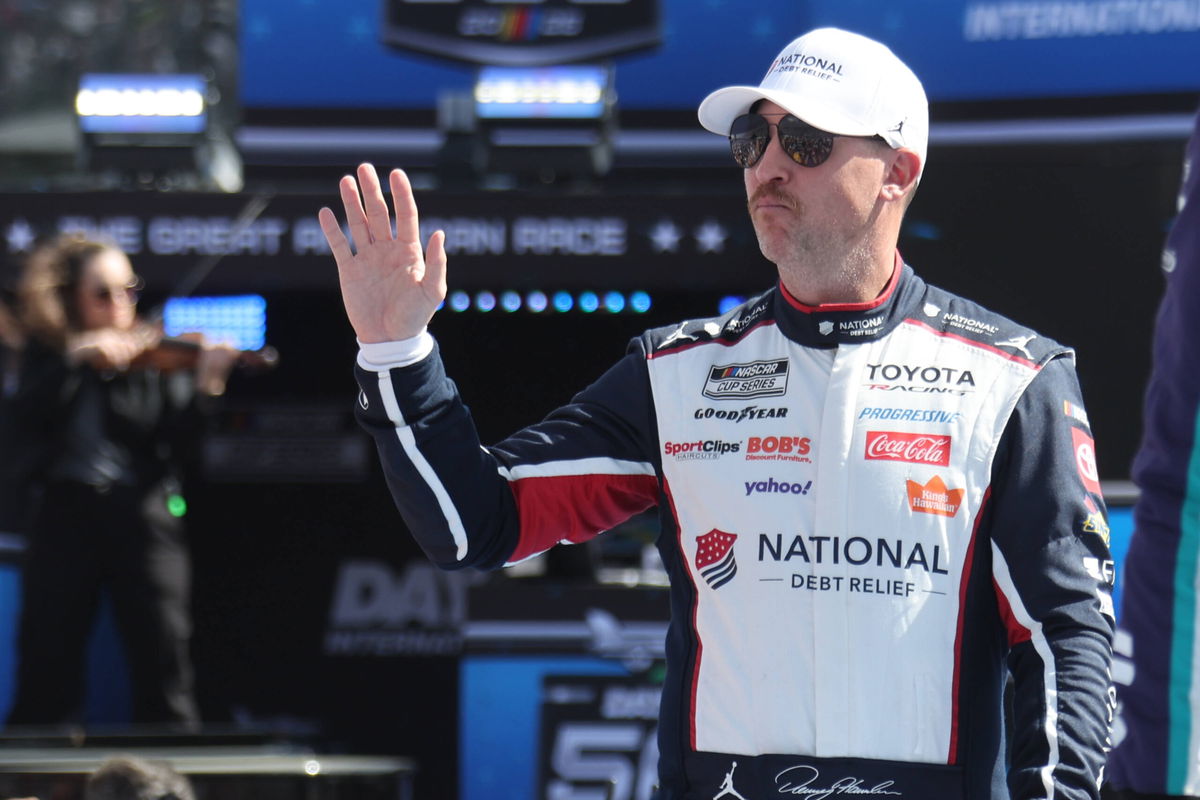
DAYTONA BEACH, FL – FEBRUARY 15: Denny Hamlin 11 Joe Gibbs Racing National Debt Relief Toyota waves to the crowd prior to the running of the 68th NASCAR, Motorsport, USA Cup Series Daytona 500 on February 15, 2026 at Daytona International Speedway in Daytona Beach, FL. Photo by Jeff Robinson/Icon Sportswire AUTO: FEB 15 NASCAR Cup Series Daytona 500 EDITORIAL USE ONLY Icon2602151518500
Imago
DAYTONA BEACH, FL – FEBRUARY 15: Denny Hamlin 11 Joe Gibbs Racing National Debt Relief Toyota waves to the crowd prior to the running of the 68th NASCAR, Motorsport, USA Cup Series Daytona 500 on February 15, 2026 at Daytona International Speedway in Daytona Beach, FL. Photo by Jeff Robinson/Icon Sportswire AUTO: FEB 15 NASCAR Cup Series Daytona 500 EDITORIAL USE ONLY Icon2602151518500
NASCAR rolls into Darlington Raceway this weekend, and as always, the “Lady in Black” promises chaos, comebacks, and a whole lot of Darlington stripes. There’s no shortage of storylines! Throwback Weekend nostalgia, questions around whether 23XI Racing’s recent edge has cooled off, and a new wave of rising stars trying to prove they belong on one of the sport’s toughest stages.


Yet, towering above it all is one defining narrative. Can Denny Hamlin finally break the five-win tie at Darlington and stand alone among legends with the fourth-highest wins? At a track that rewards patience and punishes the smallest mistake, this isn’t just another race for Hamlin, it’s a shot at legacy.
Watch What’s Trending Now!
Why Darlington separates the best from the rest
There’s a reason Darlington Raceway carries the nickname “Too Tough to Tame.” This isn’t just another NASCAR oval on the calendar schedule. In fact, drivers, spotters, crew chiefs, and even fans will testify that it’s a track that exposes every weakness a driver has. Its unique egg-shaped layout, with Turns 1 and 2 tighter than Turns 3 and 4, forces teams to compromise on setup. Nail one end, and you’re likely struggling on the other.
Imago
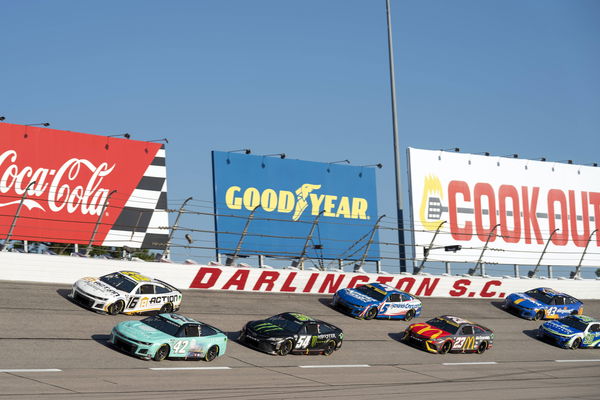
NASCAR, Motorsport, USA Cup Series 2023: Cook Out Southern 500 NASCAR Cup Driver, AJ Allmendinger 16 races for position for the Cook Out Southern 500 at the Darlington Raceway in Darlington SC. LicenseRM 20755208 Copyright: xZoonar.com/LoganxTxArcexGrindstonexMediaxGroup/ActionxSportsxPhotographyx 20755208
Then there’s tire wear. Darlington chews through rubber faster than almost any track on the schedule, meaning drivers have to balance aggression with patience. Push too hard early, and you’re hanging on for dear life in the closing laps. Add in a narrow racing groove, and suddenly there’s no room for error.
That’s where the infamous “Darlington stripe” comes in. As you all know, it’s sometimes a badge of honor, or sometimes a mark of survival. Even the best drivers brush the wall here, flirting with disaster lap after lap. It’s not a question of if you’ll make a mistake, but how well you recover from it.
And that’s what truly sets this place apart. Winning at Darlington isn’t about luck or catching the right break. It’s about discipline, adaptability, and precision over long runs. In short, it’s mastery! And only the very best ever truly tame it.
The ‘five-win’ club
And that’s exactly why success at Darlington Raceway carries a different kind of weight. No, this isn’t just about stacking wins on your resume. It’s about earning your place among the toughest competitors the sport has ever seen. And at the very top sits David Pearson with a staggering 10 victories, followed by Dale ‘The Intimidator’ Earnhardt with nine. Then comes Jeff Gordon, whose seven wins underline just how difficult sustained dominance at Darlington really is.
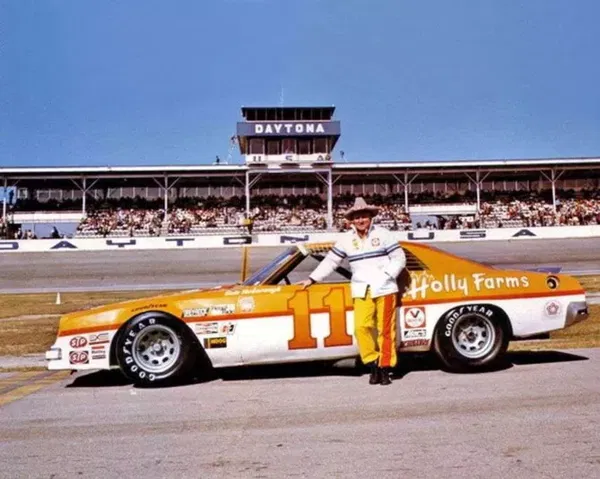
Just below that elite tier lies the exclusive five-win club. This is a group of legends who didn’t just win here, but mastered it over time. Cale Yarborough defined Darlington in the 1970s with his relentless dominance. Darrell Waltrip showcased remarkable adaptability, finding ways to win across different eras and conditions. Bill Elliott brought unmatched consistency, while Bobby Allison embodied grit, battling through the track’s unforgiving nature time and again.
Imago
NASCAR
This list is a benchmark, while the drivers sit a little low on the all-time Darlington win list. But it serves as a measuring stick reserved for drivers who could repeatedly conquer NASCAR’s most demanding oval.
Which is what makes the current conversation so compelling. Denny Hamlin isn’t just chasing another stat to pad his résumé. He’s chasing separation. One more win doesn’t just move him past this group. It pushes him into a rarer conversation, with the next target already looming: Gordon’s seven-win mark.
Denny Hamlin’s redemption arc 2026
If 2025 ended in heartbreak, 2026 has begun as a statement. For Denny Hamlin, the pain of last season still lingers, especially that crushing finale at Phoenix Raceway, where a late pit strategy gamble cost him a shot at the championship. It was a decision that didn’t just slip away for Hamlin. In fact, it haunted him, and it might still be haunting him.
And then came an even deeper loss, a very personal one. During the offseason, Denny Hamlin lost his father, Dennis Hamlin, following injuries sustained in a house fire, a moment that reshaped everything beyond racing. Denny Hamlin had even considered taking a break from NASCAR for the 2026 season because of the tragedy. For a driver who has always carried emotion close to the surface, it added a new layer to his journey.
Yet, what’s followed has been nothing short of remarkable.
Denny Hamlin’s 2026 campaign started quietly. He was 31st at Daytona, then things took a positive turn with a 13th-place finish at Atlanta (EchoPark Speedway). Next, a 10th-place run at the street course COTA was followed by a fifth at Phoenix, signaling that something was building. Then came the breakthrough at Las Vegas Motor Speedway. Leading with authority, Hamlin captured his 61st career victory, moving into the top 10 on NASCAR’s all-time wins list.
Now sitting fourth in the standings, the consistency, looks like, is back for Denny Hamlin. But more importantly, so is the control that he has always shown.
This version of Denny Hamlin feels different. More composed in the chaos, more calculated in his decisions, and far more dangerous when the opportunity presents itself. If 2025 was about what slipped away, 2026 is shaping up to be about what he’s ready to take back.
Denny Hamlin vs. Darlington
Few drivers in modern NASCAR have built a relationship with Darlington Raceway quite like Denny Hamlin. His five victories (spanning 2010, 2017, 2020, 2021, and most recently 2025) tell a story of sustained excellence across different car generations, rule changes, and competitive eras. That kind of longevity at a place like Darlington isn’t accidental.
What truly sets Hamlin apart is the way he approaches the track’s demands. He’s one of the best in the garage when it comes to managing long runs, carefully balancing aggression with tire conservation. While others burn up their equipment chasing track position, Hamlin often plays the long game. And, most importantly, wins it.
Then there’s his ability to stay clean. At a track where the “Darlington stripe” is almost inevitable, Hamlin has mastered the art of flirting with the wall without crossing the line too often. It’s a skill that shows up in the numbers. His 7.9 average finish here is the best among experienced drivers, a staggering stat given the track’s unpredictability.
All of it adds up to one clear label: Darlington specialist. Hamlin doesn’t just survive this place. He understands it, adapts to it, and more often than not, thrives in it.
What makes Hamlin so good here?
So what exactly makes Denny Hamlin so effective at Darlington Raceway? It starts with his driving style. Hamlin is known for smooth inputs. The man is easy on the throttle, controlled on corner entry, and patient on exit. At a track where tire wear dictates everything, that restraint becomes a weapon.
He thrives on long green-flag runs, where races are often decided at Darlington. While others fall off as their tires degrade, Hamlin tends to come alive, maintaining pace and even closing gaps late in a run. That ability to conserve without sacrificing speed is rare and incredibly valuable here.
Getty
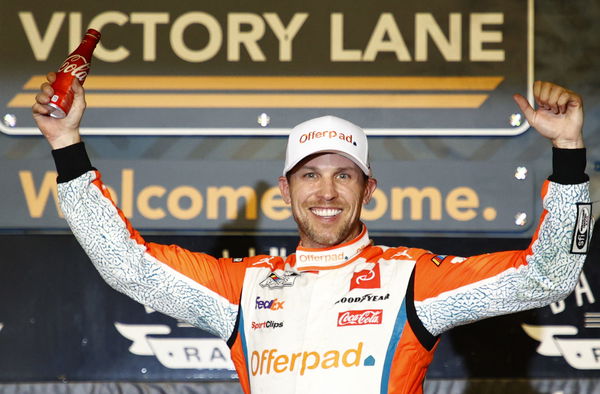
DARLINGTON, SOUTH CAROLINA – SEPTEMBER 05: Denny Hamlin, driver of the #11 Offerpad Toyota, celebrates in the Ruoff Mortgage victory lane after winning the NASCAR Cup Series Cook Out Southern 500 at Darlington Raceway on September 05, 2021 in Darlington, South Carolina. (Photo by Jared C. Tilton/Getty Images)
Another key factor is adaptability. Darlington’s surface evolves throughout a race, and Hamlin has an uncanny feel for adjusting his line and approach as conditions change. In contrast, many of today’s aggressive, high-attack driving styles struggle at this track.
Pushing too hard too early often leads to excessive tire wear (or worse), a costly brush with the wall. It’s a place that punishes impatience. And that’s where experience tips the scales. Denny Hamlin doesn’t just react to what Darlington throws at him. Instead, he anticipates it.
Who could spoil the party?
As strong as Denny Hamlin looks heading into Darlington Raceway, nothing at this track comes easy! And certainly nothing is guaranteed.
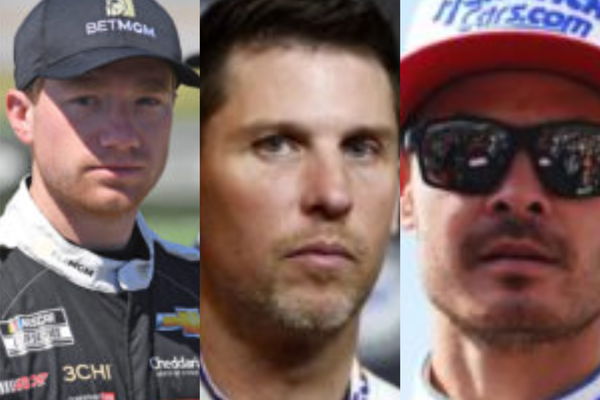
If there’s one driver who can match Hamlin on raw pace alone, it’s Kyle Larson. When Larson finds rhythm, he can dominate any surface, and Darlington is no exception. Then there’s Tyler Reddick, who’s quietly building serious momentum in 2026. His aggressive style might be risky here, but if he manages tire wear, he’s a legitimate threat to steal the spotlight.
Imago
Image Credits : Imago
And then comes the wildcard. Darlington itself.
Late-race cautions have a habit of flipping the script, while pit strategy gambles can make or break even the strongest cars. One mistimed stop or bold two-tire call can undo an entire race’s worth of dominance.
There’s also a new wrinkle this weekend. NASCAR is rolling out its short-track aerodynamic package at Darlington, aiming to reduce aero grip and put more control back in the driver’s hands. Hamlin himself raised concerns, saying, “These cars, with essentially little to no underbody…are out of control.” Combined with the Next Gen car’s already sensitive handling, it adds another layer of unpredictability.
So yes, Denny Hamlin might be the favorite on paper. But at Darlington, paper doesn’t mean much.
What does a sixth win actually mean?
If Denny Hamlin pulls it off at Darlington Raceway, a sixth win wouldn’t just be another stat. It would be a statement and a big one for sure. It would move him past four Hall of Famers, Bill Elliott, Darrell Waltrip, Cale Yarborough, and Bobby Allison, and into a tier few drivers have ever reached at one of NASCAR’s toughest tracks.
Beyond the numbers, it reshapes the narrative around his legacy. Hamlin has long carried the label of the “greatest without a title.” Another Darlington win doesn’t erase that. But it certainly challenges it. It adds weight to his case in the NASCAR Mount Rushmore conversations, especially when you factor in his consistency across eras and car generations.
There’s also the longevity angle. In the ever-evolving Next Gen era, where adaptability is everything, Denny Hamlin continuing to win (this will be his 62nd, and he will now be just one win behind tying Kyle Busch’s 63-win record), reinforces just how complete a driver he is.
And then there’s the emotional layer. Doing it after the personal loss he endured this offseason would make the moment resonate far beyond the racetrack.
