
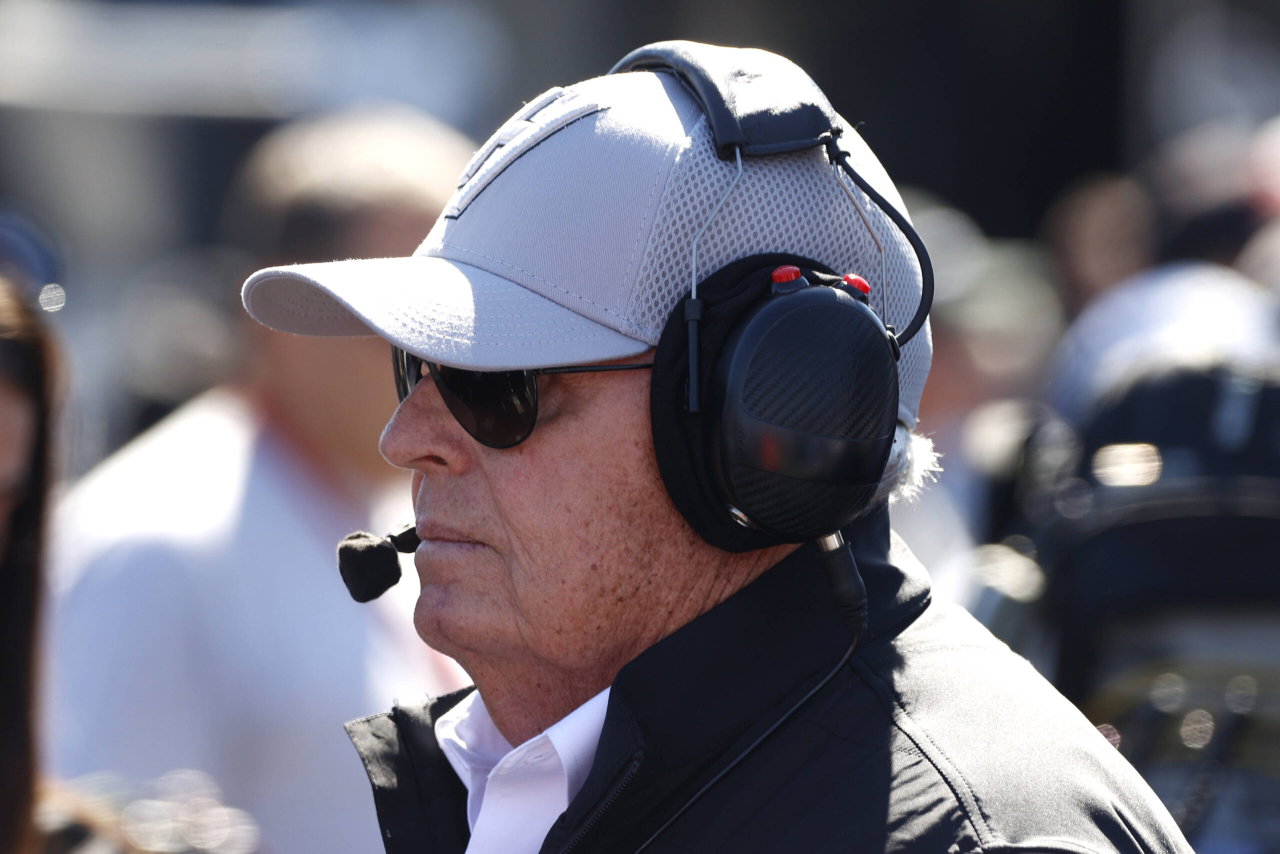
Ross Chastain spent much of the race a lap down at Talladega, but his position on the track still mattered to Kyle Larson’s championship campaign. As Stage 1 approached its finish, Chastain faced criticism for holding up Toyota drivers attempting to advance through the field, potentially preventing them from taking stage points away from Larson. Later, Chastain helped propel the No. 5 toward a dramatic victory. Both incidents raised questions about Chevrolet’s efforts to protect its leading championship contender.
Watch What’s Trending Now!
NASCAR found no evidence that drivers deliberately lifted to hand Larson the win, but the fallout didn’t end there. Denny Hamlin says Chevrolet’s priorities for its championship contender pull against what its other teams want, and he argues the manufacturer’s hierarchy keeps teams like Trackhouse and Richard Childress Racing in Hendrick Motorsports’ shadow.
“I don’t believe anyone will ever be Tier One with Chevy other than Hendrick, because they control it,” Hamlin said on the latest episode of his Actions Detrimental podcast. “And as long as you control it, you control how that information gets shared. I mean, do we really honestly believe RCR is getting the same information as Hendrick from Chevy?
“It’s a hard truth that not a lot of people are going to love, but it is the truth. To bring it all back, people like Ross have no choice but to do what they’re told. Unfortunately, superspeedway racing has gotten to that point. But the No. 5 car has earned his right to be the number one guy everyone else has to look out for, even if you’re not actually associated with the same race team as he is.”
The Stage 1 controversy began with Chastain’s position in traffic. After a speeding penalty on pit road left him a lap down, the Trackhouse driver remained in the mix as Toyota drivers tried to advance. NASCAR reporter Jeff Gluck reported that Bubba Wallace struggled to get around Chastain and that Chase Briscoe asked his spotter for a way to the bottom lane.
With Larson finishing fourth in the opening stage, fans questioned whether Chastain’s positioning had prevented Toyota drivers from challenging the No. 5 for valuable stage points. But his on-track moves alone don’t show that he was ordered to block Toyota.
The scrutiny grew after Danielle Trotta reported hearing before the race that Chevrolet teams had been told to help Larson, including by protecting his chances at stage points. The report fed suspicions of manufacturer cooperation, but it didn’t confirm that every Chevrolet driver was told to sacrifice his own race.
The final lap added another layer to the controversy. Larson dropped from the lead to 11th before recovering with help from Chastain’s push to beat Hendrick teammate William Byron by 0.041 seconds. Chastain finished fourth.
NASCAR reviewed the available throttle data and found no evidence that Byron, Ricky Stenhouse Jr. or Cole Custer lifted to give Larson the win. That answers the allegation that drivers handed him the race, but it doesn’t settle the questions about Chastain’s earlier moves in Stage 1.
Hamlin’s explanation centers on who holds authority when manufacturer interests enter the equation. He believes drivers answer to their crew chiefs, who answer to their teams, which operate within Chevrolet’s manufacturer program. In his view, Hendrick Motorsports, under Rick Hendrick, sits above that structure. Hamlin argues Hendrick’s technical authority over the Chevrolet program creates an information advantage that smaller teams may not be able to match.
Hamlin pointed to the Chevrolet Technical Center as an example. He questioned whether RCR receives the same technical information as Hendrick. That is his read of the situation, and he offered no evidence that Chevrolet distributes information unequally.
His broader point is that Chastain can’t be expected to act on his own. A driver who defies his crew chief risks consequences within the team, even if the order helps another Chevrolet team. In Hamlin’s view, that leaves drivers with little say over decisions made above them.
“He’s doing what he’s told,” Hamlin said. “So, as a driver, you’re the lowest on the totem pole when it comes to team orders or manufacturer orders. Think about where Ross falls on the totem pole… At the top, Hendrick. Then below that, Chevy. Then below that, Trackhouse. And then below that, the crew chief. Then below that is the driver. That is the totem pole he is answering to, right?”
Hamlin’s argument stops short of showing that Chastain manipulated the race. What it does is lay out why he thinks responsibility shouldn’t fall on the driver alone. NASCAR’s throttle review cleared the final-lap allegation, but the Stage 1 questions and Hamlin’s claims about Chevrolet’s hierarchy have no official ruling behind them. Chevrolet, Trackhouse and Hendrick will likely keep fielding questions about where team interests end and manufacturer interests begin, especially with the championship still being decided.