Imago
Fox Sports (Camera) (source:X)
Imago
Fox Sports (Camera) (source:X)
NASCAR and danger have always gone hand-in-hand. Speed, risk, crashes, these have always been a part of the sport’s story. But what happens when the danger doesn’t remain a byproduct of racing anymore and instead becomes a selling point? That’s the harsh reality that ex-broadcaster Kenny Wallace pointed out about a FOX executive, exposing their ugly methods to promote the sport.
Watch What’s Trending Now!
Kenny Wallace admitted that FOX was banking on danger
Since 1979, NASCAR has been televised and brought to fans who could not make it to the tracks. With time, the television ratings increased and became the network’s bread and butter. But it wasn’t short of some controversial policies.
Wallace said in the Herm and Schrader podcast, “I would say this, NASCAR is a dangerous sport. I was in the Fox TV meeting, we have one of our executives come in and he sat all of us down. He says, ‘Okay, look. We’re losing TV ratings because people tune in to see people die. By God, we’re not hurting anybody anymore. We want you all to go on TV and want you to remind everybody that this is a dangerous sport.'”
Top Stories





He continued, “What’s sad is, I just saw over the weekend, again. There is this thought that if we kill people, it’s going to make the sport exciting again. I think that’s absolutely asinine because history repeats itself. Listen, you don’t want to become dumber, but when that Fox executive said, ‘Remind everybody that the sport is dangerous, damn it! We’re not killing anybody anymore.'”
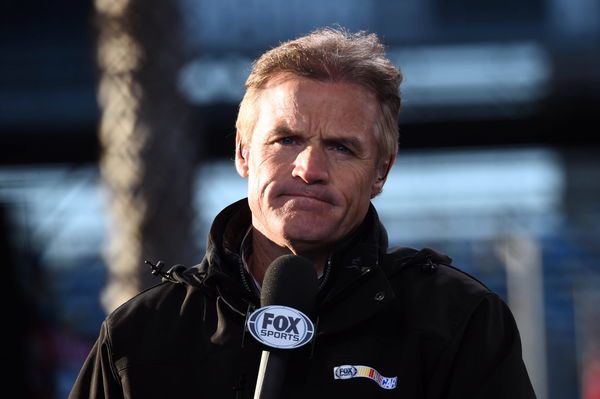
Imago
NASCAR, Motorsport, USA Budweiser Duel 1 Feb 19, 2015 Daytona Beach, FL, USA Fox Sports NASCAR analyst Kenny Wallace before race one of the Budweiser Duels at Daytona International Speedway. Daytona Beach Daytona International Speedway FL USA, EDITORIAL USE ONLY PUBLICATIONxINxGERxSUIxAUTxONLY Copyright: xMikexDinovox 8391821
The bottom line was that Fox was banking on the thrill of danger attracting fans, driving up ratings. Removing the human element from the statement, the tactic makes a ton of sense. After all, the element of danger promises edge-of-the-seat action. But as Wallace pointed out, that approach feels very unsettling. It’s cold to reduce the drivers to use them as tools to drive ratings and numbers.
How safe is NASCAR now in the modern era?
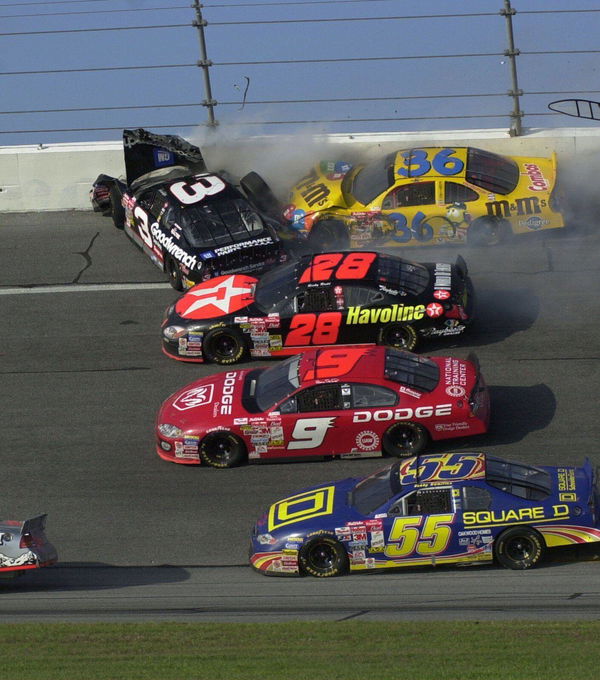
Imago
February 17, 2020: FILE: Feb. 18, 2001 – U.S. – (KRT3) KRT SPORTS STORY SLUGGED: NASCAR, Motorsport, USA EARNHARDT KRT PHOTOGRAPH BY JACOB LANGSTON/ORLANDO SENTINEL (February 18) DAYTONA BEACH, FLA– DALE EARNHARDT (3) crashes into the wall in turn four, collecting the car of Ken Schrader (36) on the last lap of the Daytona 500. Earnhardt crashed in the last lap of today s Daytona 500 and was sent to the hospital. Earnhardt, a seven-time Nascar Winston Cup champion, died of injuries resulting in the last lap of the race. He was 49. (OR) AP PL KD BL 2001 (Vert) (lde) (Additional photos available on KRT Direct, KRT/PressLink or upon request) — Nascar 2001: Daytona 500 – ZUMAm67_ 20010218_baf_m67_001 Copyright: xOrlandoxSentinelx
In the modern era, NASCAR has drastically improved driver safety, especially since the death of Dale Earnhardt in 2001. February 18, 2026 marked his 25th death anniversary. Since his crash, NASCAR has mandated life-saving gear like the HANS (Head and Neck Support) device. They also have to wear full-face helmets.
Every NASCAR track is lined with SAFER (Steel and Foam Energy Reduction) barriers. They absorb the impact force do deal with the clashes better.
Fire-protection is upgraded. Real-time crash data systems and quick medical response teams further help. All of this is definitely the reason why the sport has fortunately not seen another death like that since 2001.