
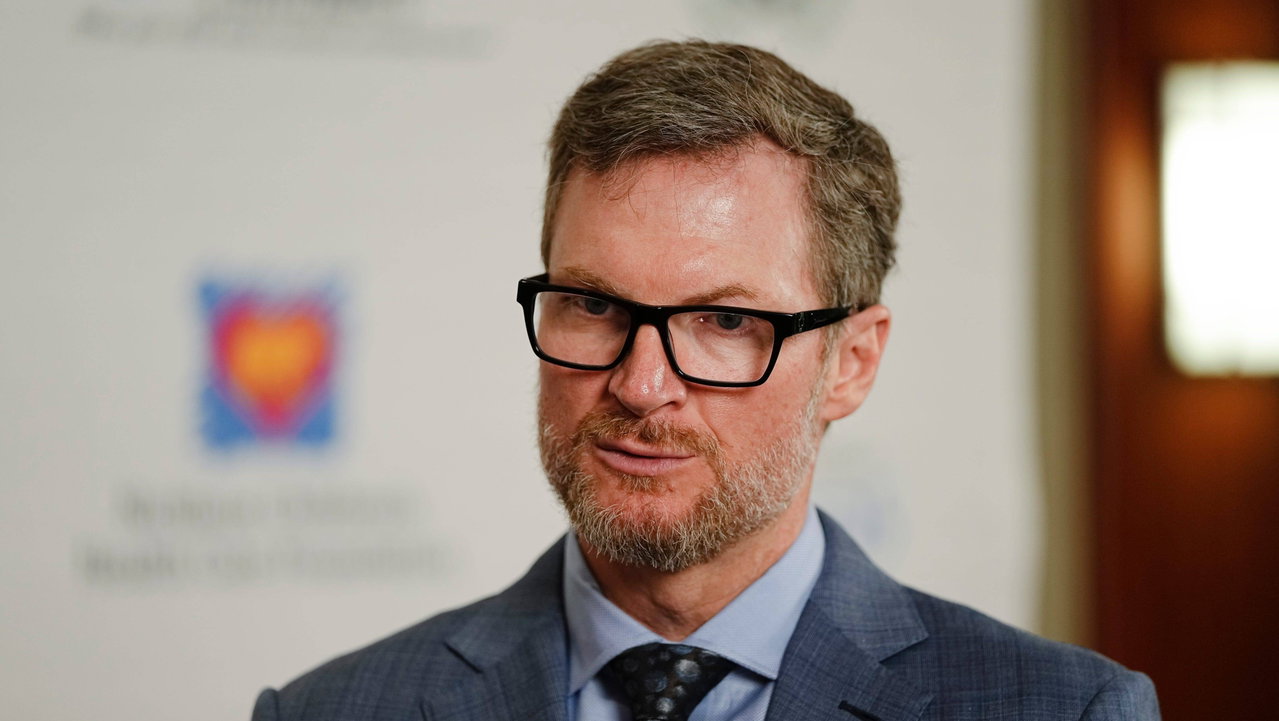
The cars are inches apart, drivers are fighting for every position, and the pack is barreling toward the finish of another intense stage. Then the caution comes out, the field slows, and the action gives way to pit stops and a television commercial break. It’s a familiar interruption in NASCAR, but not everyone believes it belongs at every track. At Daytona and Talladega, where the drafting rarely lets the field spread out, Dale Earnhardt Jr. thinks the sport needs to rethink the entire arrangement.
Watch What’s Trending Now!
“But at Daytona and Talladega, the cars can’t get away from each other. They’re drafting. They’re on top of each other. There’s action every lap. We’ve proved at Daytona and Talladega they don’t get away from each other, and so you don’t need these cautions to bring the field back together. Network will say, but our commercials? F*** your commercials,” Dale Jr. said recently on the Dale Jr. Download podcast.
He argued that the two superspeedways do not need scheduled cautions to bunch up the field because drafting naturally keeps competitors fighting for position. His frustration became clear when he addressed the networks’ need for commercial windows, offering a blunt alternative to the current arrangement.
The stage format itself dates back to the 2017 season, when NASCAR introduced a three-part race structure across its national series. The decision followed months of discussions involving drivers, teams, tracks and television partners. One of the central objectives was to create predictable windows for broadcasters to schedule commercials without missing crucial green-flag action. NASCAR also wanted drivers to compete for stage points throughout the race rather than focus exclusively on the final result. The additional restarts were another attraction, offering opportunities to reset the field and create fresh battles for position.
However, Dale Jr. believes those objectives do not translate equally to every venue. Daytona and Talladega have a distinct racing dynamic because drivers rely on drafting partners to maintain speed. The lead can change several times within a single lap, and one push from another car can completely alter the running order. Unlike at some intermediate tracks, where a dominant driver can build a substantial advantage, superspeedway competitors often remain within striking distance of one another without needing a caution to close the gap.
Recent races have offered plenty of evidence of that natural competition. The 2025 Coke Zero Sugar 400 at Daytona featured 44 lead changes among 19 drivers, with Ryan Blaney edging Daniel Suárez by just 0.031 seconds. The 2026 Daytona 500 also produced a dramatic finish, with Tyler Reddick taking advantage of a chaotic final lap to secure the victory. Talladega has delivered similar unpredictability. Austin Cindric became the 10th different winner in 10 consecutive races there in April 2025. That race featured only four cautions, including the two scheduled stage breaks.
For Dale Jr., that makes the scheduled interruptions difficult to justify. He wants NASCAR to remove stage breaks from both superspeedway events and allow the races to develop naturally. His alternative is straightforward: television networks should return to showing commercials while the cars continue racing.
“Run them, run them during the green flag. That’s what we did for 50 f****** years. Run them. I like it. There’s nothing wrong with wondering what the hell’s going on in the race while the commercial’s playing. That was a thing. That’s not a bad thing.”
This is not a new concern for Earnhardt. In 2024, he criticized the 15-minute stage break at Chicago, warning that lengthy interruptions could send viewers reaching for the remote. A year later, he went further, calling for stage cautions to be eliminated entirely while retaining stage points.
The former driver also challenged the assumption that fans cannot tolerate missing a few laps of live action. He pointed out that watching a race does not require someone to remain glued to the screen every second. Viewers might get up for a drink, talk to someone beside them, or simply accept that the broadcast will occasionally move away from the track. For him, that is a reasonable trade-off if it means avoiding unnecessary cautions.
In fact, Dale Jr. believes those commercial breaks could create another kind of excitement. A viewer returning to the broadcast might see damaged cars scattered across the track or a completely different driver leading the race. The immediate question would be what happened during the break. Rather than treating that missed action as a problem, he sees the anticipation and curiosity as part of the viewing experience.
That perspective comes from the way he remembers watching NASCAR during the 1980s and 1990s. Commercials regularly interrupted green-flag coverage, and broadcasters did not always provide a continuous view of every lap. Fans accepted that they might miss an overtake or an incident and relied on replays and commentary to catch up. Dale Jr. remembers that experience fondly, arguing that it never stopped people from following the races.
His proposal would not necessarily require NASCAR to abandon stage racing altogether. It would simply recognize that Daytona and Talladega offer a different kind of competition. Dale Jr. wants the racing to dictate the show at those venues, rather than scheduled television breaks dictating when the action stops.