
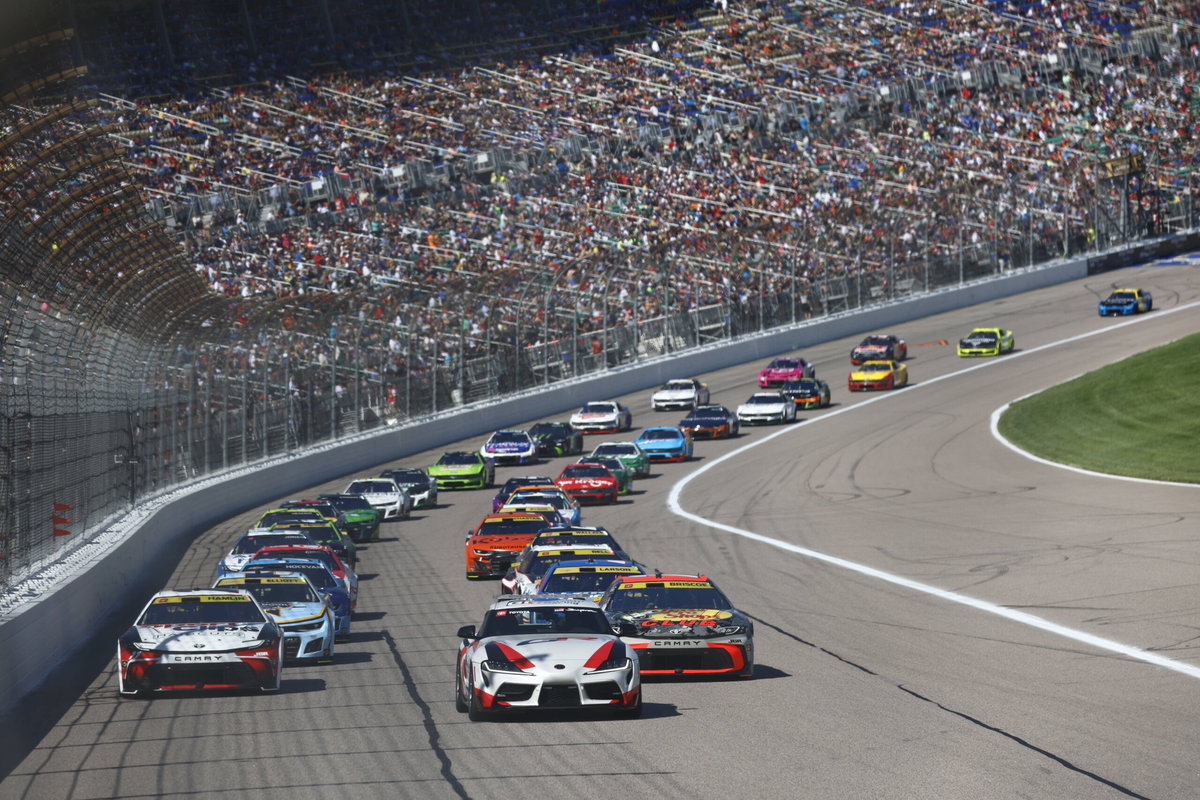
As soon as NASCAR decided to sub out the playoff format in favor of Chase, one thing was made clear—no more gambles and reckless moves. The ideology that worked with the ‘win and in’ rule would ruin the races in the new format. As a result, Kansas finally saw racing become much more constrained and stable. But on the other hand, this ‘cleaner’ style of racing, which features fewer cautions, is making the fans wonder if this is truly the NASCAR they love.
Watch What’s Trending Now!
NASCAR insider Jeff Gluck posted a question on his social media: “OK, so…do we think this is because of the points system and guys being smarter to not throw away a good day? Just coincidence?” It was a reply to the recent metric released by NASCAR, which shows that there have been the fewest cautions this year through the span of nine races since 2012.
Then, there’s also the fact that only 6 DNFs have taken place in the last five races. This has never happened before in the history of the Cup Series. So why exactly are these metrics going down?
First of all, the Chase format will only allow the top 16 drivers to advance to the post-season. This means if drivers are not racking points every weekend, then there is a high chance that they won’t be able to make the cut, even though they have one or two stellar finishes. So what happens when you remove the factor that causes uncertainty?

OK sooo…do we think this is because of the points system and guys being smarter to not throw away a good day? Just coincidence?


There have been six DNFs in the last five races, the fewest in a five-race span in Cup Series history. Additionally, the 2026 season has seen 54 total cautions, the fewest through nine races since 2012 (48).

Simply put, the competitors start evaluating and analyzing each and every move to maximize their chances of a better finish. No longer do they need to worry about someone winning and moving forward. If they manage to score enough points and stay in the top 10s and top 15s throughout the 26 races, they still have a fighting chance in the postseason.
Earlier drivers would take the lunge and end their opponent’s race alongside their own. It didn’t really matter. There were 26 races, which meant 26 chances to score a seat in the Playoffs. If they apply the same strategy now, they are losing one chance every weekend and losing points rapidly.
As one of the users aptly pointed out below the post, “There hasn’t been a lot of wheel-to-wheel racing and, as you mentioned, very few cautions. Everyone is running almost the same speed.”
Kansas race saw no incidents in the race except for Cody Ware’s spin on the second-last lap. Another example this weekend was when Austin Hill got DNFed during the O’Reilly race. He was P6 in the driver standings prior to the race. After his race-ending crash, he slipped to P8. Hill already has one victory and four top 10s in the 2026 season. In spite of that, one DNF sent him tumbling down.
That’s how sensitive racing has become. Naturally, drivers are trying to play it safe now and avoid chaos, in turn bringing in fewer collisions and wrecks. While some fans are enjoying this ‘pure’ form of racing, there are several others who despise this new change, considering it boring.
Fans unsure about the new format as racing becomes safer
In the comment section of Gluck’s post, a fan mused about the ongoing season with a grim reply. “I was never a win-and-you’re-in guy, but I knew exactly what a season-long points system would do to racing. It’ll make the last few races of the Chase exciting, but it’ll dull things out for the regular season.”
What he means to say is that, when drivers like Tyler Reddick start dominating, the audience can already easily guess the race results. It is a stark contrast to the earlier seasons, where even a driver with multiple wins could miss out on the fight for the championship.
Nevertheless, this aspect is sure frustrating for some fans. A user was clearly annoyed about the same. “Yes, it’s the format, and we told you all this would happen. But no, y’all didn’t want to listen.”
Meanwhile, another group of fans is very impressed by this type of racing. As one of the users details his feelings, “Love it. I’m not a proponent for full season points. I believe having a form of a playoff system is important, and the 10-race Chase is great for it while maintaining rewarding consistency and eliminating the ‘win and you’re in’ nonsense.”
While traditional motorsports rely on a season-long points format, NASCAR’s Chase gives the top 16 drivers a fresh start after the regular season. They have 10 races to turn things around and claw their way back to the title fight. Although some users are also outlining a different and more technical aspect of this story.
“Not necessarily points, more so the engineers/drivers have this car so dialed in (well, most teams) that it’s now far easier to game plan each track. Stage cautions are an enormous strategy assist to the teams, too. The unpredictability factor is less and less these days.”
The NASCAR Next-Gen is already a stable car that allows drivers more grip with less power. It is certainly easier to drive, and with multiple years under their belt, it is no wonder that both teams and drivers are starting to figure out the sweet spot. As they gain more experience with this car, they can easily push it to the limits without tipping over the scales.
The new points format for NASCAR has its own nuances. What are your opinions about this? Do let us know.