Imago
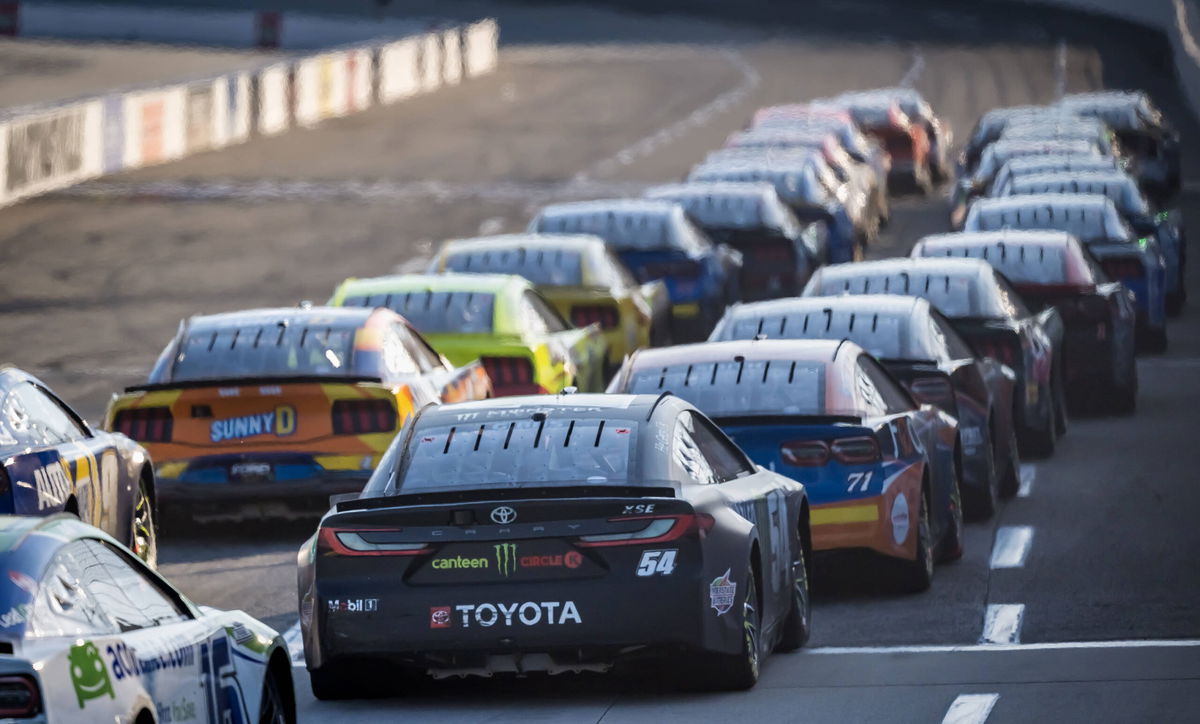
November 3, 2024, Ridgeway, Va, USA: NASCAR, Motorsport, USA Cup Series driver, TY GIBBS 54 of Charlotte, NC, races through the turns during the Xfinity 500 at Martinsville Speedway in Ridgeway, VA. Ridgeway USA – ZUMAa161 20241103_aaa_a161_010 Copyright: xWalterxG.xArcexSr.x
Imago
November 3, 2024, Ridgeway, Va, USA: NASCAR, Motorsport, USA Cup Series driver, TY GIBBS 54 of Charlotte, NC, races through the turns during the Xfinity 500 at Martinsville Speedway in Ridgeway, VA. Ridgeway USA – ZUMAa161 20241103_aaa_a161_010 Copyright: xWalterxG.xArcexSr.x
Broadcasters are responsible for bringing every lap, every battle, and every bit of drama to life for fans watching at home, but when that connection feels off, people notice fast. The Rockingham O’Reilly NASCAR race coverage was an example of that, as it sparked backlash with accusations of a “lazy” remote setup. Only this time, instead of piling on, a lot of fans jumped in to defend one familiar voice at the center of it all.
Watch What’s Trending Now!
On-track drama meets off-track backlash
For most of the race at Rockingham Speedway, it looked like Corey Day had everything under control. He dominated early, sweeping both stages and leading the majority of laps, setting the pace like a driver who wasn’t going to be touched. But as the race wore on and tire wear came into play, the script flipped. As the race progressed, William Sawalich stepped up his driving to take over and secure an emotional and hard-fought victory.
It was the kind of race that had everything. Dominance, strategy, and a late twist. While the action on track was delivered, a completely different conversation was brewing off it. Amidst all the racing drama, fans began to notice something unusual about the broadcast itself, and they weren’t happy.
The CW is once again calling today’s O’Reilly Rockingham race from the Charlotte studio & it appears it’ll just be Adam Alexander and Parker Kligerman in the “booth” today.
Charlotte to Rockingham is a 90 minute drive. This is inexcusable behavior from a broadcaster.
— RaceDay Report (@RaceDay_Report) April 4, 2026
The criticism quickly shifted toward The CW Network, which currently serves as the exclusive broadcaster for the NASCAR O’Reilly Auto Parts Series, covering all 33 races along with practice and qualifying sessions as part of a seven-year deal. Instead of calling the race from the track, the broadcast team appeared to be stationed remotely in a Charlotte studio. This decision did not sit well with a portion of the fanbase, especially given how close Rockingham is to Charlotte.
What started as a few frustrated comments soon turned into a wider debate about effort, presentation, and what fans expect from a national broadcast. And as the criticism picked up steam, the spotlight didn’t just stay on the network. It shifted toward the voices behind the mic, setting up a wave of reactions that went in a very different direction.
Fans push back on criticism of NASCAR race broadcast
As criticism toward The CW Network started gaining traction, a large section of the fanbase quickly stepped in, but not to pile on, rather to correct the narrative.
One of the most common responses pointed out a key misunderstanding: “The CW is not responsible for the production. They simply air the program. Do your homework.” The point was extremely valid, as The CW only holds the broadcast rights, the actual race production, including camera work, direction, and even booth logistics, is all handled by NASCAR’s in-house production team alone.
Others took it a step further, explaining that this isn’t some last-minute “lazy” decision. Instead, it’s part of a larger shift in how races are produced. “We go over this every time. That new NASCAR production building from COVID is why they have to… pretty sure it’s in their contract.” That facility, built as a long-term solution, serves as a central hub for race control and broadcasting, allowing for consistent, high-quality production from one location.
Then came the practical angle of budget and efficiency. “Nothing to do with distance, it has everything to do with a budget. What is the cheapest way to broadcast a race?” one fan wrote, highlighting the financial reality. NASCAR’s state-of-the-art production studio, a $53 million, 58,000-square-foot complex, was designed exactly for this purpose of centralizing operations with advanced control rooms, studios, and high-speed connectivity.
Some fans even questioned the outrage itself. “Can you explain… what the broadcasts are lacking?” one user asked, pointing out that, for most viewers, the experience hadn’t really suffered. Others added a sarcastic twist: “They watch a monitor at the track. What’s your point?” It was a reminder that even at-track broadcasters rely heavily on screens.
In the end, what started as criticism of a “lazy” broadcast quickly turned into a defense of the people behind the mic, and a reality check on how modern NASCAR coverage actually works.

