
Imago
NASCAR, Motorsport, USA Bank of America ROVAL 400 Oct 5, 2025 Concord, North Carolina, USA NASCAR Cup Series driver Joey Logano 22 drives at Charlotte Motor Speedway Road Course. Concord Charlotte Motor Speedway Road Course North Carolina USA, EDITORIAL USE ONLY PUBLICATIONxINxGERxSUIxAUTxONLY Copyright: xScottxKinserx 20251005_nts_im2_0010
Imago
NASCAR, Motorsport, USA Bank of America ROVAL 400 Oct 5, 2025 Concord, North Carolina, USA NASCAR Cup Series driver Joey Logano 22 drives at Charlotte Motor Speedway Road Course. Concord Charlotte Motor Speedway Road Course North Carolina USA, EDITORIAL USE ONLY PUBLICATIONxINxGERxSUIxAUTxONLY Copyright: xScottxKinserx 20251005_nts_im2_0010
The roaring of the V8 engine makes NASCAR iconic. The cars can be heard from miles away when racing on superspeedways, and fans love the vibrations, too. But according to recent rumors, the sport could’ve killed that sound, moving to a hybrid engine. However, Ford has recently come to the rescue, revealing that they are not giving up the IC engines anytime soon.
Watch What’s Trending Now!
Ford is not moving to hybrids
Considering their far-reaching presence in motorsports, Ford has managed to test their hybrid engines along with their naturally-aspirated ones in the Cup Series. As of now, however, the manufacturer feels that racing doesn’t “need to be racing hybrid everywhere.” Mark Rushbrock, Ford Racing’s global director, added:
“But we also do full combustion-only engines in our vehicles we sell, and that’s what NASCAR is. So at this point, if it’s the right thing for the series — if NASCAR wants to do it, if the other manufacturers want to do hybrid in NASCAR — we’re not against it, but we’re not pushing for it at this point.”
This sounds like good news for the fans. When the Next-Gen cars were introduced, NASCAR revealed that these cars could be modified for hybrid engines. However, that has only remained a possibility.
Imago
Via NASCAR.com
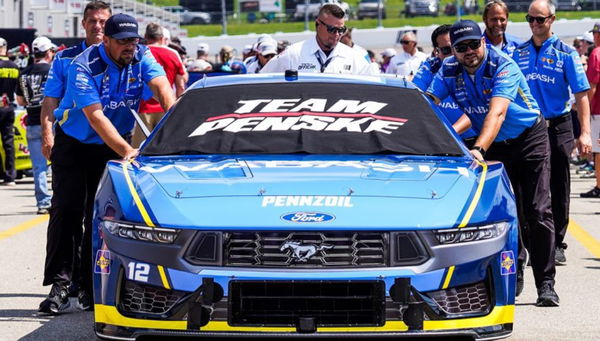
Despite the global push towards hybrid engines, the Cup Series will continue with naturally-aspirated engines. While Ford, which powers the likes of Team Penske and Front Row Motorsports, did mention that it was one of the most-discussed names when a potential Cup car with a hybrid engine was in discussion.
Honda has delivered strongly to Formula 1 when it comes to hybrid engines, but it seems unlikely that the same would happen with stock cars.
Hybrid engines in the Cup Series would mean a major revamp. The cars would drive differently, and most drivers would struggle to adapt, considering the average age of all drivers in the current field.
Meanwhile, there is yet another issue that is potentially stopping stock racing from moving to hybrid engines.
The issue with introducing hybrid engines in NASCAR
Hybrid engines work with a balance between combustion and electric power. But the latter tends to run out early and has to be recharged. When it comes to Formula 1, the battery is recharged under braking through the generated kinetic energy. This is exactly the issue with the Cup Series.
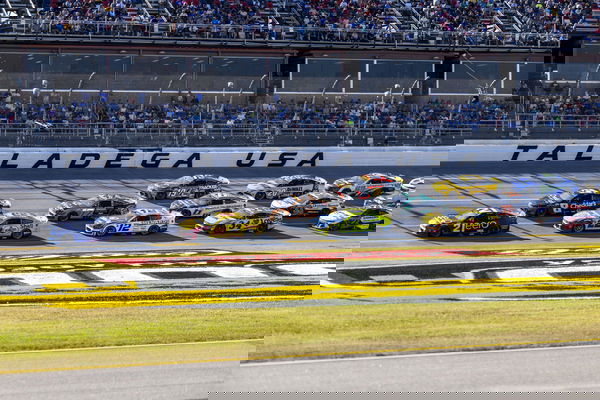
Most of the tracks are ovals. Especially with the likes of Daytona and Talladega, which require minimal braking, it would become difficult to recharge the batteries. Further, with the removal of another road course (the Roval), the possibility becomes less.
“Hybrid technology would really only make sense on some of the racetracks, like it would make no sense to put hybrid in a vehicle at Daytona or Talladega,” Rushbrook said. “So [on] a short track or a road course, hybrid makes technical sense, but not high on our priority list for NASCAR to do that.”
In the end, stock car racing is more about raw power. The introduction of hybrid engines will also likely no longer feature the rumbling sound of the V8. This happened with Formula 1. The V10 and V8 engines were known for their screaming sound. But with the introduction of the V6 turbo-hybrid in 2014, the revs were dropped to a mere 13,000, silencing the cars.
For many hardcore racing fans in the US, the sound of a Cup car means everything. Luckily for them, that iconic sound isn’t going anywhere.
Written by

Edited by

Suyashdeep Sason