
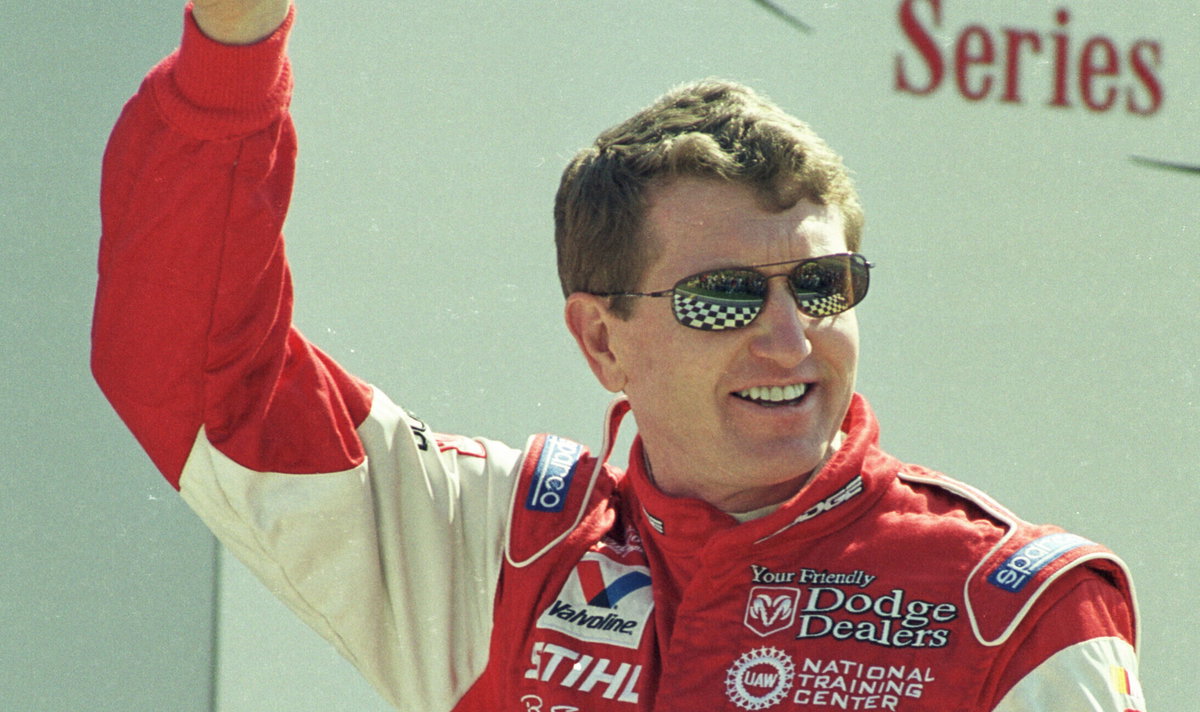
There is an old saying in motorsports that if you’re not cheating, you’re not trying. Nobody embodied that spirit more candidly than Tim Brewer, a two-time Cup Series championship-winning crew chief who began his career at just 18 years old, making him one of the youngest in NASCAR history when he called the shots for a then-unknown Richard Childress.
Watch What’s Trending Now!
It was through Junior Johnson’s operation, however, that Brewer built his legend, guiding Cale Yarborough to the 1978 title and Darrell Waltrip to the 1981 crown, with 32 wins between them over four years. By the time he joined Bill Elliott at Junior Johnson & Associates ahead of the 1992 season, his reputation for finding every possible edge in the rulebook had already preceded him for years.
“It wasn’t about cheating to me. It was a game,” as Brewer had notably said. And he played it well enough to alter a car’s ride height right under NASCAR’s nose. Speaking on the Scene Vault podcast, Brewer revealed how he did it:
“You pump the clutch and raise the car up to go through inspection. As soon as you went off pit road, you open the valve, car goes down, and you hauling a**. So, at the end of the day, we had it, we had it on Bill’s car.”
This was a time when clearing NASCAR’s race inspections was its own competition. The officials lacked the precision equipment of today, and small, well-concealed mechanical modifications could pass through entirely undetected. Brewer, having gone through the entire rulebook, had arrived at one guiding principle: “don’t get caught.”
The mechanism itself was engineered to be invisible. For years, the sport has enforced strict rules on minimum ride height, how low a car can run to the ground, because lower cars generate more downforce, allowing drivers to carry more speed through the corners and gain an advantage over the field. The suspension controls ride height, which gave Brewer his opening.
“The mechanical deal worked the clutch. The hydraulic deal had a line run down, and I dissected the trailing arms and run a line down through the trailing arm, and that line is what run to the hydraulics in the back,” he revealed.
Hitting the clutch pedal repeatedly activated the hydraulics connected to the rear suspension, raising the car’s ride height just enough to clear inspection. By running the hydraulic line through the trailing arm itself, the mechanism was almost impossible to spot.
It was also the same instinct that had already cost him once: in May 1991, NASCAR handed both Brewer and Junior Johnson a 12-week suspension, later reduced to four races on appeal, after finding an engine measuring 361.856 cubic inches in their No. 11 Ford at The Winston at Charlotte Motor Speedway. The maximum allowed was 358. But Brewer didn’t stop pushing limits, as he just began pushing them more carefully.
Thanks to that, the 1992 partnership between “Awesome Bill from Dawsonville” and Junior Johnson’s operation, already carrying six championships and 124 victories across 24 seasons as an owner, was widely viewed as one of the most formidable combinations in the sport.
Elliott won four consecutive races, at Rockingham, Richmond, Atlanta, and Darlington, becoming only the fourth driver in NASCAR’s Modern Era to accomplish that feat. He then went on to win five races total that season and led the points standings for stretches of the second half.
The word spread quickly that the hot streak was accomplished through some manner of trickery. Per motorsports journalist Steve Waid, when the sanctioning body found out, NASCAR is believed to have quietly informed Johnson to cease and desist rather than make a public enforcement issue of it, which was not an uncommon approach of that era.
How a penalty on Bill Elliott’s son forced NASCAR to change the ride height rules
Back in 2014, Chase Elliott would go on to make his Nationwide (now the O’Reilly Auto Parts) Series debut with JR Motorsports. Right from the beginning, he proved to be a promising driver as he was chasing down top 10 finishes with ease. But something changed at the Las Vegas Motor Speedway.
His #9 Chevy was found to be running lower than the minimum front ride height NASCAR allowed at the time for the Nationwide Series (4-3/4 inches). But at the time, NASCAR had already been looking forward to making a change in this rule for a long time, and this gave them the perfect opportunity to do so. The authorities soon announced that the minimum ride height was further decreased by an extra half-inch, allowing the teams to run at 4-1/2 inches.
While this did give relief to the teams, it also reflected quite the contrast of how NASCAR operated at the time of Bill Elliott and then his son. While Brewer had managed to slip through his ride height-altering mechanism, Chase Elliott’s crew chief, Greg Ives, was placed on probation, and at the time, this penalty was considered light.