
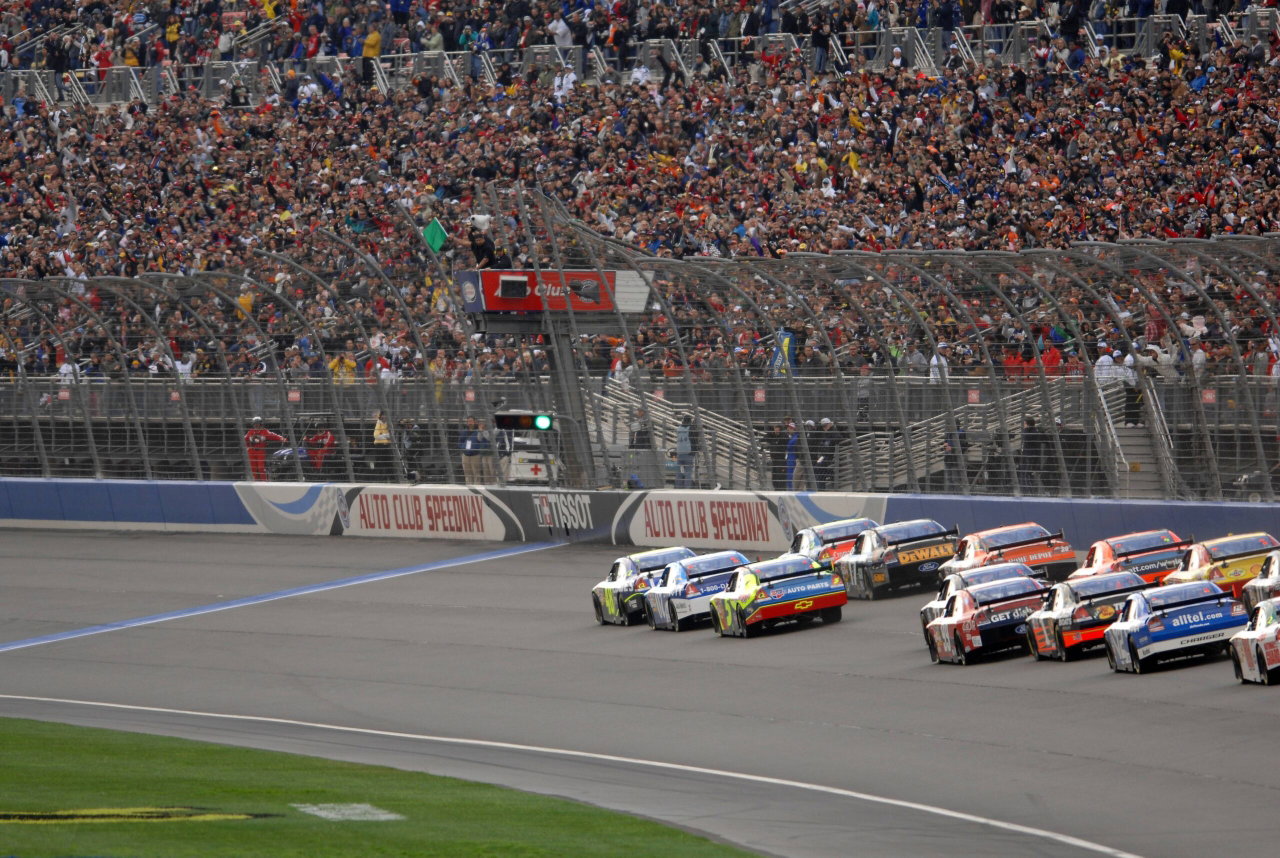
Casey Mears remembers entering NASCAR’s Cup Series at a time when the garage was still filled with drivers who had defined the sport for years. His first Daytona 500 in 2003 put him in the same field as Jeff Gordon, Mark Martin, Rusty Wallace, Dale Jarrett, Kyle Petty and Ken Schrader. For a newcomer, it was quite an introduction to stock-car racing’s biggest stage.
Watch What’s Trending Now!
Looking back on that period, Mears believes he witnessed something NASCAR has struggled to reproduce. Speaking on Dinner With Racers, the former Hendrick Motorsports driver identified the late 1990s through approximately 2010 as an exceptional period, when established legends were still competing against a fresh generation of talent. He described those veterans as the “meat and potatoes” of NASCAR.
However, Mears’s argument goes beyond the number of recognizable names in the field. He believes that era had the strongest possible collection of drivers because teams had the financial resources to recruit based on ability.
“I truly feel that era had the best guys that could have been in the sport at that time because the teams had the money to pay the right guys to be there,” he explained. In his view, the financial strength of NASCAR directly influenced the quality of its competition.
The sponsorship environment helps explain his assessment. During the early 2000s, major Cup organizations could command substantial corporate backing. A 2004 Sports Business Journal report estimated that a top-level Cup team needed approximately $15 million to $20 million annually in sponsorship to compete. Sponsors were prepared to spend heavily, giving established teams the resources to recruit drivers and maintain competitive operations.
What’s the Biggest Thing You’re Looking Forward to From Dodge’s NASCAR Comeback?
Mears remembered a time when drivers did not necessarily have to arrive with their own financial backing. “There was none of this, ‘Hey, do you have any money? Can you come drive for me?’ No, teams had money, so they hired guys they wanted to race,” he said.
He acknowledged that pay drivers were never entirely absent from NASCAR, but believed their influence was considerably smaller during that period.
The development pipeline strengthened the system further. As the Dinner With Racers hosts pointed out, major organizations had established driver-development programs with several young prospects ready to move up. If one driver failed to deliver, a team could turn to another candidate.
Owners had the financial flexibility to evaluate talent, while promising drivers had to earn their opportunities through performance. That combination helped keep competition deep across the field.
The 2008 financial crisis eventually disrupted that environment. Corporate budgets tightened, sponsorship became harder to secure, and teams began facing difficult decisions about their operations. A 2008 industry report highlighted how some organizations were struggling to obtain adequate funding, at risk of running fewer cars or skipping races.
Mears specifically identified 2008 as the year that began shaking things up, placing the end of NASCAR’s particularly strong period around 2010.
Tony Stewart’s recent comments offer another perspective on the differences between generations. The three-time Cup champion admitted that he no longer watches modern Cup racing, criticizing the reduction in horsepower.
Stewart recalled racing with approximately 875 horsepower during his peak years before NASCAR reduced the package to 775 horsepower. “I was miserable,” he said about that change. His frustration is rooted in the driving experience, but it illustrates why some veterans feel today’s racing has moved away from what they enjoyed.
Meanwhile, Spire Motorsports co-owner Jeff Dickerson believes NASCAR could be entering another period that future generations will remember fondly. “I don’t know if anyone has considered that we’re entering the good old days,” he said, pointing to the commercial momentum surrounding Carson Hocevar.
Following Hocevar’s first Cup victory at Talladega in April 2026, his winning No. 77 diecast generated the highest first-24-hour sales for a race-winning car since NASCAR and Lionel established their partnership in 2010. His personal merchandise operation also generated nearly $500,000 in its first month after the victory.
Mears’s assessment is ultimately about the relationship between money and talent. The late-1990s and 2000s brought together established champions, emerging stars, well-funded teams and development programs capable of supplying the next generation.
Dickerson sees signs of a new commercial boom, but recreating the competitive depth Mears remembers requires more than producing another popular driver. It takes an entire system that can afford to put the best available talent behind the wheel.