Imago
Trackhouse Racing
Imago
Trackhouse Racing
When Justin Marks launched Trackhouse Racing, it didn’t take long for the team to shake up the NASCAR establishment. By 2022, Trackhouse had gone from newcomer to giant-slayer, winning races and challenging powerhouse teams with bold strategy and fresh energy. But fast forward to 2026, and the picture looks very different. Instead of leading the charge, Trackhouse finds itself stuck in the mid-pack, raising an uncomfortable question: what exactly changed?
Building a NASCAR powerhouse almost overnight
Watch What’s Trending Now!
Trackhouse Racing’s story began with bold ambition. Marks and then co-owner Pitbull tapped Daniel Suárez as the organization’s first full-time driver in 2021, putting him behind the wheel of the No. 99 Chevrolet. Their debut at the Daytona 500 was a learning experience. Suárez qualified 15th but crashed early and finished 36th.
Still, signs of promise came quickly. Just seven races into the team’s existence, Suárez finished fourth in the Bristol Dirt Race, proving the operation could run with established teams.
The real turning point arrived in June 2021 when Marks purchased the entire Chip Ganassi Racing Cup Series operation. The acquisition included the team’s race shop and two charters, instantly transforming Trackhouse from a single-car newcomer into a multi-car contender for 2022.
Imago
Image Credits: Imago
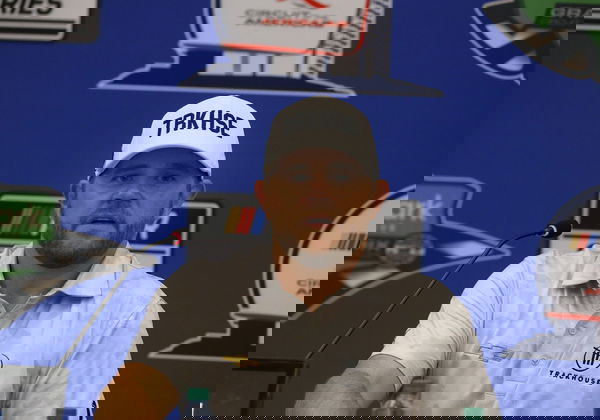
That expansion brought Ross Chastain into the fold. Chastain wasted little time proving the move worthwhile. Just six races into the 2022 season, he outdueled AJ Allmendinger and Alex Bowman at Circuit of the Americas, scoring the team’s first Cup Series victory. A month later, he added another win at Talladega Superspeedway.
Momentum continued when Suárez delivered a historic victory at Sonoma Raceway, becoming the first Mexican-born driver to win in NASCAR’s top division.
Innovation and global ambitions
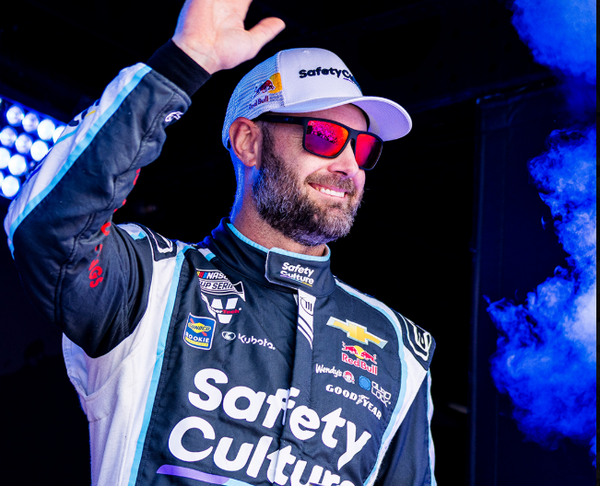
While results on track were impressive, Trackhouse also built its brand around bold ideas. In 2021, the team introduced “Project 91,” a program designed to bring international racing stars to NASCAR. The initiative paid off spectacularly during the inaugural Chicago Street Race in 2023. Australian Supercars champion Shane van Gisbergen stunned the field by winning in his Cup debut, becoming the first driver in 60 years to accomplish that feat.
Imago
Credit: TeamTrackhouse/X
Trackhouse continued building momentum in the following seasons. Chastain added wins, including one at Nashville Superspeedway in 2023. On the other hand, Suárez returned to the playoffs in 2024 after winning at Atlanta Motor Speedway. By 2025, the organization had grown into a three-car powerhouse.
Chastain delivered one of the team’s biggest moments by winning the Coca-Cola 600, while van Gisbergen dominated road courses. Starting with NASCAR’s first Cup race in Mexico City, SVG rattled off victories in the final five road course events of the season, becoming the winningest rookie in Cup Series history.
Yet even during that successful stretch, cracks were beginning to show.
A new era brings growing pains
Despite the highs of 2025, Suárez struggled to keep pace in the No. 99 Chevrolet. The team ultimately announced in July that he would not return for the 2026 season. In his place, Trackhouse signed rising star Connor Zilisch, a highly touted 19-year-old prospect expected to represent the team’s future.
The move symbolized a transition period. Chastain remained the veteran leader, van Gisbergen continued adapting to full-time Cup competition, and Zilisch began his rookie campaign with enormous expectations. But early results in 2026 suggest the transition hasn’t been seamless.
A tough start to 2026
Through the first five races of the 2026 NASCAR Cup Series season, Trackhouse has shown flashes of speed but little consistency.
Across 15 combined starts, the team is winless and has managed only two top-five finishes. At Daytona, Chastain finished 20th while van Gisbergen and Zilisch ended up 30th and 33rd, respectively. The following race at Atlanta offered more promise, with Chastain finishing third and van Gisbergen sixth, but Zilisch again struggled and crossed the line in 30th.
Subsequent races at Circuit of the Americas and Phoenix Raceway produced similarly mixed results.
The latest outing at Las Vegas Motor Speedway highlighted those struggles even further. Chastain finished 17th, while Zilisch and van Gisbergen ended the day 32nd and 36th, respectively. For a team that once looked capable of challenging NASCAR’s traditional powerhouses, the numbers paint a picture of inconsistency rather than dominance.
What went wrong?
Several factors may explain why Trackhouse Racing has slipped from giant-slayer status to a more inconsistent, mid-pack contender.
When Justin Marks purchased the Chip Ganassi Racing operation, he essentially inherited a team that had long hovered around the middle of the NASCAR Cup Series grid. The arrival of the Next Gen car in 2022 created unprecedented parity across the field, allowing emerging teams like Trackhouse Racing to challenge the traditional powerhouses. But as organizations such as Hendrick Motorsports and Joe Gibbs Racing gradually unlocked the new car’s secrets, the competitive balance began shifting back in their favor.
Driver lineup changes may also have played a role. The team brought in Shane van Gisbergen, an elite road-course racer still adapting to NASCAR’s oval-heavy schedule, while rookie Connor Zilisch continues his learning curve. Earlier experiments with Zane Smith also added instability to the lineup. Without a seasoned veteran consistently providing technical feedback, development can become more difficult.
Off-track shifts may have contributed as well. Co-owner Pitbull exited the partnership in 2025, and the organization expanded internationally by entering MotoGP in 2024. Now, these moves might have stretched the team’s focus during a critical competitive window.
Can Trackhouse recapture its magic?
Trackhouse Racing’s rapid rise was one of NASCAR’s most exciting storylines earlier in the decade. The team proved that fresh ideas, aggressive strategy, and fearless leadership could disrupt the sport’s hierarchy. But maintaining that momentum is a different challenge entirely.
With a young driver in Zilisch, a road-course ace still adapting to the full Cup schedule in van Gisbergen, and Chastain carrying the banner as the team’s veteran contender, Trackhouse remains packed with talent. The question is whether the organization can translate that potential into the kind of week-to-week performance that once made it NASCAR’s most dangerous newcomer.
For now, the giant-slayer that once shocked the garage has become something else entirely — a team searching for its next breakthrough. Hopefully, they find it soon!
Related Newsletters