
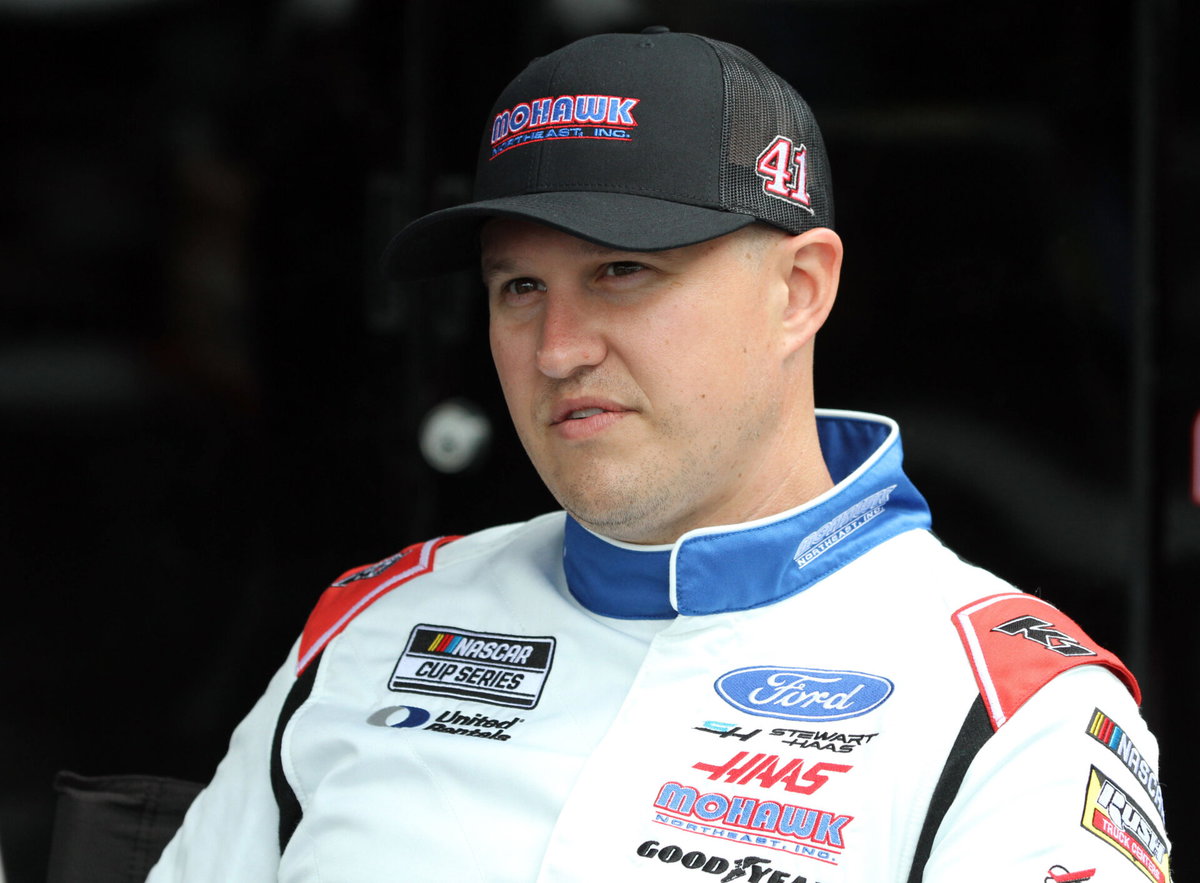
Ryan Preece thought his talk in the garage was private. It was not. Not racing or fighting with anyone on the track. He was talking to his crew chief about a headrest that was beating his head up every time he hit a bump. TNT Sports picked it up and put it on the air. That was enough to make it a story.
Watch What’s Trending Now!
NASCAR had told his RFK Racing team to raise and tighten his headrest before practice. It is a safety rule: a tighter fit limits how far a driver’s neck can whip in a crash. Preece hates it. He drives with a wider one and has already fought the change once in the offseason. NASCAR pushed it through anyway. Chicagoland was worse. The track is notoriously rough, and Preece sits differently from most drivers. So all the bumps made his head bounce off the new padding. That’s when he keyed his radio.
“This headrest is a pain in the [expletive]. I’m absolutely aggravated that I’m being told to change something that I don’t want to change,” he told his crew chief.
TNT aired it live. By the time he reached the media tent, it had already gone around.
“What you heard was some frustration that I thought was between my team and me,” Preece said. “And apparently it wasn’t.”
Because this was broadcast, he felt, it stripped away all that context.
“I wasn’t talking about another driver. I was talking about a comfort issue,” he said. On whether garage conversations should stay off-air, he went further. “I don’t know if we need to bring back digital radios so we can communicate during practice.”

“What you heard was out of context…I was in my garage talking to my team, not on the radio…” @RyanPreece_ clarifies comments made during practice about his head support and its discomfort. #NASCAR
The loophole here is that drivers assume some of their radio talks with the garage are private, but NASCAR uses an open radio system. It makes what is being spoken ready for TV. They have never been private. Every team broadcasts on frequencies NASCAR publishes openly. Fans at the track scan them. People at home listen through the NASCAR app. TV networks grab whatever they want, whenever they want, including during practice. Encryption is banned outright. There is no mute button, no kill switch, nothing.
When you are strapped into a cockpit talking directly to your crew chief, it’s like a phone call. It is not. It is closer to a microphone at a press conference.
For Ryan Preece specifically, this keeps getting expensive. Earlier in 2026, NASCAR fined him $50,000 and docked him 25 points, citing his own radio as the main evidence that he crashed Ty Gibbs on purpose at Texas Motor Speedway. Now this. Two controversies, same season, same frequency.
RFK’s charter problem is not going away, and Ryan Preece knows it
Preece confirmed he is coming back to RFK in 2027. The bigger question is what that actually looks like. RFK has two permanent charters, Keselowski’s and Buescher’s. Ryan Preece has spent the last two seasons running on a leased charter from Rick Ware Racing. That charter is no more. Rick Ware’s entry is moving to Legacy Motor Club, which is expanding to three cars next year. RFK gets nothing back.
Team president Chip Bowers has drawn a hard line: three cars, full stop. But the charter market has dried up. Prices are high, sellers are scarce, and the only realistic target, Haas Factory Team’s assets, has not moved. Keselowski admitted they are watching but have nothing to show for it yet.
If nothing changes, Ryan Preece races open. That means no guaranteed spot on the grid; he qualifies on speed every single week, competing for one of four open slots in a 40-car field. It also means roughly $5 million less in revenue across the season compared to running chartered.
The sponsors are solid. Kroger and Consumer Cellular give RFK enough backing to run it that way if they have to. But nobody at RFK wants to find out.