
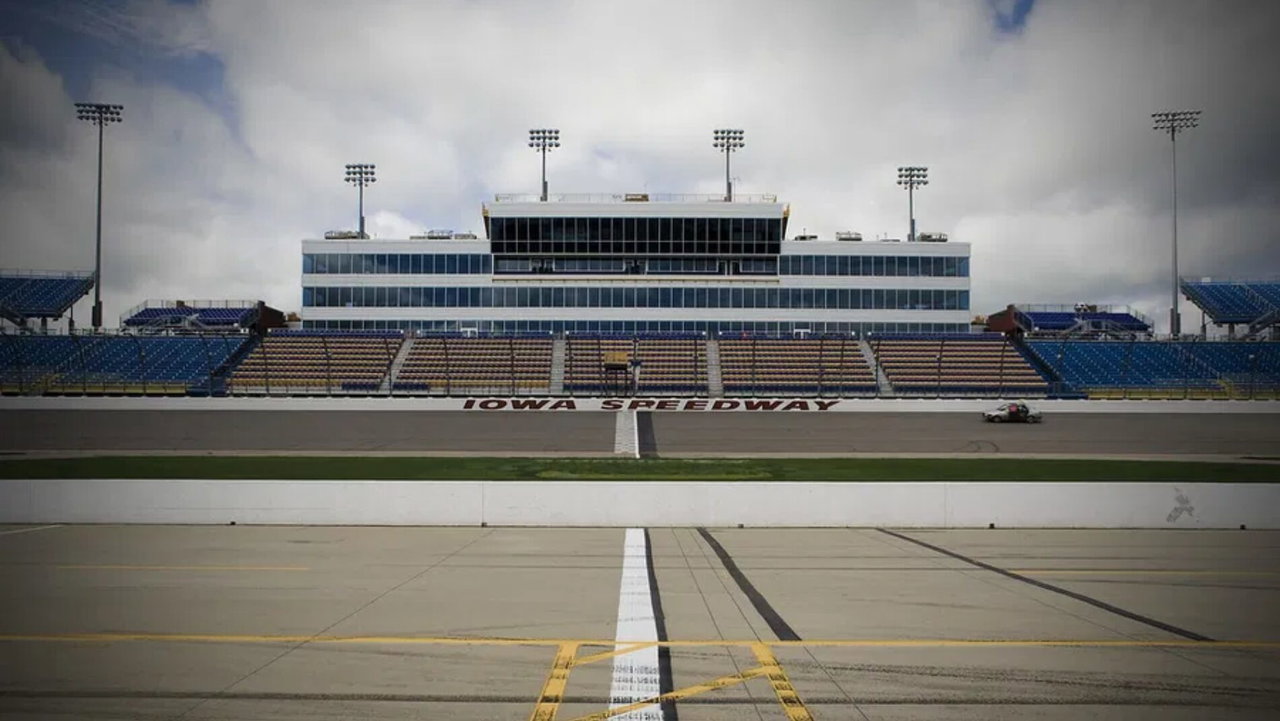
Chase Elliott had already raised doubts about Goodyear’s revised Iowa tire before Sunday’s race. “You know, it sounded like the tire that everybody wanted wasn’t what they brought back.” He was referring to Goodyear’s new plan to improve racing at Iowa. “We’re bringing a new left-side Goodyear Racing Eagle featuring an updated construction and compound to help promote more wear and fall-off,” said Goodyear’s Rick Heinrich.
Watch What’s Trending Now!
But when Christopher Bell’s four tire advantage failed to get past Ty Gibbs, this new compound became a big topic of discussion. And it also proved Elliott’s point about not expecting too much from Goodyear’s new tire.
“When you get into the situation where tires are not enough to make a difference at a short-track. And then aero is making too much of a difference at a short-track. That’s not the NASCAR short-track racing everybody’s looking for. I think Bell’s inability to complete a pass when he seemed like he was the faster car and had two fresher tires over the course of a very, very long run, it was a bit frustrating to watch.”
That was Jeff Gluck’s blunt assessment of the closing stages at the NASCAR Iowa race. And the biggest problem was not simply that Christopher Bell finished second. It was how he failed to pass Ty Gibbs.
With 59 laps to go in the race, Ty Gibbs came off pit road ahead of Bell with only two tires. On the other hand, Bell had four fresh tires underneath his Toyota. On paper, that should have given Bell a significant advantage over the long green-flag run.
Instead, Ty Gibbs continued to keep Christopher Bell behind him. Bell repeatedly closed the gap. But he could not complete the pass even once in those 60-plus laps. Even with the fresher rubber, he struggled to get a clean passing opportunity over the No. 54 car.
That is precisely the type of situation that has frustrated NASCAR fans at short tracks. If tire falloff is significant, a driver with four fresh tires should eventually be able to make meaningful progress against a car running on two older tires. But at Iowa, the aerodynamic characteristics of the cars appeared to limit that advantage.
Gluck’s criticism was therefore bigger than Bell’s inability to win. That is particularly problematic at a short track, where NASCAR fans expect drivers to be able to race closely, move around and use different lines to complete passes.
Iowa is a unique track, not a typical half-mile short oval, which bring a different set of challenge. A Goodyear tire compound that might’ve worked at Bristol or Richmond, won’t necessarily have similar impact on the roughly paved 0.875-mile track
Close contact racing at Bristol and Martinsville is what fans expect from such races. But at Iowa, track position and clean air decided the winner. Blaney, starting from pole, was untouchable; he led 129 laps, proving clean air and track position decided the race.
It is about time NASCAR takes a good look at the issues with their short track package. Perhaps it is time for them to look beyond just Goodyear’s intervention to get back on track.