“He Broke the Wall”- Insider Left Furious as Watkins Glen Safety Lapse Exposes NASCAR’s Next-Gen Defect

Add us on Google
“He Broke the Wall”- Insider Left Furious as Watkins Glen Safety Lapse Exposes NASCAR’s Next-Gen Defect
Add us on Google
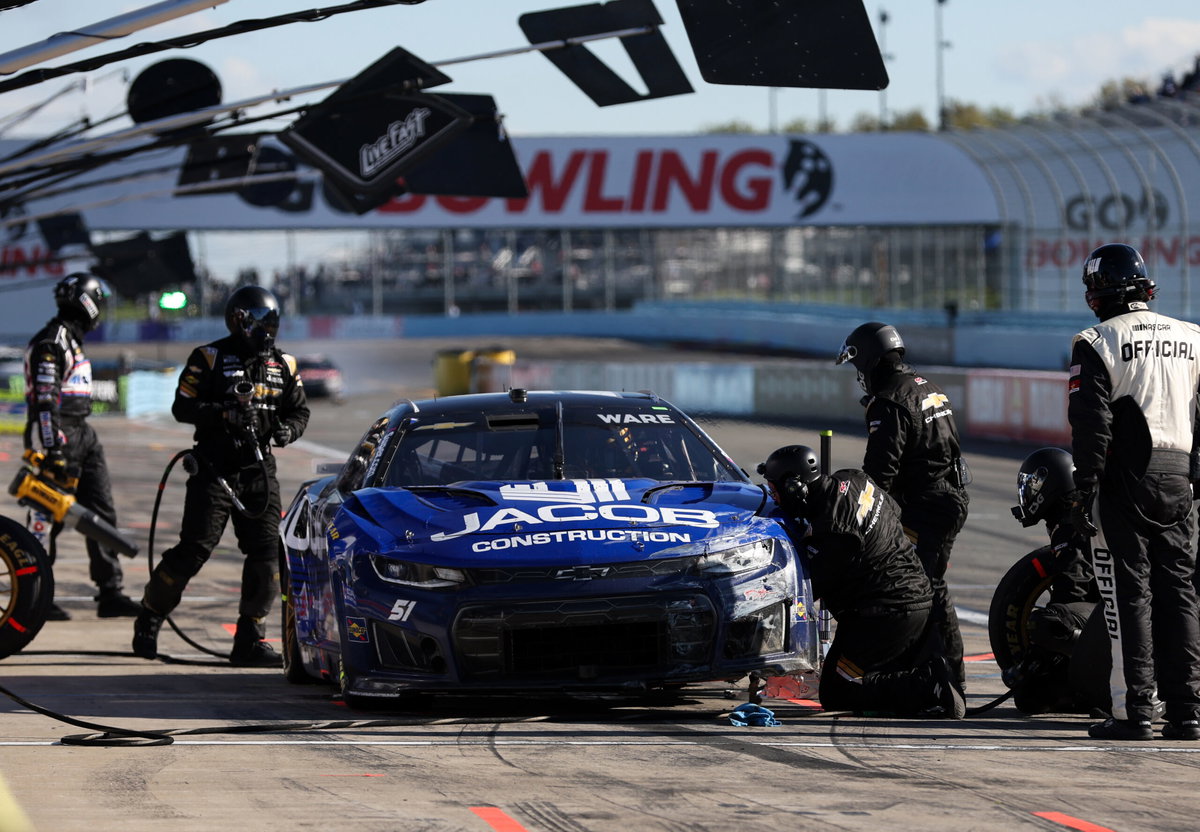
Imago
May 10, 2026; Watkins Glen, New York, USA; Crew members work on the damaged car of NASCAR Cup Series driver Cody Ware (51) after being involved in an accident during the Go Bowling at The Glen at Watkins Glen International. Mandatory Credit: Matthew O’Haren-Imagn Images
Imago
May 10, 2026; Watkins Glen, New York, USA; Crew members work on the damaged car of NASCAR Cup Series driver Cody Ware (51) after being involved in an accident during the Go Bowling at The Glen at Watkins Glen International. Mandatory Credit: Matthew O’Haren-Imagn Images
“In frontal impacts, the Next Gen [data] shows to perform a little better,” John Patalak from NASCAR’s safety board had claimed earlier in 2022, but that didn’t seem to be the case at Watkins Glen earlier last Sunday. Cody Ware spun while battling for position and slammed hard into the wall, yet no caution was thrown. Instead, the race stayed green because Ware was still able to move the car and eventually drive back toward pit road. NASCAR race control seemingly judged that the situation did not require stopping the racing action right away. However, once Ware’s onboard footage surfaced online, the backlash only intensified, with many fans and insiders questioning how such a violent impact was allowed to continue under green conditions.
Watch What’s Trending Now!
With the mismanagement as such that the Next Gen car has shown, even with the safety features now, the entire NASCAR management seems to be in question by angered fans, insiders, and former drivers.
“I’ve seen where they dispatch ambulances at Talladega for someone just spinning out and not hitting anything. Then I’ve seen people clobber the wall and we stay green,” claimed Kurt Busch, discussing Ware’s crash at The Glen.
“These cars have black boxes in them, and they need to trigger a yellow when a car has a 15G impact or 20—we all need to come up with that number,” Busch explained.
The Next Gen cars were claimed to be the safest. One of the most prominent features is that they have a ‘black box’ that senses crashes over 15G and sends the data back to the authorities, and the authorities then put out a caution. However, that did not happen during the race. While FOX did not show the crash on the broadcast, the onboard clips were difficult to even look at. Ware’s car spun nearly backward into the barrier before bouncing off the impact, briefly appearing airborne as it snapped back across the track. The fact that he was eventually able to refire the car and continue moving seemingly played a major role in NASCAR keeping the race green.
This is a pretty bad decision by NASCAR to not throw a caution…
Cody Ware flat out wrecked, came back on the track, and no yellow.
One day after IndyCar made a beyond awful call with Alexander Rossi. Horrible weekend for race controls. pic.twitter.com/cIauT9JIzI
— Austin Konenski (@AustinKonenski) May 10, 2026
The impact of the crash was massive. His car almost seemed to go airborne and bounced around before landing again. A few of the onlookers even claimed that the wall he went into was damaged from the impact.
“I mean, he broke the wall. It was him and Berry, I think totally separate incidents,” Freddie Kraft said, describing the incident.
Images circulating online later appeared to show visible damage to the ARMCO barrier, further fueling criticism toward NASCAR’s decision-making process. Denny Hamlin was among those who openly criticized race control, arguing there was “absolutely no excuse” for officials to miss a crash of that magnitude given the number of camera feeds and monitors available in NASCAR’s production center. Hamlin also pointed out that the race remained green for the final nine laps after Ware’s wreck, a sequence that ultimately allowed Shane van Gisbergen to run down Ty Gibbs and Connor Zilisch before driving away to the win.
This is not the first time the authorities are under question for not throwing out the caution. Back in 2025, Cody Ware was the center of yet another head-on crash into the wall, but this time at Chicago. Nearing the race end, he went straight into the wall with a massive impact, but no caution was thrown out until he signaled that he was okay but couldn’t continue. By the time, Shane van Gisbergen had taken the white flag.
Even insider Bob Pockrass had commented that authorities need to work on these procedures better: “But the real problem is why NASCAR didn’t realize how hard a hit Ware had — NASCAR said if it knew, it would have thrown the caution immediately. With the technology available these days, it feels as if there should be a way for NASCAR to know quicker that a driver slammed into a wall at 90+ miles an hour and came to an abrupt stop.”
A delayed caution can sometimes become a triggering point for a chain reaction on the field, and despite having sensors on the car, the question these insiders are asking is why authorities are not quick with their actions. However, an insider has a strong claim to back the sport.
Jeff Gluck comments on NASCAR’s decision to keep the track green
Jeff Gluck had an interesting overview of the entire situation. He claimed that the authorities seemingly missed seeing the crash live, and when they saw the car moving back on the track and into the pits, they might have assumed that it was safe enough to keep the track green.
“I’m sure it was one of those things where if they had maybe seen it hit live, they would go, ‘Oh, put it out,’ because that was big enough. He kept moving, so I guess that’s why they kept the race going,” Gluck said.
It was an interesting situation that the authorities were in. At the time of the crash, most of the eyes were fixated on the leading cars. With Ty Gibbs leading the race and Van Gisbergen chasing him down, there were only short glimpses towards the back of the field. This was understood to be one of the reasons why NASCAR didn’t throw a caution at first.
NASCAR vice president of racing communications Mike Forde later addressed the controversy on the “Hauler Talk” podcast, explaining that race director Tim Bermann only switched over to the Turn 6 camera feed after being alerted by the spotter stationed there. By the time officials viewed the incident, Ware’s No. 51 Chevrolet was already rolling away from the scene and the turn spotter had radioed that the track was clear of debris. According to Forde, NASCAR would have thrown the caution immediately had officials seen the impact live.
However, this raises another question about the Next Gen car. If the cars are equipped with the trigger, as Kurt Busch explained, why wasn’t the caution triggered when Cody Ware crashed in the closing laps? There is quite a bit of confusion regarding it, and the safety of the Next Gen car is still in question.
Forde also revealed that NASCAR is now working on a system that would speed up the delivery of crash data from a car’s incident recorder directly to race control. The project, which has reportedly already been under development by John Patalak’s safety team, is expected to help officials review G-force data and crash severity almost instantly even if a driver manages to continue moving after impact.
