
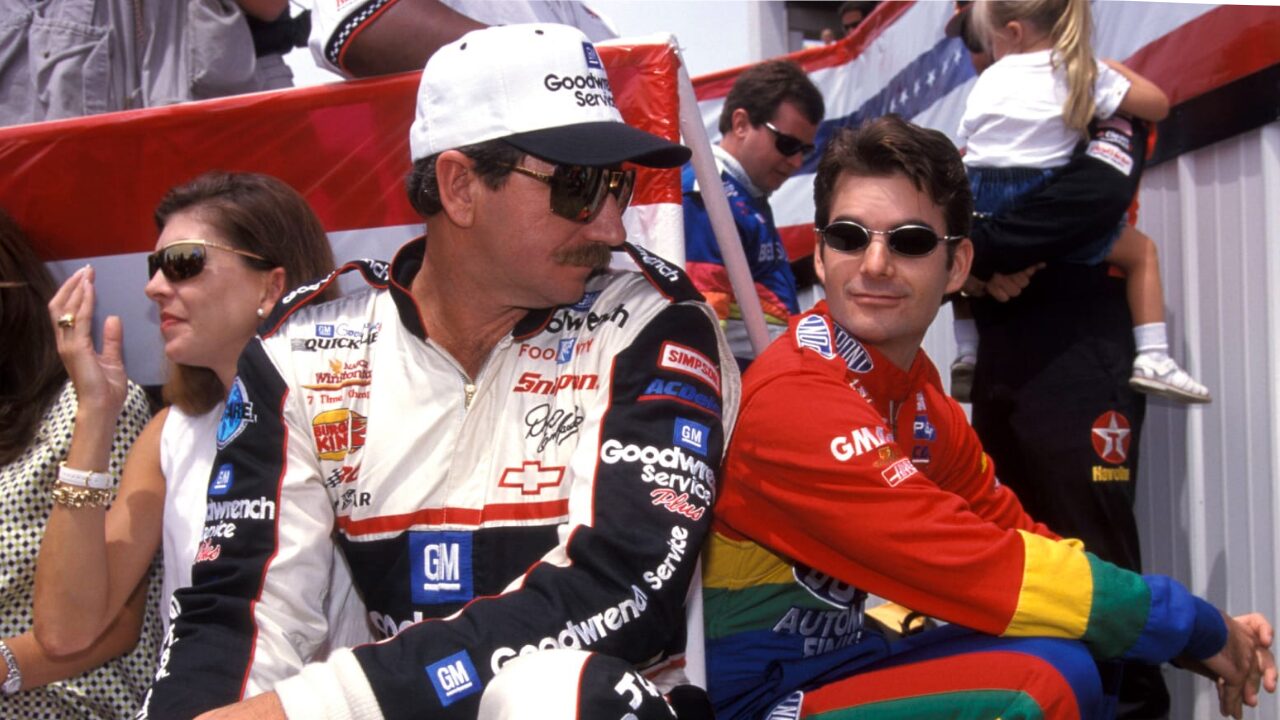
For fans, Dale Earnhardt and Jeff Gordon represented two completely different sides of NASCAR. The black No. 3 and rainbow No. 24 became symbols of a heated generational rivalry. Yet away from the track, Earnhardt quietly became one of Gordon’s most important mentors. Behind the public jabs was a relationship that helped Gordon understand racing, fame, and the business opportunities that came with being a NASCAR superstar.
Watch What’s Trending Now!
“I believe I brought up, hey, you know, I’m probably going to be signing a new deal. What should I be focused on? And he was like, he didn’t skip a beat, you know, likeness, you know, control your rights, and if you can manage it, manage it. And so I was like, okay. He didn’t say anything about money, right?” Jeff Gordon’s recollection on the Business of Motorsports podcast reveals just how different Earnhardt’s thinking was.
The seven-time Cup Series champion understood that a driver’s earning potential extended far beyond the paycheck received for driving a race car. Earnhardt had already built an enormous commercial presence around his No. 3 brand.
That business mindset also played into the relationship between Earnhardt and Gordon through Action Performance. The company became a major force in NASCAR merchandising, producing die-cast cars, apparel and other racing memorabilia.
Earnhardt recognized that Gordon’s rainbow No. 24 had enormous commercial potential. While fans could not have imagined it at the time, Earnhardt was benefiting from Gordon’s growing popularity while also encouraging his younger rival to capitalize on it himself.
The No. 3 had become a merchandising phenomenon, and Gordon’s colorful identity offered another opportunity to build a powerful brand. That advice ultimately became hugely important for Gordon.
Instead of focusing exclusively on his driving contract, he made sure his likeness and merchandising rights were protected. Gordon later recalled that Rick Hendrick was not particularly interested in the merchandising side of the business, giving Gordon the freedom to pursue it.
Looking back, Gordon considered that decision one of the best things he ever did. The impact went well beyond the merchandise business. Gordon eventually became one of NASCAR’s most recognizable commercial figures. He built business interests that included wine, an energy drink venture and involvement in motorsports-related development projects.
In many ways, Dale Earnhardt had given Jeff Gordon an early lesson that extended beyond simply becoming a better driver. The message was straightforward: control the value of your name.
Earnhardt understood that a driver’s career could eventually end. But a strong personal brand could continue generating opportunities long after the racing stopped.
For Jeff Gordon, that lesson arrived at exactly the right time.
How Dale Earnhardt helped Jeff Gordon handle the spotlight
Dale Earnhardt’s influence on Jeff Gordon was not limited to contracts and business. The older champion also understood what Gordon was experiencing as his popularity exploded. Gordon had become one of NASCAR’s biggest stars while simultaneously becoming one of its most polarizing figures.
Fans regularly booed him. For many Jeff Gordon supporters, that hostility was simply part of the experience of watching the sport’s newest superstar challenge the established order. Dale Earnhardt, however, offered Gordon a different way to view it.
He famously told Jeff Gordon, “As long as they’re making noise, you’re doing something right. It’s when they stop cheering or booing that you need to worry.”
That advice helped Gordon develop the thick skin required to operate at NASCAR’s highest level. The criticism was relentless at times, but Gordon continued producing results.
He won his first Cup championship in 1995 and went on to claim titles in 1997, 1998 and 2001. Gordon finished his Cup career with 93 victories, ranking among the winningest drivers in series history.
His success also helped transform NASCAR’s image during the sport’s explosive growth in the 1990s and early 2000s. Yet the irony was that Jeff Gordon and Dale Earnhardt were often portrayed as enemies.
Their contrasting personalities made the rivalry compelling. Earnhardt represented NASCAR’s old-school identity, while Gordon became one of the faces of its rapidly changing future.
On the track, they raced hard against one another. Away from it, however, they had a deep mentor-mentee relationship. Dale Earnhardt made sure that he helped Jeff Gordon in every way he could. And Gordon clearly listened and followed every single word ‘The Intimidator’ spoke.