
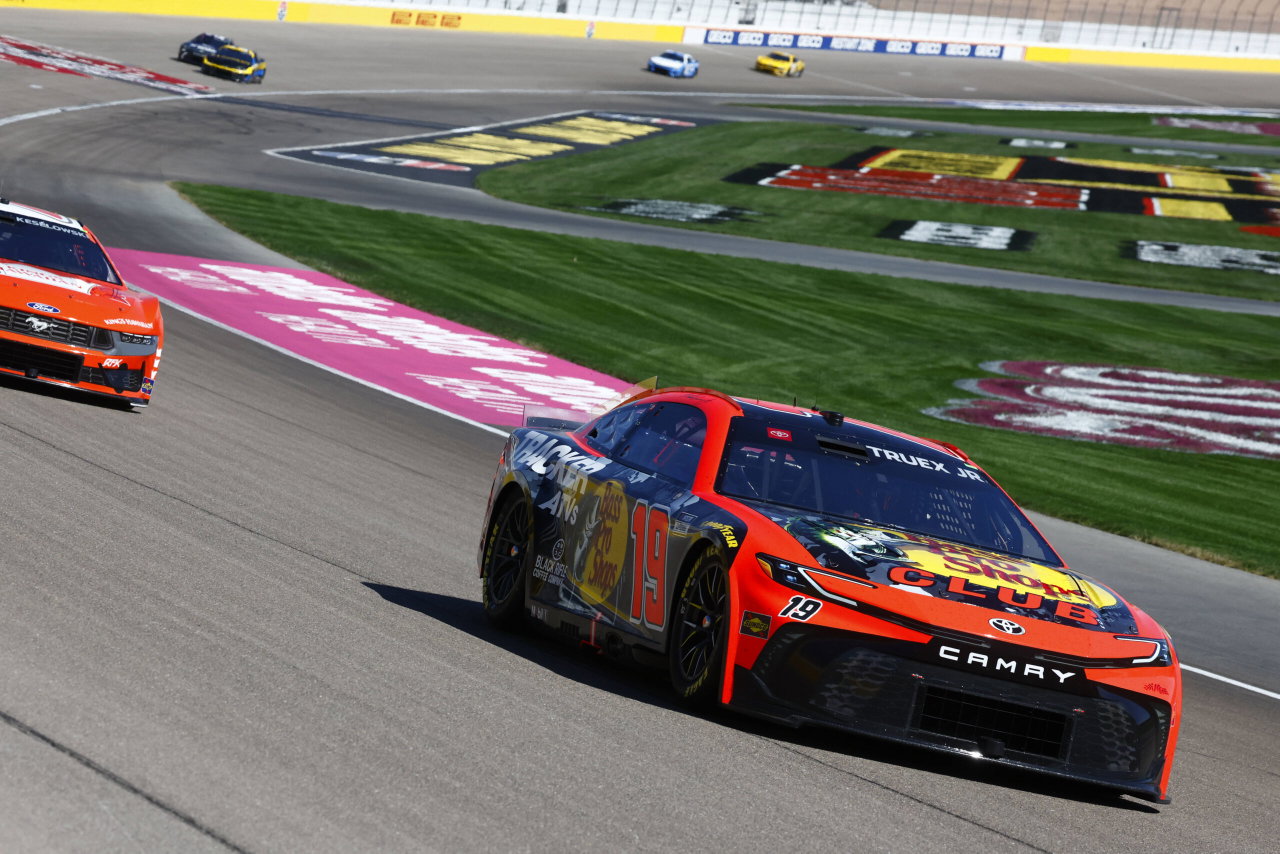
The Next Gen car was supposed to change everything about how NASCAR teams built speed. Engineers who had spent years hunting advantages in chassis and aero suddenly had a spec car and fewer places to look. James Small thinks one familiar name walked out the door at exactly the moment that mattered most.
Watch What’s Trending Now!
“He pretty much got out at the perfect time. Yeah, he really did because, you know, even at the back end of Gen 6, they started restricting chassis development. Like, they froze the chassis, you know. We used to go through so many iterations, like throughout the year, it would be like 19A, B, C, D, E, F, G cars,” James Small’s assessment of Cole Pearn’s departure on the Dinner with Racers podcast offers an interesting look at how much NASCAR’s technical environment has changed.
The Joe Gibbs Racing crew chief was describing an era when teams could continually develop their chassis and search for improvements throughout a season. Engineers could examine wind-tunnel findings, make adjustments, and bring revised versions of their cars to the track. Small explained that the strongest organizations could accumulate 700 to 800 hours in the wind tunnel, while Stewart-Haas Racing even had its own facility.
That kind of freedom gradually disappeared as NASCAR tightened development restrictions and moved toward the Next Gen platform. Small’s point is that the sport became a very different engineering challenge, with teams having fewer opportunities to develop major components and more emphasis placed on extracting performance from the areas still open to adjustment.
Instead of building an entirely new version of a chassis, teams now look for smaller gains through setup details, weight distribution, and other technical parameters.
Would SVG Be a Better Choice Than Brent Crews for the No. 11?
Small also mentioned how closely he monitors details such as weight when working with Chase Briscoe, because even marginal improvements can matter.
There is an important distinction, however, between Small’s interpretation and Pearn’s actual reason for leaving. Pearn announced his departure from Joe Gibbs Racing in December 2019, explaining that he wanted to spend more time with his wife and children.
He said the demands of travelling with NASCAR had meant missing important moments in his children’s lives, and he did not want to look back years later with regrets.
He did not announce that he was leaving because of the Next Gen concept or its eventual technical restrictions. Small is instead looking back at the timing and suggesting that Pearn stepped away just as the sport was moving into a less open development environment.
Pearn had plenty of reasons to be remembered as one of the most successful crew chiefs of his generation. He joined Furniture Row Racing as a race engineer in 2010 and became Martin Truex Jr.’s crew chief in 2015.
Their partnership produced 17 Cup wins and the 2017 championship with the No. 78 team. When Furniture Row shut down, Pearn and Truex moved to JGR for 2019, where they added seven more victories.
Their five-year run together included 24 wins and four Championship 4 appearances, making them one of the most productive driver-crew chief combinations of that period.
Leaving the pit box did not mean Pearn disappeared from motorsports altogether. He built a different life in British Columbia, where he and his wife run Golden Alpine Holidays, a large wilderness vacation property.
He also maintained some technical involvement in NASCAR. Since 2021, he has handled aerodynamic mapping work for JGR, using wind-tunnel data to help build simulations for different track types. He briefly returned to the spotlight in 2025 when he reunited with Truex for the Daytona 500, serving as crew chief for the No. 56 Tricon Garage entry.
Small’s comments also connect with concerns other NASCAR figures have raised about the development opportunities available under the Next Gen rules. Chase Elliott had warned about the risks of moving toward spec racing, arguing that tighter regulations could put teams in a narrower competitive box.
More recently, Adam Stevens, Christopher Bell’s crew chief, expressed support for opening up parts of the car. He said the ability to develop components and stay ahead of the competition was something he had enjoyed about the sport but felt was now missing. Chris Gayle, Denny Hamlin’s crew chief, also shared his enthusiasm for bringing back more room for innovation.
That does not mean the Next Gen project failed to deliver on everything NASCAR intended. When the car was unveiled, the series emphasized cost control, closer manufacturer relevance, improved safety, and a more level starting point for teams.
The use of common parts and approved suppliers was designed to make entering the Cup Series more manageable and reduce the escalating costs of in-house development. For newer organizations, that approach offered a genuine opportunity to compete without first spending years building an engineering advantage.
But there is a trade-off. The same restrictions that help control spending also limit the areas where engineers can experiment. Small’s recollection of the Gen 6 development cycle highlights what some in the garage miss: the freedom to build, test, revise and potentially uncover a major advantage.
Pearn did not leave NASCAR to escape that future, but Small believes the timing worked out remarkably well. And for crew chiefs who still enjoy the engineering battle as much as the racing itself, that is a change worth discussing.