
Imago
NASCAR, Motorsport, USA NASCAR Cup Series Championship Nov 5, 2023 Avondale, Arizona, USA Detailed view of the The Bill France Cup championship trophy prior to the NASCAR Cup Series Championship Race at Phoenix Raceway. Avondale Phoenix Raceway Arizona USA, EDITORIAL USE ONLY PUBLICATIONxINxGERxSUIxAUTxONLY Copyright: xMarkxJ.xRebilasx 20231105_mjr_su5_018
Imago
NASCAR, Motorsport, USA NASCAR Cup Series Championship Nov 5, 2023 Avondale, Arizona, USA Detailed view of the The Bill France Cup championship trophy prior to the NASCAR Cup Series Championship Race at Phoenix Raceway. Avondale Phoenix Raceway Arizona USA, EDITORIAL USE ONLY PUBLICATIONxINxGERxSUIxAUTxONLY Copyright: xMarkxJ.xRebilasx 20231105_mjr_su5_018
Imago
NASCAR, Motorsport, USA NASCAR Cup Series Championship Nov 5, 2023 Avondale, Arizona, USA Detailed view of the The Bill France Cup championship trophy prior to the NASCAR Cup Series Championship Race at Phoenix Raceway. Avondale Phoenix Raceway Arizona USA, EDITORIAL USE ONLY PUBLICATIONxINxGERxSUIxAUTxONLY Copyright: xMarkxJ.xRebilasx 20231105_mjr_su5_018
Imago
NASCAR, Motorsport, USA NASCAR Cup Series Championship Nov 5, 2023 Avondale, Arizona, USA Detailed view of the The Bill France Cup championship trophy prior to the NASCAR Cup Series Championship Race at Phoenix Raceway. Avondale Phoenix Raceway Arizona USA, EDITORIAL USE ONLY PUBLICATIONxINxGERxSUIxAUTxONLY Copyright: xMarkxJ.xRebilasx 20231105_mjr_su5_018
Long before playoffs, stages, and win-and-you’re-in rules were standardized, NASCAR and its championship format were built on endurance, consistency, and survival. When the sanctioning body was founded in 1948 and crowned Red Byron as its first champion the following year, the idea of a season-long points battle was simple: show up, finish races, and outlast the competition.
Watch What’s Trending Now!
Over the decades, however, NASCAR’s championship format has undergone some massive changes, reflecting the sport’s growth, commercial expansion, and changing fan expectations. Unlike other motorsports like Formula 1, NASCAR didn’t have the most stable and systematic points system, and heading into the 2026 season, there is yet another massive change.
The NASCAR Championship Format was initially based on prize money
Drivers raced in NASCAR’s first race at Daytona Beach in 1949, which would later become the location of the iconic Daytona International Speedway. While the sport would be much more standardized by then, the points system in 1949 was rather confusing. The points were tied directly to the prize money earned in races. This meant that the points varied in every race depending on the purse amounts. Winning a race with a shorter purse could mean getting fewer points than barely finishing within the top-10 in a race with a higher purse.
This system continued for years, but a variation was introduced in 1952. Points were awarded down to the 25th finishing place, and 200 points became the minimum points the winner was awarded in a race with a purse of $4,000 or less. This was done to acknowledge the growing field and the prize purse.
1968: Points were now based on the race length


The prize money system was scrapped in 1968, and NASCAR focused on awarding drivers points based on the race length instead. For starters, the winner got 50 points in races that were less than 250 miles in total length. For the races more than 250 miles but less than 399, the point tally was doubled, and the winner earned 100 points. Any more than that, the winner was awarded 150 points. Owing to the fact that this era was still dependent a lot more on the cars’ reliability, keeping the engine running for that distance in itself was worthy of points. Moreover, points were now awarded to all drivers within the top 50.
1972 – 1973: Adapting to the evolving sport
The sport started taking a modern approach this time, with the establishment of the Winston Cup Series (now called just the Cup Series). Any variables in the points system were removed, and the NASCAR championship format was standardized. The winner was given 100 points. Every driver down to the 50th position was awarded points, and they dropped by two with every loss in position.
At the same time, however, the drivers were given additional points for every lap they completed. This is where the track length system still existed. At tracks shorter than a mile, drivers would earn a quarter of every point, 0.5 points for one-mile tracks, and 1.25 points for the 2.5-mile superspeedways.
1974: Return of the prize money system
If you feel that NASCAR’s Championship Format in the playoff era was confusing, this took the complexity to another level. In 1974, the authorities came up with a rather interesting system, involving a lot of math. Understandably, it lasted for only one year. As per this system, a driver’s total starts were multiplied by the purse money. The result was then divided by 1,000. Rather confusing? Here’s how the formula looked:
Prize money × starts ÷ 1,000
Rather confusing, and it only lasted for that one season. It’s quite apparent why. But NASCAR was more open to change at the time, as they came up with a new system that lasted decades the following year.
1975: Full-season champion
NASCAR authorities finally landed on a much more standard and simple points system. Developed by Bob Latford, it was called the Latford System and was the longest-lasting championship format in the sport’s history up until then.
It was rather simple. The winner was awarded 170 points, and five points were dropped for every position up to the sixth place. Following that, four points were dropped for every position up until the 11th place, and then three points up to the last place.
Imago
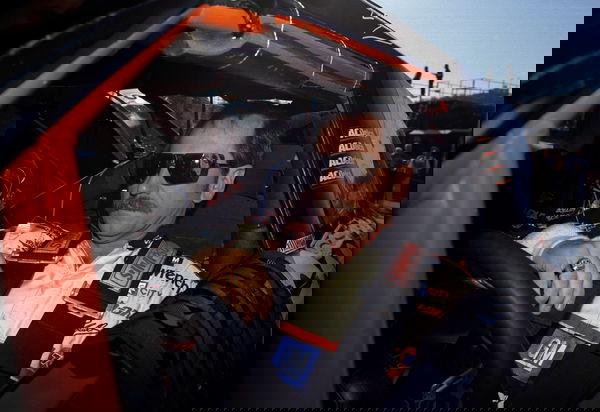
US Presswire Sports Archive Nov 1, 1997 Avondale, AZ, USA NASCAR, Motorsport, USA Winston Cup Series driver Dale Earnhardt Sr 3 at Phoenix International Raceway. Avondale Arizona USA, EDITORIAL USE ONLY PUBLICATIONxINxGERxSUIxAUTxONLY Copyright: xMarkxJ.xRebilas-USAxTODAYxSportsx 4037723
This was the NASCAR championship format that saw some of the legends like Richard Petty and Dale Earnhardt dominate the sport. Both drivers managed to clinch seven championships each, and this system is still missed by many to this date. It was ultimately changed in 2004.
2004: Chase for the Cup is introduced
The Latford points system continued. There was no change in that, with the winner still being awarded 170 points. However, after the 26th race of the season, the top-10 drivers would have their points reset to near-equal. But to reward their regular-season performance, there was a five-point gap between each position. The top-ranked driver entered the Chase with a 50-point bonus, second with a 45, and so on. This meant everyone started the Chase close together, but those who performed better in the Regular Season still had a small advantage.
There was a small variation made in this system in 2007, with the playoff field being expanded from 10 drivers to 12. The Latford system was still used, but this version added an extra ten-point bonus for every race win. These extra points were added to a driver’s total after the reset in the Chase.
2011: Farewell to the Latford System
For the first time in decades, NASCAR wasn’t going to use the Latford System to award points. Instead, they used an even simpler format for the races, awarding a single point per position. This ended up simplifying the points in the races, but the Chase system had some tweaks to it. The NASCAR Championship Format now includes two wildcard entries in the Chase for drivers ranked between 11th and 20th. The drivers with the most wins were given the entry, influenced by Jamie McMurray’s performance in 2010. He won some of the major races, yet didn’t make it into the Chase playoff.
2014: Elimination Playoffs
This witnessed a major overhaul in NASCAR’s point and championship system. The ten-race Chase was no longer used. The playoff field was expanded to 16 drivers, and the final ten former Chase races were divided into four rounds. This system prioritized winning races over anything else. The drivers could make it to the top-16 (the playoffs) just by winning a race throughout the length of the Regular Season. They just had to be in the top-30, which was almost guaranteed by winning a race. In a scenario where there would be fewer than 16 race winners, the remaining playoff spots were filled based on the points.
The playoff rounds that were introduced saw a reset after every three races. The drivers in the bottom four with the fewest points were eliminated, unless they had managed to win a race. By the season’s final race, only four drivers remained, dubbed the “Championship 4.” These drivers went all out to win the final race, and the winner would be declared the champion.
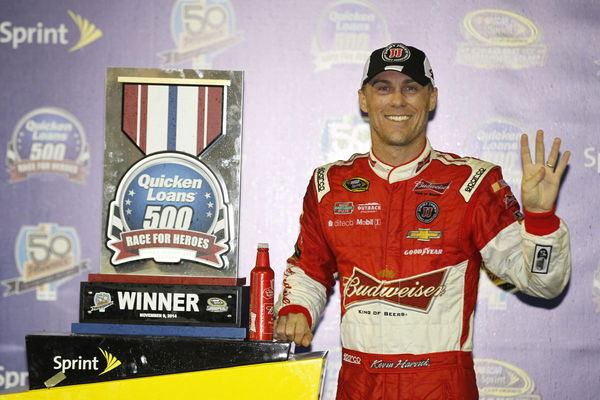
Understandably, this was rather confusing. But more than that, fans found it unfair to the drivers who had remained consistent throughout the length of a season, since this system only awarded the race winners. A single race win outweighed any number of top-five finishes any other driver had. Kevin Harvick was the first driver to win a championship in this format.
Imago
NASCAR: Nov 09 Quicken Loans Race Heroes 500, Avondale, AZ – Nov 09, 2014: Kevin Harvick (4) wins the Quicken Loans Race Heroes 500 at Phoenix International Raceway in Avondale, AZ.
2017: Stage racing and stage points
The elimination playoff system remained more or less the same, but with minor tweaks. Stage breaks and stage points were introduced in 2017, and the playoff races were split into stages. Stage points were awarded to drivers via race wins, stage wins, and Regular Season ranking. This put the drivers under pressure from the season’s start. The playoff points were carried through each round of the playoff, except for the Championship 4, still leaving uncertainty for the final race despite the year-long performance. This was the exact reason why this system was largely criticized, and NASCAR finally decided to scrap it.
2026: Return to The Chase
Announced quite recently, the authorities have scrapped the old NASCAR Championship Format, and the Chase will return from the 2026 season onwards. The system would be similar to the old Chase format, but the field will be increased to 16 drivers instead of 10. Moreover, race wins will no longer have the same weightage, as the top-16 drivers will qualify for the Chase and all will compete till the season’s final race for the Championship.
Some thoughts on the new championship format. I will miss elimination races a little bit but this will be better: @NASCARONFOX https://t.co/l7dD3PnT3Y
— Bob Pockrass (@bobpockrass) January 12, 2026
Many fans had been asking for the old Latford System to return. But that would also mean that the Championships would be decided weeks before the season actually ended, making the remaining races not as interesting. Returning to the Chase system was endorsed by iconic personalities like Mark Martin and Dale Earnhardt Jr, so NASCAR is rather confident with it. Now it will be an interesting aspect to see who makes the most of it in its first year of return.
Related Newsletters