
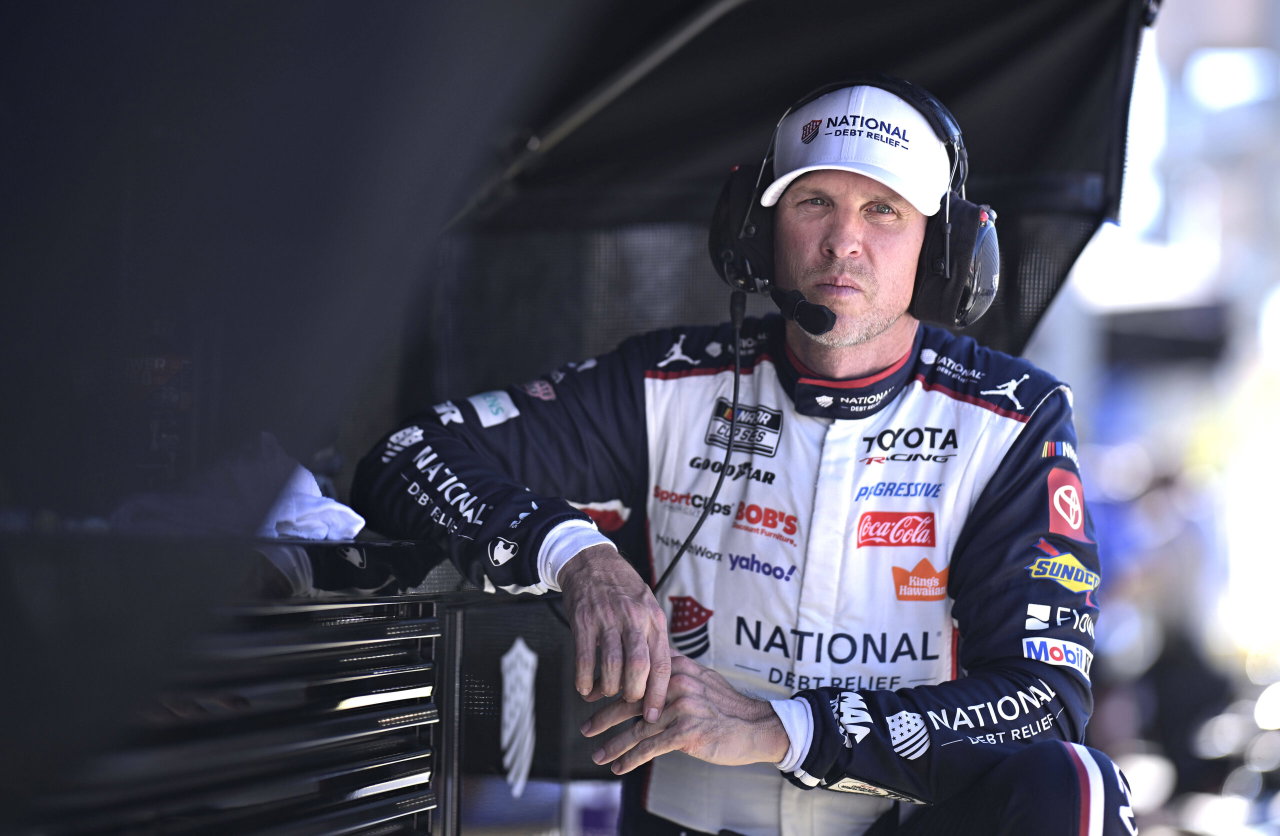
Putting NASCAR races back on broadcast television could help the sport reach more viewers, but Denny Hamlin wants teams to consider what they might lose in the process. The question is not simply whether more fans would watch races on network television. It is whether teams could afford the financial consequences of a deal that prioritizes exposure over media-rights revenue.
Watch What’s Trending Now!
In a short clip posted on X, Hamlin told Matt Weaver that he had raised concerns well before NASCAR’s latest television agreements became a talking point. He believes the reduction in broadcast-network races could hurt viewership over time, even if the arrangement made financial sense when the deal was negotiated.
The situation becomes much more complicated when the money reaching chartered teams enters the discussion. Asked whether more broadcast races could mean smaller payments for teams, Hamlin offered a hypothetical scenario that captured the stakes.
“What if NASCAR said, hey, we’re going to be on all networks, but your payments are going to be half of what they were?” he asked. “The team’s, I mean, I don’t know, how many survive that?”
For the 23XI Racing co-owner, the warning is not an argument against broadcast television. It is a reminder that a solution designed to improve NASCAR’s visibility could create a different crisis inside the garage.
Hamlin said he had expressed concern when NASCAR announced that nine network races would go away. The sport’s current seven-year media-rights agreements, which began in 2025 and run through 2031, spread Cup Series coverage across Fox, NBC, Amazon Prime Video and TNT Sports.
The new arrangement brought additional media partners and substantial financial benefits, but it also reduced the number of races available on over-the-air television. Only nine Cup events are scheduled annually on Fox and NBC, with the remaining races distributed across cable and streaming platforms.
That shift matters because broadcast television can reach viewers who do not subscribe to any particular cable package or streaming service. Moving races behind additional access requirements risks making it harder for casual fans to follow the championship, even if the media rights agreement delivers stronger short-term revenue.
Hamlin acknowledged that NASCAR had managed to put together an arrangement that made financial sense at the time. However, he believes leadership must evaluate the long-term consequences before negotiating the next deal.
The concern is already part of the wider debate around NASCAR’s audience. According to an Awful Announcing report examining The Chase’s viewership, the first six races of the 2026 postseason averaged 1.62 million viewers, barely above the 1.61 million recorded over the comparable stretch in 2025.
Charlotte’s October 11 race drew 1.48 million viewers on USA Network, down 15% from the previous year’s Charlotte Roval event. The comparison is not identical in terms of venue or race circumstances, but the figures underline why NASCAR’s distribution strategy remains under scrutiny.
The question is whether the sport can continue collecting strong rights fees without sacrificing the broader audience that makes those rights valuable in the first place.
For Hamlin, the financial consequences cannot be separated from the audience question. Chartered teams depend on revenue distributions to support expensive operations, and a major reduction in those payments could force teams to reconsider spending, sponsorship and long-term viability.
That is why he refused to suggest an easy bridge between the current arrangement and a future deal that might favor broadcast television.
“No idea. I’m not smart. Yeah, no idea,” Hamlin admitted when asked how NASCAR could manage the transition in the short term.
He then described the possible consequence of such a change: “If that’s the route, then it has to, there has to be a reset, then it’s just going to be a survival of the fittest, who can survive.”
There is another side to the equation, however. Hamlin acknowledged that races on broadcast networks could offer greater exposure to sponsors, potentially helping teams offset some lost media revenue through commercial partnerships.
That benefit is possible, but it is not guaranteed. Sponsors would need to see enough additional reach and engagement to justify paying more, and teams would still have to manage their budgets while waiting for any commercial gains to materialize.
NASCAR therefore faces a difficult balancing act. More viewers could strengthen its sponsorship appeal and improve the sport’s long-term position, but reducing the financial support teams receive could undermine the very competition the television deal is supposed to promote.
Interestingly, NASCAR CEO Steve O’Donnell has discussed the possibility of moving TNT’s Cup Series races onto broadcast television, according to a Heavy.com report.
O’Donnell indicated that he planned to meet with CBS Sports chief David Berson to discuss potential changes. The idea could involve moving or simulcasting races on CBS, though no final plan has been announced.
Such a move would illustrate how NASCAR might seek greater exposure without necessarily abandoning its existing media partners. It could also become part of a broader conversation about how the sport positions itself before the next rights negotiations.
Meanwhile, an analysis from another report in June 2026 raises a different possibility: whether streaming platforms such as Prime Video could offer NASCAR a stronger long-term home as traditional cable audiences shrink. Streaming may provide access to different audiences, but it does not automatically solve the accessibility challenge posed by moving races away from free broadcast television.
The sport also faces questions over how its audience is measured. As outlined by SBJ’s report, NASCAR returned to panel-only comparisons during 2026 while working with Nielsen on measurement methodology. That debate makes it important to distinguish between genuine audience changes and differences in how viewing figures are calculated.
Ultimately, Hamlin’s concern reaches beyond the next television negotiation. A deal that delivers more money today may still leave NASCAR with difficult questions about reach, sponsorship and competitive sustainability tomorrow.
His hypothetical 50% payment cut is not an actual proposal, but the question behind it is real: how much financial pressure can teams absorb in exchange for greater exposure?