
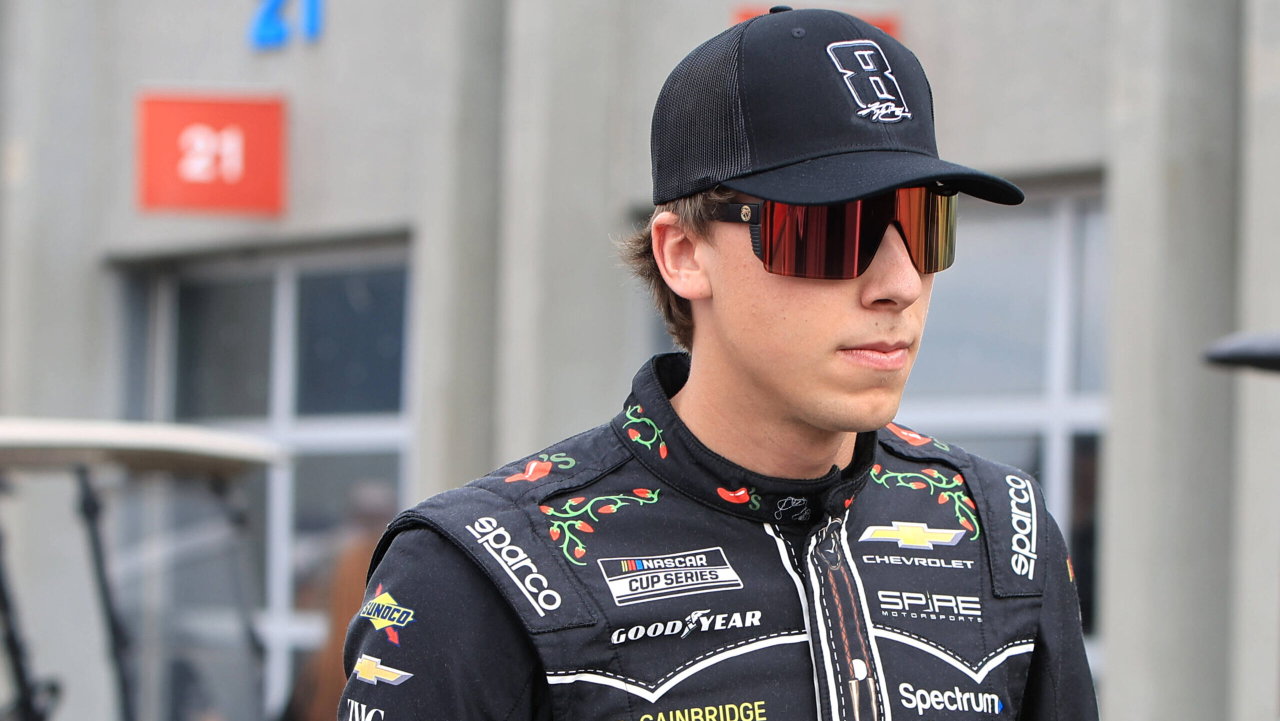
The rivalry between Carson Hocevar and Corey Heim did not start in Indianapolis. It began with their intense battle during the Truck Series in 2023, when harsh racing and scathing remarks set the stage for a conflict that has only become more intense over time. The two were at odds once more, as the Brickyard 400 added another chapter. However, Eddie D’Hondt, Heim’s spotter, claims that what transpired on the track was more about smart racing strategy than personal grudges.
Watch What’s Trending Now!
“It’s just tactical awareness, acumen of knowing how the race is unfolding, and so it was our job. Albeit he didn’t like it and we wouldn’t have liked it either to keep him behind us. That’s, that’s just how it goes, how it is, and so he was frustrated. I don’t blame him.”
Eddie D’Hondt, a spotter for Corey Heim and an employee of 23XI Racing, made those candid remarks while revisiting one of the most talked-about Brickyard 400 moments.
Teams were cycling through green-flag pit stops on Lap 91 when the exchange took place. Heim moved up to block the Spire Motorsports driver after leaving pit road ahead of Hocevar. But he let Denny Hamlin, his owner from 23XI Racing, merge ahead of them.
Carson Hocevar was unable to return to the lead lap as a result of the maneuver. This essentially stranded him behind the No. 67 Toyota. A displeased Hocevar gave Heim the finger as they sped down the front stretch. From D’Hondt’s point of view, there was nothing personal about the decision. Heim’s car was already on the lead lap, while Hocevar had just completed his stop.
Letting the faster Chevrolet through would only have increased the chances of Carson Hocevar recovering valuable track position later in the race.
Instead, the No. 67 team chose the tactically smarter option. He kept a quick rival pinned behind them for as long as possible. D’Hondt admitted Carson Hocevar had every right to be frustrated. But he also maintained that any crew chief and spotter would have instructed their driver to do exactly the same thing in that scenario.
Hocevar also acknowledged after the race that the rivalry remains alive, but he understood why Heim raced him the way he did.
“It’s fine. We don’t like each other, but we race really hard and his stuff’s super-fast, obviously. Yeah, the car he’s in, but he does a really, really good job with it. I’m looking forward to, when we get our stuff a little better, being in front of him, and maybe holding him off.”
Heim on the other hand brushed aside the growing attention surrounding the rivalry. Like D’Hondt, he too insisted that he was simply focused on beating the No. 77 on track rather than fueling any narrative.
“You guys love talking about a guy who finished ninth. I mean, holy c–p. All I did was make sure he stayed behind me, and I did and I finished in front of him. I don’t worry about a narrative or a genre. Like, he’s got a ton of talent and he’s going to win a lot of races, and I’m focusing on myself and trying to do the same, you know? That’s really all there is to it.”
Although the gesture made news, D’Hondt’s explanation gave a different impression. He saw the incident as smart racing at one of NASCAR’s hardest courses to pass on, not retaliation or residual animosity from their Truck Series days. If the positions had been reversed, Hocevar himself probably would have taken the same action.