
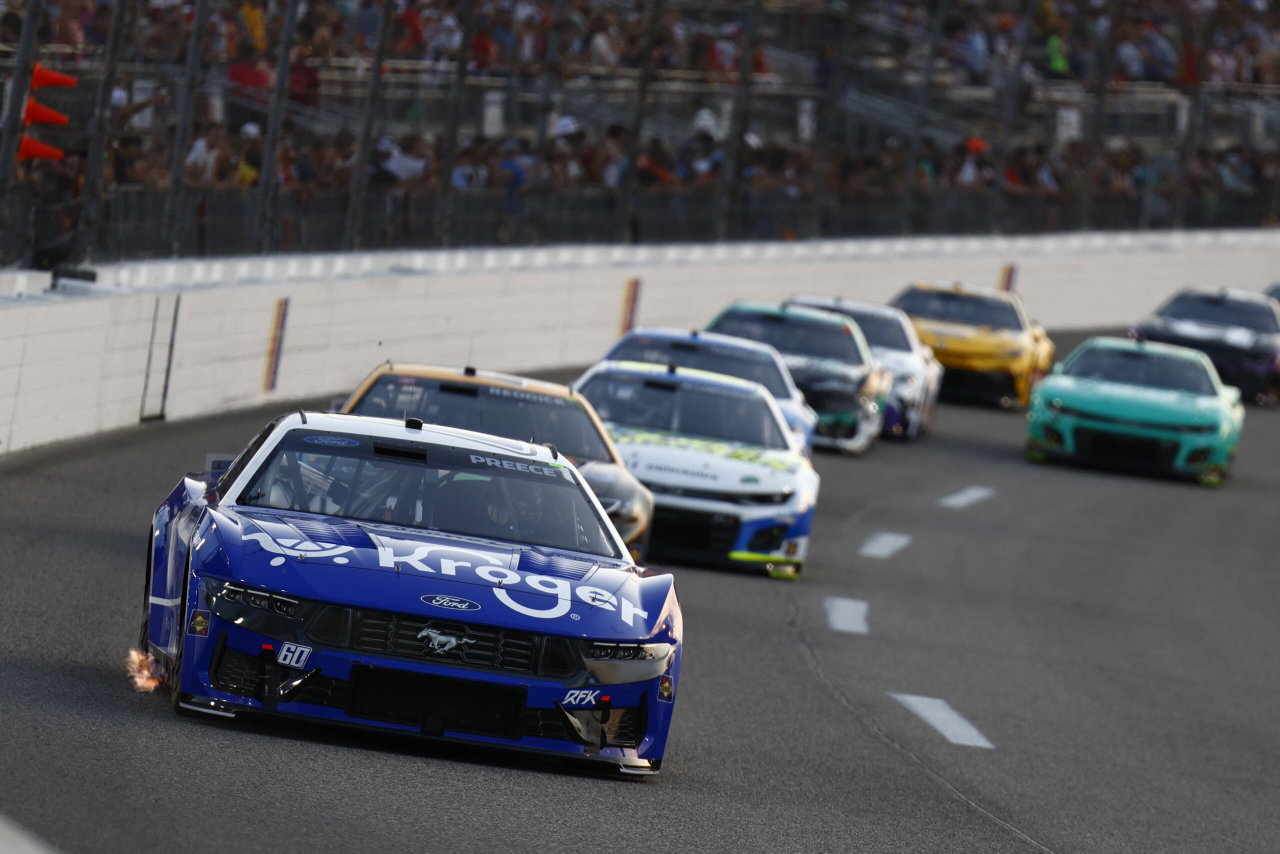
NASCAR has spent years looking for ways to make its racing more competitive, with changes to the cars often at the center of that discussion. But Ryan Preece believes the answer may not be another technical tweak. Instead, the RFK Racing driver wants NASCAR to put more of the outcome back in the drivers’ hands.
Watch What’s Trending Now!
For Preece, tire management is one area that could make a major difference. He believes meaningful tire wear would force drivers to think more carefully about how they attack a run, creating more variables and giving them more opportunities to make a difference on the track. His solution is surprisingly simple.
“It took 80 to 100 laps to get there, but once we got there, you saw guys start to struggle. I don’t want to see guys go out there and run 100 laps like they’re qualifying every lap. That’s not fun. That’s not that there is no strategy to that other than you did the best job in the shop making a car as fast as possible, which is great, which is what you’re supposed to be able to do, but I don’t want to get beat by another car. I want to get beat by another driver,” Preece said on the Door Bumper Clear podcast.
Preece’s main issue with the current Cup Series package is pretty simple. He wants tires to matter more. If a driver pushes too hard early in a run, there should be a clear price to pay later instead of the fastest cars being able to run near qualifying pace for most of the stint.
He brought up Bristol — where Preece finished 10th — when explaining what he wants NASCAR to move toward. Tire wear took a while to become a major factor there, but once it did, the racing changed. Some drivers started losing grip and speed much faster than others, which created more differences between the cars.
That kind of progression is important to Preece because it makes drivers pay for pushing too hard early. A driver might gain positions after a restart, only to lose them later after using up too much of the tire. It creates a decision that cannot simply be solved in the garage before the race begins.
Preece’s preference also reflects a broader push from drivers for Goodyear to produce tires that require more management. During the unpredictable 2024 Bristol race, severe tire wear led to repeated blowouts, forcing drivers to abandon their pre-race strategies and cruise at around 70% throttle simply to preserve their tires. Goodyear director of racing Greg Stucker later said the drivers themselves had been asking the manufacturer to take a more aggressive approach.
“The drivers have been pushing us to be more aggressive in our recommendations to be more aggressive in tire wear and let them manage the tires over the course of the run,” Stucker said to NASCAR media.
Denny Hamlin has also backed that idea. The Joe Gibbs Racing driver has repeatedly said he prefers tires with more wear and degradation, arguing that a tire losing performance is better than one that stays competitive throughout an entire stint.
Hamlin made the same point after last year’s race at the Charlotte ROVAL, where he praised Goodyear for creating significant tire fall-off. While the race itself received mixed reactions from drivers and fans, Hamlin saw the tire behavior as a positive step from the manufacturer.
Preece is not calling for tire degradation on its own. He also wants NASCAR to keep horsepower important, arguing that the three main ingredients of racing are horsepower, aerodynamics and tires. His preference is for all three to have a real impact during a race instead of one car being so fast that it controls the entire event.
That is why he has pointed to tracks like Martinsville and Richmond. Both can put more emphasis on changing grip and tire performance. Martinsville, in particular, has produced races where drivers had to pit during a run because their tires were no longer performing well enough. Preece sees those situations as a chance for strategy to become part of the race rather than just an inconvenience.
The Next Gen era has already brought a major change to NASCAR’s tire package. When the car was introduced, Goodyear switched to wider, 18-inch low-profile racing tires, replacing the previous 15-inch setup and increasing the footprint by about 1.5 inches. The slick tires are designed to maximize contact with the track during dry oval races.
Goodyear has continued to experiment with its tire package. At Iowa Speedway this season, the manufacturer introduced a new left-side tire with an updated construction and compound designed to increase wear and lap-time fall-off. The goal was simple: make tire management and strategy matter more over the course of a run.
That is ultimately what Preece wants to see. Rather than adding more complexity to the car, he wants drivers to face more decisions once the race begins. If they have to choose when to push, when to conserve and how much speed they can get out of a fading tire, the driver becomes a bigger part of the equation.