
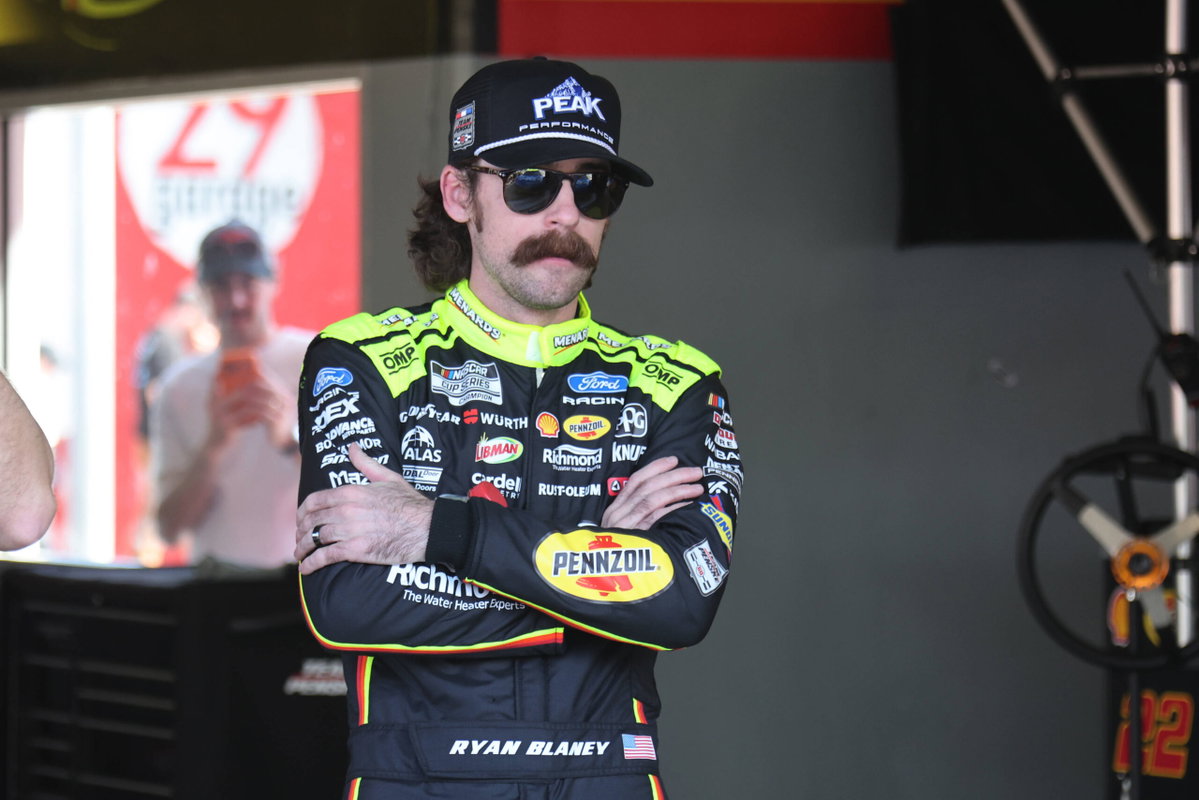
Ryan Blaney knows better than most that reaching NASCAR’s highest level is only one part of a much bigger racing story. The 2023 Cup Series champion has built an impressive career, collecting multiple victories and establishing himself as one of Team Penske’s leading drivers. His journey began in grassroots racing, progressing through Bandoleros, Legend cars and Late Models before reaching NASCAR’s national series. Along the way, he competed against several drivers who eventually became his Cup Series rivals. Now, Blaney is reflecting on the remarkable talent that never received the same opportunity.
Watch What’s Trending Now!
“I think that gets lost a little bit is just how much talent is out there that people might not get a shot, you know? And so I had a lot of people I either were friends with or kids, or a lot of people I looked up to that I raced with every weekend.” Ryan Blaney’s comments offer a glimpse into the side of racing that rarely receives the same attention as NASCAR’s biggest names.
Before becoming a Cup Series champion, the Team Penske driver spent his childhood competing against racers from different generations on short tracks. Some of those competitors eventually reached NASCAR’s national divisions, while others remained in grassroots racing despite their ability. Blaney’s own progression shows how much can depend on getting the right opportunity at the right time.
Blaney’s route to the top began remarkably early. Growing up in a racing family, with father Dave Blaney competing in NASCAR and grandfather Lou Blaney making his name in modified racing, he was surrounded by motorsports. Ryan started in Quarter Midgets before moving into Bandoleros and Legend cars.
By 14, he was racing Late Models, competing against drivers who were sometimes twice or even three times his age. Those older competitors became mentors, teaching him lessons that extended beyond what happened on the track.
His progression through the ranks gathered momentum in 2011, when he won the Casino Arizona 125 in the K&N Pro Series West. The following year proved especially important. Blaney made his NASCAR O’Reilly Auto Parts Series debut with Tommy Baldwin Jr., finishing seventh at Richmond. He also earned opportunities with Team Penske and won his third start in the Craftsman Truck Series at Iowa.
That performance helped establish him as a promising young prospect. He eventually became a full-time Cup driver and captured his first championship in 2023. By the end of the 2026 season, Blaney had accumulated 21 Cup victories.
Two familiar names from those early years followed similarly impressive paths. Bubba Wallace and Blaney began racing Bandoleros together when they were nine or ten. Their careers diverged during the Late Model years, with Wallace continuing to develop in a different division while Blaney pursued another route.
They crossed paths again in the K&N ranks, Truck Series, and eventually Cup. Wallace made his Cup debut in 2017 and became a full-time driver the following season. His first Cup victory came at Talladega in 2021, making him the second Black driver to win at NASCAR’s top level. He has since added two more victories, including the 2025 Brickyard 400.
Chase Elliott was another childhood competitor Blaney mentioned. The two grew up racing Legend cars and Late Models before moving into NASCAR’s developmental divisions. Elliott signed a driver development deal with Hendrick Motorsports in 2011 and won the 2014 O’Reilly Series championship at just 18.
He then reached Cup, where he captured the 2020 championship and established himself as one of the series’ leading drivers. Blaney, Wallace and Elliott represent three childhood racers whose paths eventually led to NASCAR stardom. However, their stories also highlight how uncommon that progression can be.
The short-track world has produced plenty of exceptional drivers who never became full-time NASCAR Cup competitors. Bubba Pollard is one prominent example. Widely regarded as one of pavement Late Model racing’s leading talents, Pollard built an impressive résumé through marquee victories and regional championships.
Yet his national-series opportunities remained limited, partly because securing the financial backing needed for a NASCAR deal proved difficult. His 2024 Xfinity Series debut at Richmond finally offered a wider audience a look at his ability. Starting 37th, he worked his way through the field to finish sixth.
Lee Pulliam and Philip Morris offer another example of the depth of talent in grassroots racing. Pulliam won four NASCAR Local Racing Series national championships, while Morris collected five. Their rivalry became one of the defining stories of Late Model Stock racing in the Southeast. Morris even recorded 23 victories during his 2018 campaign.
Despite those achievements, neither became an established Cup Series driver. Their accomplishments demonstrate that a driver’s reputation within short-track racing does not always translate into opportunities at NASCAR’s highest level.
Blaney’s reflections carry particular weight because he experienced both sides of that journey. His talent helped him progress, but opportunities and support also played important roles. The drivers he remembers from those early weekends deserve recognition too, even if their names never became familiar to the wider NASCAR audience.