
What a year it’s been for Corey Heim. On the back of winning the Truck Series last year, Heim found himself in Victory Lane twice in 2026, first in San Diego and then at the iconic Indianapolis Speedway. And to top it off, he has a full-time ride with 23XI Racing next season. The one bad news he got dealt with, however, was that he would not be eligible for the Rookie of the Year award in 2027, and that’s something Brad Keselowski blames on the system.
Watch What’s Trending Now!
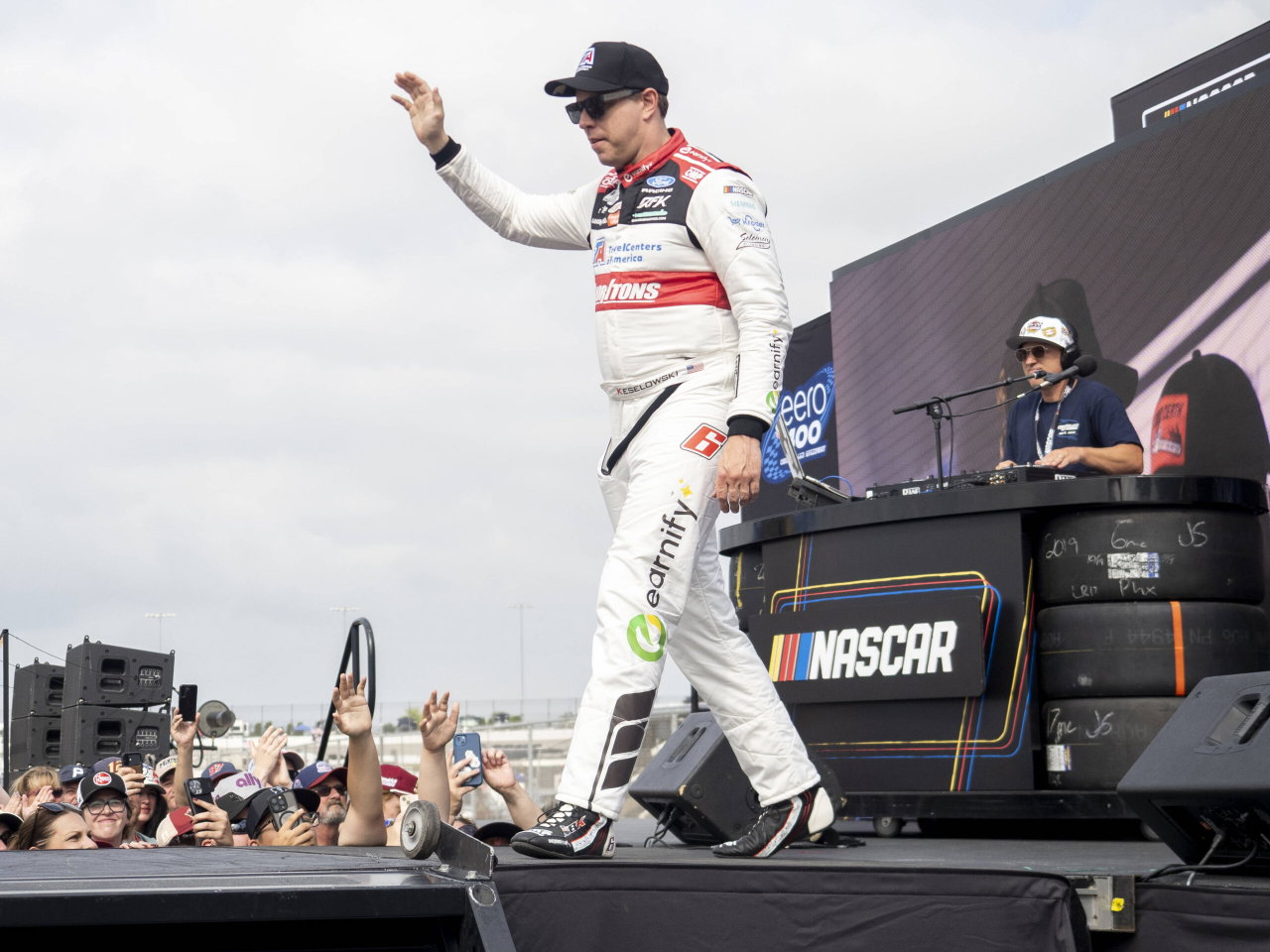
“I felt the same way,” Keselowski said to NASCAR journalist Tim Moore at the New Hampshire Motor Speedway. “I thought it was a farce. I thought the system was broken. It hasn’t changed, and unfortunately for guys like Corey, it’s a reality.”
Earlier this month, ahead of the Richmond race weekend, NASCAR suddenly announced a rule change. Only drivers with 12 or fewer Cup Series starts would be eligible for the Rookie of the Year award. Heim has had eight starts in 2026, bringing his career total to 15. A frustrating side effect of success for Heim.
“There’s some pluses and minuses to what Corey has done. He’s won two races this year. That’s phenomenal,” Keselowski added.
The RFK Racing driver understands how Heim must be feeling because he lived a version of it himself.
In 2009, drivers with more than seven Cup Series starts were ineligible for the ROTY award. After winning at Talladega, Keselowski chose to run 10 more races to gain experience at NASCAR’s highest level. But as he improved, he ultimately lost his eligibility for the award. That is exactly what he is arguing against.
“I think what is honestly not working for the sport, you know, the Rookie of the Year needs to mean something. It needs to carry weight. And the way it’s set up now, it disincentivizes the evolving process to win it to becoming a successful driver. So there needs to be a tighter line there for sure,” Keselowski said in the same interview.
NASCAR’s development pathway rewards drivers who see opportunities in the part-time Cup series. Gather experience and deliver results. Results, however, can erase the eligibility for the recognition that is supposed to celebrate the best new full-time talent.
Even more surprising was the fact that no one knew NASCAR was planning to make such a change. Denny Hamlin, who co-owns 23XI Racing with Michael Jordan, said the team did not take Heim’s ROTY eligibility into account when planning his part-time 2026 schedule because they had no idea NASCAR was considering the change.
“I wasn’t made aware of it, nor was I aware of what the plan was. I don’t think that we necessarily designated the certain amount of races based on that. It’s weird, because they did say ‘oh, that’s case by case,’ which usually you just have a number. But it sounds like they put out a number, but it’s a new number, maybe? I don’t know,” Hamlin said before the Cook Out 400 last weekend.
Keselowski’s critique is absolutely on point. Winning races should not automatically disqualify a driver from the recognition that marks the beginning of a Cup career. Until the criteria better align with the reality of modern driver development, the tension Keselowski described will keep happening, and the rookie of the year award will continue to lose some of the weight that it is meant to carry. Even Heim, who’s admittedly not losing sleep over this, said something on the same lines.
Corey Heim also spoke on the Eligibility rule
After finishing second at the Black’s Tire 250 in Richmond, everyone on track wanted to ask Heim what he thought about NASCAR’s bombshell. Like Keselowski, his concern was about what the award actually meant.
“My only problem with it really is, you know, you’re sort of losing value to that award. I think if you want that award to mean something, if you’re giving somebody a trophy and you say, “Here you go, you’re the best rookie.” Heim said.
He believes that the top-performing rookie should win the award, regardless of how many starts they have made in the series. Winning it just for the sake of it would hardly make the award feel meaningful.
This season, for instance, Connor Zilisch is the only driver classified as a rookie, meaning he will win the award regardless of his performance. In 2027, that will be Jesse Love, who has been confirmed for a full-time seat with Wood Brothers Racing, replacing Josh Berry.
Heim’s comments show that, while he accepts NASCAR’s decision, he still questions whether the current system rewards the best rookie performance. NASCAR has now set a firm 12-start limit for Cup Series rookies and requires drivers to apply for the award. That leaves Heim ineligible this season and next, despite already proving he can win at NASCAR’s highest level.
“I think last year or the year before we kind of put a line in the sand and said, ‘Hey, let’s make it easy for everybody,’ because it did get for a good while there a little bit confusing on not understanding how this person is a rookie with 20 starts last year or whatever. We put some numbers and parameters on there,” NASCAR’s Vice President of communications, Mike Forde said.
He was referring to the ROTY awards won by Ty Gibbs and Shane van Gisbergen, two drivers who emerged winners despite having 15 and 14 starts respectively in 2023 and 2025. Forde and NASCAR don’t want this becoming a norm.
However, Keselowski’s admission and Heim’s frustration point to the same underlying issue. The path that encourages young drivers to gain Cup experience through limited schedules can ultimately prevent them from receiving the very award meant to recognize their arrival as full-time competitors.