
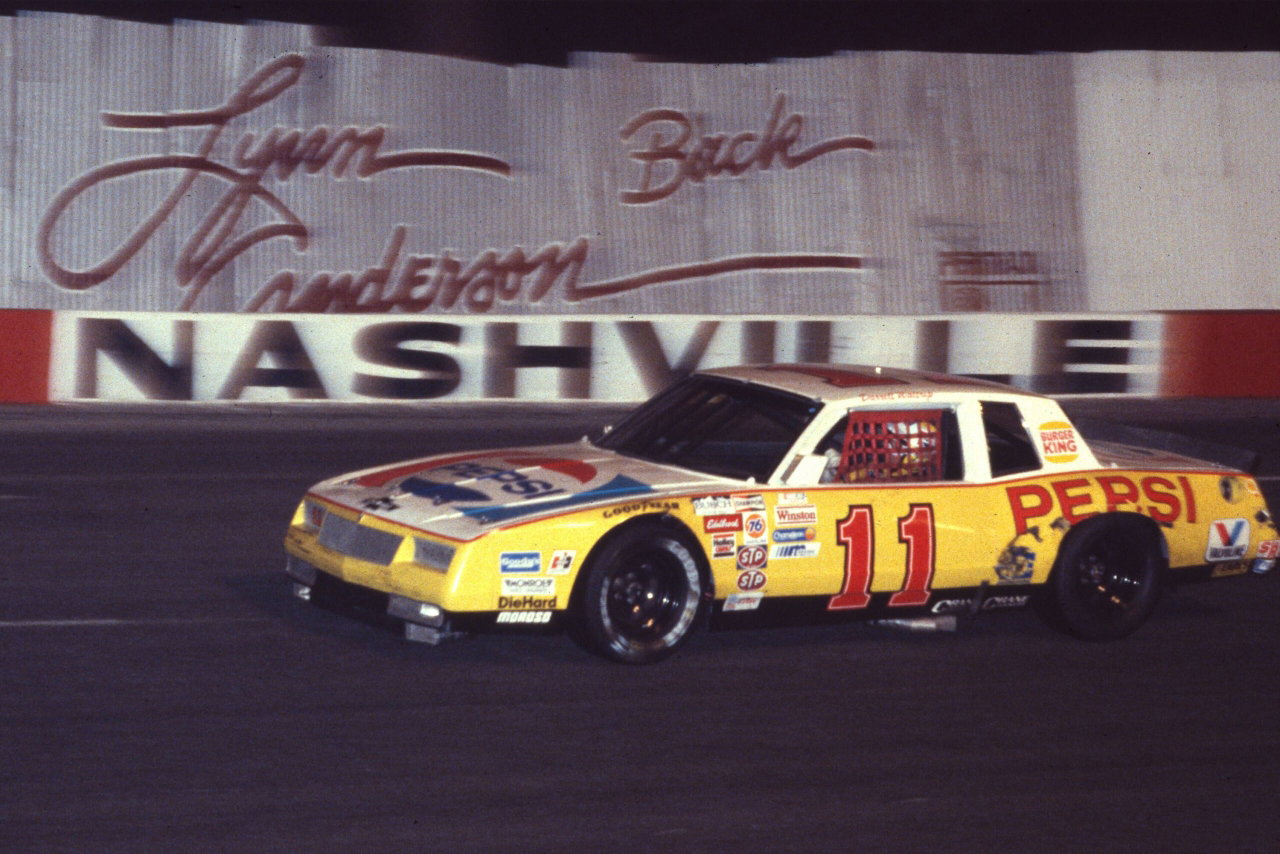
Day by day, the fight to keep NASCAR’s historic tracks alive is getting more intense. Fans continue to call for Rockingham, Road America, and North Wilkesboro to become permanent parts of the schedule again. But instead of offering hope, the ongoing fight over the Nashville Fairgrounds casts a dark shadow over the future of these cradles of American motorsport.
Watch What’s Trending Now!
The fight over the 122-year-old speedway is no longer just about whether NASCAR should return to a historic short track. It has become a test of whether motorsports can protect its historic venues as racetracks increasingly compete with housing, development, and commercial projects for valuable land.
That is why what happens in Nashville could matter far beyond Tennessee.
The fight for Fairground Speedway is no longer just a track fight
Should the Fairgrounds be restored to its former glory, or should locals use the land for affordable housing and other community spaces? This battle has become fully political in recent months.
Restore Our Fairgrounds, an anti-racing group seeking to remove the mandated auto-racing requirement from the city charter for Nashville Fairgrounds Speedway, is collecting signatures to put a charter amendment on the ballot.
The petition needs 41,000 signatures from registered voters by mid-September 2026. If it gets enough support, the amendment would go to a public vote and could permanently end racing at Nashville Fairgrounds Speedway.
“Our signature gathering effort is now underway, and our coalition looks forward to engaging with Nashvillains about the future of the fairgrounds speedway.” Mike Kopp, co-founder of Restore Our Fairgrounds, said, as reported by Nashvillescene news.
In April 2026, the judge, Chancellor Patricia H. Moskal didn’t rule in favor of the anti-racing group, stating that the title of the ballot was misleading because it read ‘Updating the Functions and Duties of the Metropolitan Board of Fair Commissioners (“Fair Board”)’ and the anti-racing group co-founders were establishing their case over ‘affordable housing’ that was misleading.
“The proposed amendment does not purport, on its face, to operate or name a state fair or otherwise do anything that the State Fair and Exposition Act regulates. Again, the fact that outdated language may continue to be used in the Metro Charter does not invalidate the proposed amendment that is limited to removing auto racing and adding affordable and workforce housing,” the judgment read.
“Kopp and Solomon’s proposed amendment would remove one of those listed activities, auto racing, and replace it with a new activity, ‘affordable and/or workforce housing.’ While the title of the proposed amendment refers only to “functions and duties” of the Board of Fair Commissioners, the subject of the proposed amendment removes a permitted activity on the fairground premises and replaces it with a new activity. Thus, the Court concludes that the title of the proposed amendment does not clearly express its subject and fails to meet the requirements.”
The petition effort has now moved into television, social media, and other forms of advertising. According to WSMV4 News, people wearing green T-shirts have been seen collecting signatures at various locations across the city, including grocery stores, events, and especially GEODIS Park, home of Major League Soccer side Nashville SC.
In July, hidden-camera recordings and resident complaints revealed that some canvassers pushing to ban racing at the Fairgrounds were allegedly making false claims that demolishing the speedway would make way for affordable housing.
NASCAR has not officially stated that the track may be demolished. Despite that, NewsChannel 5 reported that, according to a hidden investigation, some petitioners were telling people that the speedway was going to be demolished. This has raised serious questions about whether signatures are being collected through misleading or fraudulent claims.
NASCAR and Speedway Motorsports do not own the land and cannot unilaterally demolish a city facility. The Fairgrounds Speedway is protected under the Metro Charter of Nashville and Davidson County. The obligation of the Metro Charter is that the city government must preserve historical activities, explicitly including auto racing at the fairgrounds site.
Not just this, they also had “petitioner circulator” jobs posted as early as Friday, paying workers $22 to $24 per hour. Now, again two weeks after this controversial move, the anti-racing group released a video on YouTube, featuring AI-generated people posing as Nashville residents to promote their agenda against racing at the fairgrounds.
One of them said, “We don’t need a big, expensive sports deal pushed by out-of-state NASCAR billionaires.”
This legal battle and dispute matter far beyond Nashville. The Fairgrounds can definitely be seen as a test of whether NASCAR can demonstrate that a historic track remains a valuable asset and part of a modern-day city.
Even Dale Earnhardt Jr. expressed his disbelief and concern about this illegitimate practice and raised certain questions.
“My question is, if it’s true, which there’s video evidence of these folks seeking these signatures, stating false information or just incorrect information, how can that not be taken to de-legitimize the 50,000, 60,000 signatures they need?” said Dale Jr. on an episode of The Dale Jr. Download. “They are using actual government letterhead to give this to the residents. That’s the moment it becomes a legal matter.”
If NASCAR loses this historic track, it’ll also lose the opportunity to show how historic racing facilities can survive urban development pressures. NASCAR will for sure have to prove that preserving racing is in Nashville’s broader public interest.
NASCAR may be fighting the wrong battle
Inside the racing community, the case seems obvious. The track has existed in some form for more than a century and is one of the most unique short-track venues in America.
It’s the second-oldest continuously operating racetrack in the country, a historic part of the sport where legends like Richard Petty, Bobby Allison, and Darrell Waltrip won multiple major NASCAR races.
The fairgrounds have hosted motorized competition since 1904. NASCAR’s premier series ran there from 1958 until 1984. Dale Earnhardt Jr. raced late models there as a young driver, returned in 2026 for a CARS tour event that drew a near-capacity crowd, and has repeatedly called the track part of the sport’s living history.
“I’d love for the racetrack to be here. I love for there to be grassroots short-track racing here. I think what they have right now is a great balance. If they’re able to continue down this path and allow the track some ability to renovate and improve some of the facility with fans and so forth, I mean, I’d love this place to stick around in any shape and form,” Dale Jr. told NASCAR journalist Steven Taranto in April 2026.
However, these arguments and emotions are only powerful inside the racing community. They’re not necessarily persuasive to a Nashville resident who doesn’t follow — or frankly care enough about — NASCAR.
What will the project benefit him? Will it create opportunities for him? Will it bring more tourism, or is it going to create affordable housing as claimed by petitioners? That’s what an average resident with no ties to the sport would ask those advocating to save it.
The track’s history is a strong argument for why the venue matters, but it may not be enough to convince residents, city officials, and taxpayers to support a particular redevelopment plan. The people who matter most are the voters who will ultimately decide. That means the argument has to move beyond nostalgia and focus more on public policy.
The housing argument also cannot simply be dismissed as propaganda. According to Realtor.com, Nashville has a shortage of homes for middle-income earners, who face the largest gap in supply. So Nashville does face real housing pressure, and affordable housing is a legitimate concern.
The residents will need a very transparent comparison rather than slogans. The pro-racing side should commission an independent economic impact analysis that compares the full life-cycle value of both options.
That analysis should include land use assumptions, tax revenues, infrastructure requirements, housing, affordability, construction costs, employment, visits, pending, and public risk. It should also distinguish between gross economic activity and actual net public benefit.
A race weekend can generate substantial spending, but not every dollar spent by visitors becomes municipal revenue. Similarly, housing can provide tax revenue and meet a real public need, but construction also requires infrastructure, public services, and financing. A serious debate has to consider both the benefits and the costs.
The petition controversy raises serious questions over public trust
The petition campaign has also sparked a debate over public trust, after complaints that some canvassers allegedly made misleading claims about the proposal, including saying that the speedway had already been demolished. Former Metro Council member Zack Young also filed a complaint alleging that a paid petition circulator misrepresented what the proposed charter amendment would do.
“They’re lying to people, and they’re saying that this is about affordable housing. The way that that petition language reads, not one single unit of additional affordable housing will be built. The only thing that happens is that this racetrack will cease to exist. There will be more land for a billionaire like John Ingram to build parking garages or more apartments that don’t have to be affordable.
“They have said that the racetrack is already demolished. Doesn’t look like it to me. One of them said that there was a fire in half the grandstands that burned down. Doesn’t look like it to me. They’re saying that the Metropolitan Development and Housing Agency is going to build all sorts of affordable housing out here. Just lie after lie after lie,” Young stated.
He also said around 340 people have asked Davidson County election officials to remove their names from the petition. These allegations need to be investigated carefully because they raise some legal obligations and questions.
They should not automatically invalidate every signature or prove that every person associated with the Campaign acted improperly. But they are serious ballot initiatives that depend on informed consent.
The voters need to know and need to understand whether they are signing to preserve the race, ban it, or promote affordable housing, or simply play a question before the electorate.
The pro-racing side needs a well-informed, fact-based public information effort. NASCAR, Speedway Motorsports, and Nashville officials should work together to create a centralized Fairgrounds fact-checking resource.
The document should publish its sources, assumptions, and uncertainties. It should also acknowledge what remains unresolved. Credibility will be stronger if NASCAR admits that the proposal has costs and risks rather than presenting every criticism as anti-racing misinformation.
The dispute has become more complicated because Fairgrounds Speedway sits next to GEODIS Park. John Ingram, Nashville SC’s lead owner, has previously raised concerns about major upgrades to the racetrack. Local reports noted his worry that two large venues next to each other could compete for concerts and other events while also creating traffic and neighborhood issues.
In 2023, Ingram argued that an expanded racetrack could affect Nashville SC’s business and pointed to the financial commitments tied to GEODIS Park, including the stadium, revenue bonds, and other construction investments.
His position was not that he opposed racing altogether, but that a much larger facility could create operational and financial problems for both venues.
That is a legitimate concern. A renovated Speedway could bring more traffic, parking pressure, scheduling conflicts, and competition for concerts. At the same time, the two venues could potentially benefit from coordinated scheduling, shared infrastructure, and a broader sports and entertainment district.
Speedway Motorsports has argued that the facilities can coexist within the Fairgrounds.
“I’ve reached out to [John] Ingram and his office many times and never had a call back,” Marcus Smith, CEO of Speedway Motorsports, said on the Dale Jr. Download podcast. “I wish that he would. I don’t understand it. I’ve never had anything like it.”
Therefore, the issue should be looked at on its merits rather than made personal. It would be unfair to label John Ingram as anti-NASCAR or anti-racing without clear evidence to support that claim.
Earlier narratives sometimes portrayed the project as a case of national taxpayers subsidizing NASCAR. But the proposed model involved Bristol Motor Speedway renovating and operating Fairgrounds Speedway through a long-term partnership. Supporters argued that the deal could shift around $40 million in deferred maintenance, debt, and ongoing costs to Bristol while giving the city a professional operator for the facility.
That does not mean the proposal is risk-free. Earlier versions involved public financing and significant capital investment, so taxpayers are right to ask about the financial structure, guarantees, and what happens if the project falls short.
Public support should not be built around a headline alone. Still, the financial case may be more favorable to NASCAR than the sport has communicated. The status quo is not cost-free either. Supporters of the Bristol partnership say Fairgrounds Speedway has more than $40 million in deferred maintenance and ongoing obligations.
If the partnership is rejected, Metro could remain responsible for those costs, as well as the expense of maintaining, repurposing, or decommissioning the facility. That creates a potential financial argument for preserving and professionally operating the speedway rather than allowing the historic venue to become an unfunded liability.
The public should also be shown the downside. What happens if the Cup race does not perform as expected? What if concert bookings fall short or development costs rise? A credible business case should explain not just the best-case scenario, but also who carries the risk if things go wrong.
The strongest version of the project is one that turns the Fairgrounds into a year-round motorsports and entertainment venue while preserving a historic public asset and creating measurable value for the community.
That could include NASCAR Cup Series races, local and regional short-track racing, concerts and festivals, driving experiences, community events, hospitality, corporate events, and other non-racing activities. It could also include job training and workforce development programs.
That distinction matters. A single Cup race may generate revenue and attention, but it cannot justify a major public redevelopment on its own. A multipurpose venue has a better chance of serving Nashville throughout the year, while also making it easier to compare the project with GEODIS Park.
Rather than treating the two venues as rivals, Nashville and Speedway Motorsports could coordinate their calendars, transportation, parking, and shared infrastructure. The question is not simply whether the two venues can coexist. It is whether they can work together to create one of Nashville’s strongest sports and entertainment districts instead of competing for the same events.
And there is one important piece that cannot be ignored: the local community. Residents near the Fairgrounds should not be expected to accept more noise and congestion simply because the speedway is historic. At the same time, they should not be dismissed as people who do not understand racing.
Their concerns are real and can be measured. A formal neighborhood advisory group should be established before final approval, with access to project documents, regular meetings with operators, and a clear process for addressing complaints.
NASCAR and Speedway Motorsports should also commit to measurable community benefits, including local hiring, youth and motorsports programs, community-use days, and investment in the surrounding neighborhood.
Once those commitments become enforceable, residents will have a clearer idea of what they are getting, what is expected of the project, and who is responsible if those promises are not met. That could change the political conversation from NASCAR vs. Nashville to a discussion about what the Fairgrounds can actually do for the city and its people.
Dale Jr. might be the best ambassador for NASCAR for this fight
Dale Earnhardt Jr.’s connection to short-track racing and credibility among fans make his support valuable, but celebrity advocacy has limits. Dale Junior saying “save the grounds” will resonate strongly with NASCAR followers.
It may mean little to a national voter who does not watch racing. The opportunity is to ask Dale Jr., Denny Hamlin, and other respected figures to explain why the venue matters to Nashville.
They should discuss local jobs, tourism, youth programs here around events, historic preservation, and responsible neighborhood management. Not merely because they want another race. The same applies to Speedway, motorsports, President Marcus Smith, and Chief Executive Jerry Caldwell.
They both should answer the operational questions directly, including why the company believes it can restore the facility. How the partnership would work and what commitments it is prepared to guarantee.
But what if NASCAR loses?
We have two scenarios, but let’s start with the positive one. If the restoration efforts succeed, the Fairgrounds could once again host a genuine urban short track and return to NASCAR’s national schedule. Bristol Motor Speedway would also gain another facility under the Speedway Motorsports portfolio.
A successful project could give NASCAR a strong short-track venue and a major annual event, while also showing how racing can work alongside other sports and entertainment facilities. It could become a model for privately operating neglected public racing properties while preserving their history and redeveloping them for modern use.
But simply securing a lease or bringing back a Cup Series race would not guarantee success. The project would ultimately be judged by attendance, public costs, its impact on the neighborhood, whether the promised investment actually arrives, and how well it works alongside nearby venues.
Now, consider the uncomfortable scenario in which NASCAR loses the Fairgrounds. It would mean more than losing a single event. The sport could lose a 122-year-old racing institution in a major American city, raising questions about whether enough was done to preserve one of its historic venues.
That would also raise concerns about the future of other historic tracks facing development pressure, including North Wilkesboro, Martinsville, and other urban or near-urban venues. The tracks are not identical. They mostly have different owners, local economies, and political challenges. But the underlying problem remains that historic racing venues are increasingly competing with other uses for valuable land.
Racing properties occupy valuable land, while housing, stadiums, commercial projects, or mixed-use developments can offer cities a different vision for the future. Opponents at other tracks could point to Nashville as an example, arguing that historic racing venues can be sacrificed when residents raise concerns about noise, traffic, public spending, and land use.
Fairgrounds Speedway could become a test case for NASCAR’s future. If NASCAR succeeds, Nashville could become a blueprint for protecting historic tracks across the country. Other racing venues could point to the Fairgrounds as proof that they can create jobs, attract visitors, support local businesses, preserve local identity, and serve as modern entertainment districts.
If NASCAR fails, opponents at other tracks could use Nashville as their own blueprint. They could argue that historic racetracks can be replaced with housing, commercial development, or other projects that make better use of valuable land.
The debate could then shift toward housing, land value, noise, traffic, and public spending until racing becomes politically expendable. That would make the Fairgrounds fight about much more than one historic oval. It would become a test of whether NASCAR is prepared to defend its heritage with arguments that make sense in the modern world.