
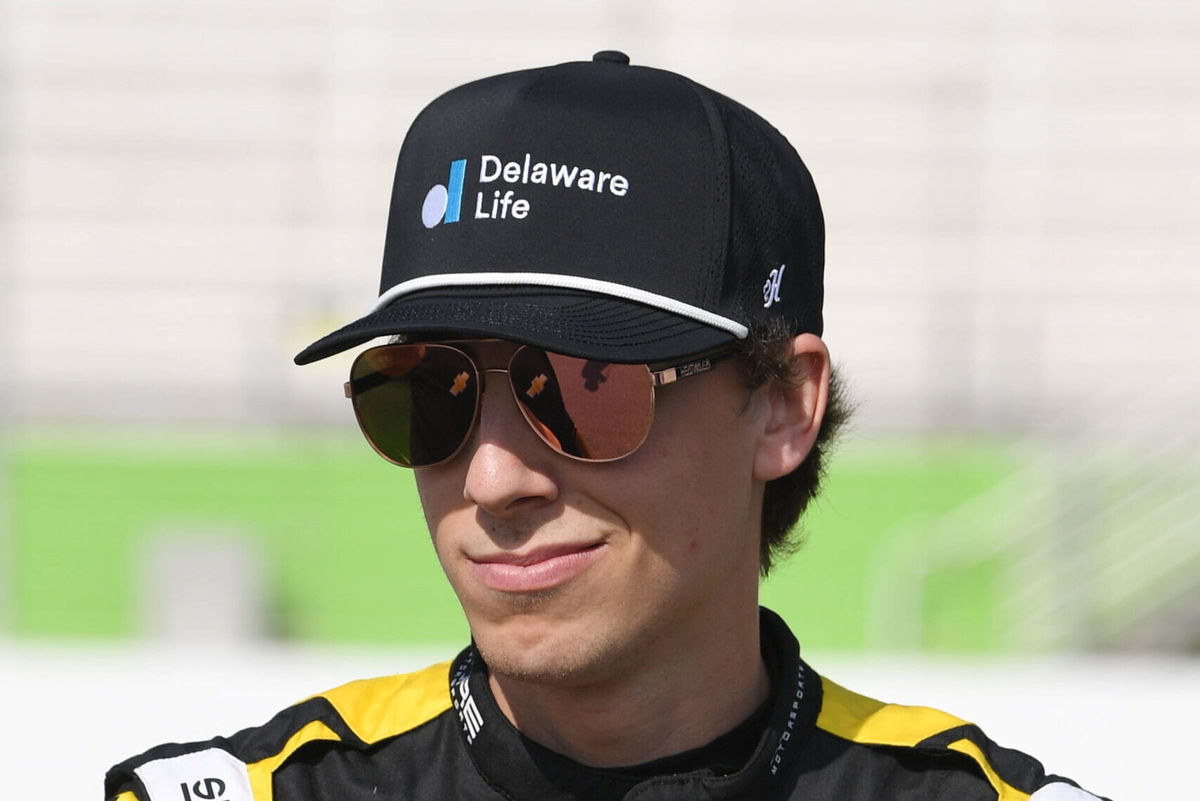
NASCAR’s midweek media calls often give drivers a chance to address the biggest talking points surrounding them, and this week, Carson Hocevar was the man in the spotlight. During a Zoom call with the NASCAR media, the Spire Motorsports driver was asked by Bob Pockrass about the growing tension between him and some of his Cup Series rivals. Hocevar, however, offered an answer that appeared to put performance ahead of relationships, suggesting that if he is fast enough, it will not matter who in the garage likes him or not.
Watch What’s Trending Now!
“Ultimately, I feel like if we’re fast enough, it’s gonna benefit them to work with you, anyways. There’s a lot of times when I am getting pointed out, because we’re fast by even guys that I have had bad races with. It’s all relevant,” Hocevar told Bob Pockrass when asked whether he needs good relationships with other drivers to be successful on the track.
Hocevar’s answer offers a straightforward explanation for why he believes the reported garage boycott should not concern him. In his view, speed changes everything.
If his Spire Motorsports Chevrolet is fast enough, other drivers will have a reason to work with him regardless of their personal feelings. There is some truth to that argument. But it also conveniently leaves out why some drivers may not want to help Hocevar in the first place.
Since arriving in the Cup Series, Hocevar has developed a reputation for aggressive racing and has managed to find himself in disputes with a long list of competitors. His latest confrontation came at Darlington, where he made contact with Brad Keselowski and sent the RFK Racing driver spinning. Keselowski did not take the incident lightly, warning that Hocevar’s “day is coming and it’s coming hard.”
What made the situation worse was Hocevar’s reaction. Rather than accepting responsibility, he initially responded with a laugh and, “He spun.” He later offered a more detailed explanation, describing the contact as the kind of thing that happens when two drivers are racing hard.
That attitude is important because the issue is not one isolated incident. Hocevar has spent much of his Cup career developing an image as the driver who will make aggressive moves and deal with the consequences afterward. That can make competitors think twice before giving him the same cooperation they might offer another driver.
Denny Hamlin has already suggested that this is Hocevar’s real problem. Earlier this year, after an Atlanta race where Hocevar found himself without the drafting help he needed late, Hamlin linked the situation to Hocevar’s history with other drivers and compared it to the kind of relationship problem Joey Logano once faced.
“I mean, there are drivers, and there were drivers in our meeting today that said no matter what, they will not push Carson Hocevar to a victory. Absolutely not. They’ll push anyone else,” he revealed on the Actions Detrimental podcast back then.
That makes Hocevar’s latest explanation feel incomplete. Yes, Spire’s lack of speed is a legitimate factor. Chevrolet has struggled throughout 2026 after introducing its redesigned Cup body.
The new package was supposed to bring improvements, but the Bowtie teams have spent much of the season searching for performance while Toyota has established itself as the dominant manufacturer. Even Hendrick Motorsports, Chevrolet’s flagship organization, has endured an unexpected slump.
So Hocevar is not wrong to point toward his equipment. At Darlington, he started 34th and charged forward to finish 11th, ending the night as the second-highest-finishing Chevrolet behind Kyle Larson. Even Hocevar acknowledged that the Toyotas were “stupid-fast” and called his result the best his team could realistically achieve.
But equipment cannot explain everything. A driver can control how he races his competitors. He can choose when to make an aggressive move, how much room to leave, and how he handles the aftermath. Hocevar has repeatedly chosen a confrontational approach, and now he is dealing with the consequences of that reputation. His second explanation about the limitations of improving an underperforming car only reinforces the point.
“I can only go as fast as we can get our cars,” Hocevar said. “I can’t go to the race shop and just have my guys sit out longer there and instantly go faster. That’s a difficult reality at times for drivers.”
The frustration is understandable. Hocevar cannot personally redesign the Chevrolet or manufacture more horsepower. But he can improve his racecraft, his decision-making and the relationships he has with the people he races against.
That is the part of the equation his “if we’re fast enough” argument does not address. Speed may make competitors work with him. But respect might determine whether they want to.