
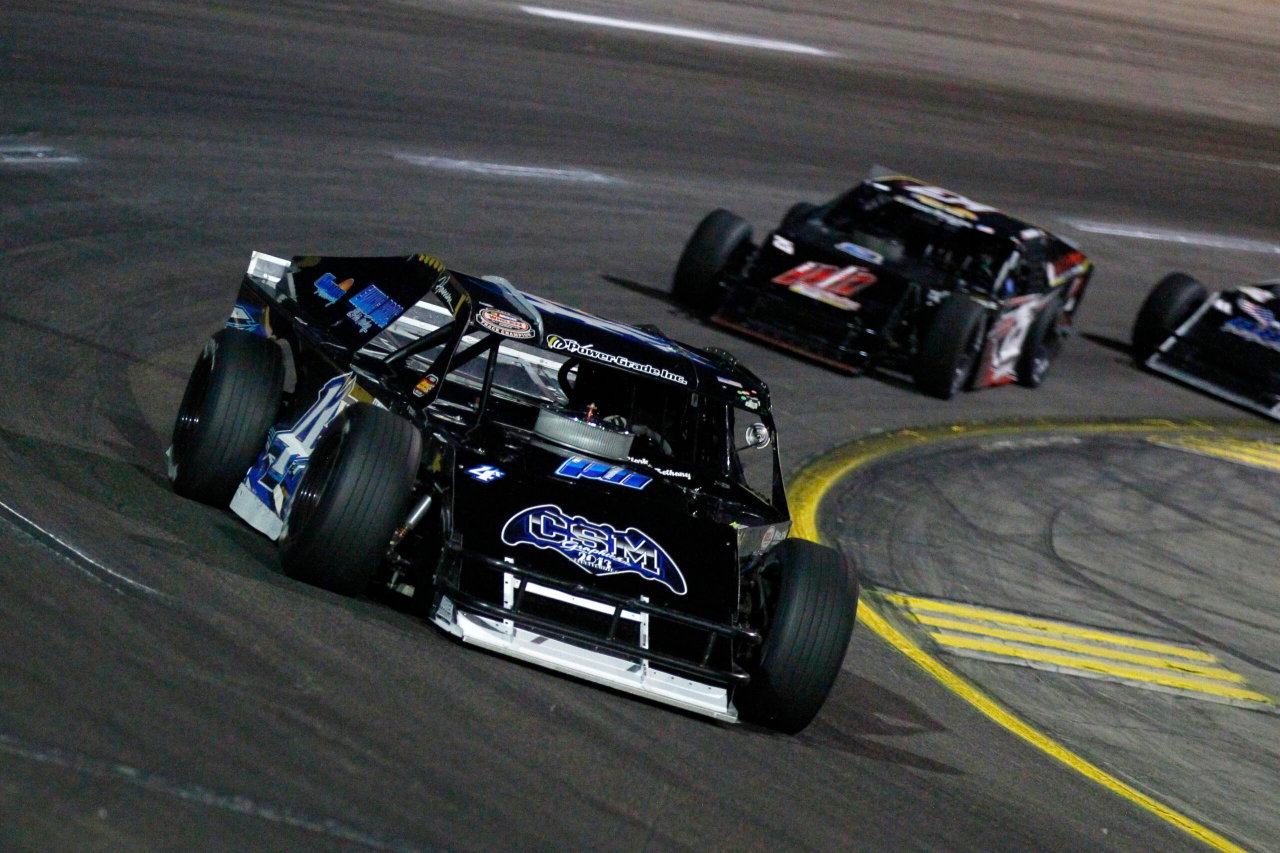
What do Jeff Bodine, Jimmy Spencer and Ryan Preece have in common? All three used Modified racing as a stepping stone toward competing at NASCAR’s highest levels. For decades, the Whelen Modified Tour served as one of the sport’s strongest grassroots platforms, helping talented drivers turn regional success into national opportunities. But that historic connection is beginning to weaken. With participation hitting an all-time low and questions emerging about the division’s place in NASCAR’s future, an insider has delivered a chilling warning about what could lie ahead.
Watch What’s Trending Now!
“There’s been murmurs coming from places that hold weight. There’s been chatter that some in NASCAR upper management don’t see the NASCAR Whelen Modified Tour fitting into the global forward plan of NASCAR as a whole,” Shawn Courchesne said in a recent video.
Shawn Courchesne has brought those concerns into sharper focus, suggesting that some senior NASCAR figures may question whether the Modified Tour belongs in the organization’s forward-looking plans. He distinguished rumors from confirmed policy, admitting he does not know whether the division is genuinely viewed as expendable. Still, his warning raises a difficult question: what happens when one of NASCAR’s most historic grassroots divisions no longer appears to serve the sport’s wider ambitions?
The concern is not emerging in a vacuum. During NASCAR’s November 6 State of the Sport press conference, CEO Steve O’Donnell discussed several parts of the organization but did not specifically address the Whelen Modified Tour. That omission does not prove the series is being sidelined or that NASCAR intends to discontinue it. But alongside Courchesne’s account of conversations circulating among people close to the sport, it has added to the uncertainty surrounding the division.
The numbers offer a more tangible explanation for why the Modified Tour is under scrutiny. For much of its first 35 years, from 1985 through 2019, the series averaged 31.8 cars per event. Participation began slipping in 2020, and the average fell to 24.1 cars in 2025.
Is Alan Gustafson Holding Chase Elliott Back?
The situation worsened in 2026, when the tour averaged just 23.6 cars per race, an all-time low. That represents a decline of more than 25% from its 2019 average. For a series built around deep fields and fierce regional competition, that is a significant warning sign.
Yet the issue extends beyond the number of cars taking the green flag. Courchesne argues that teams in NASCAR’s national divisions no longer view the Modified Tour as a meaningful place to identify and develop drivers. That is a serious challenge for a regional series that once played a role in the sport’s talent pipeline. If young competitors cannot see a realistic route from Modified racing to NASCAR’s national ranks, the division risks losing a major reason for attracting ambitious drivers.
The list of drivers who once made that climb underlines what has changed. Jeff Bodine, Greg Sacks, Ron Bouchard, Ken Bouchard, Steve Park, Jeff Fuller, Jimmy Spencer and Randy LaJoie all used Modified racing on their way to NASCAR’s upper divisions. Courchesne points to Ryan Preece as the clearest recent example of a driver who used the Modified ranks as a springboard to full-time national-series competition. The series still has a proud history, but its role in developing NASCAR’s next generation is less visible.
There are, however, signs that NASCAR is not simply walking away. When announcing the 2026 schedule, regional racing managing director Joseph Dennewitz called the Modified Tour a longstanding cornerstone of the organization. The calendar also restored events at Stafford Speedway and Oxford Plains Speedway.
NASCAR has since announced a 15-race schedule for 2027, including Lancaster Speedway’s return and the tour’s first visit to Thunder Road Speedbowl. Thompson Speedway will host both the season opener and finale, while Stafford receives two dates.
Series director Gary Putnam has outlined practical steps aimed at making the tour more sustainable for teams. These include increasing purse payouts, reducing travel costs, improving scheduling and inspection procedures, and making the experience better for competitors.
The 2027 calendar is expected to cut approximately 1,300 travel miles for teams based in the Northeast. Putnam has also acknowledged the need to bring regular competitors back after a difficult 2026 season, which included early problems with the new American Racer tires and reduced involvement from major names such as Ron Silk and Justin Bonsignore.
The division’s future, then, is not a settled story of NASCAR abandoning its roots. The organization has released another schedule, updated its rulebook and identified ways to address cost and participation problems. But those steps do not erase Courchesne’s larger concern about whether the Modified Tour still fits NASCAR’s long-term vision. Its history is secure; its place in the sport’s next chapter is the question.