
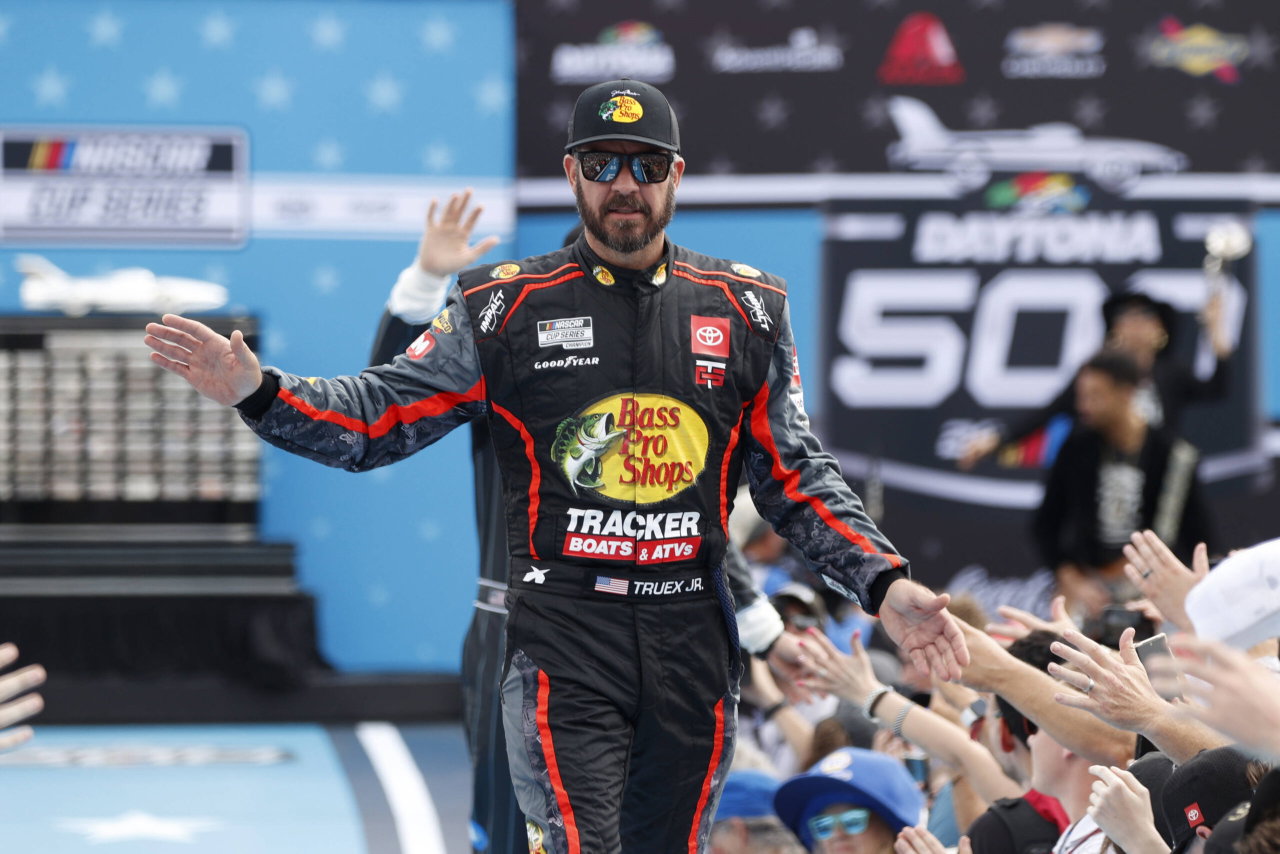
Martin Truex Jr. built his reputation on making difficult race tracks look manageable. The No. 78 Toyota often seemed to have an answer when conditions changed, with Truex finding speed where others struggled. His feel for grip, balance, and tire wear became central to his success. But in a sport where the smallest competitive advantage matters, a distinctive approach can come with a cost.
Watch What’s Trending Now!
That question grew more relevant as NASCAR gave teams better ways to study rivals behind the wheel. For a driver whose strength was extracting something extra from a car, the spread of that information raised an uncomfortable possibility: how much of his advantage could remain his own?
“Martin probably wished there was never SMT because a lot of people would have been able to copy what he does in certain tracks and things like that,” James Small said on the Dinner with Racers podcast. “That was probably a big disadvantage for someone like him because I don’t think he got much out of it. It could mimic him, especially at the tracks he was exceptional at.”
Small, who worked with Truex at Joe Gibbs Racing, was referring to more than lap times. Truex was comfortable in cars that moved around and demanded constant correction. He could manage a loose balance, work the throttle, and maintain speed over a run. That made him dangerous when conditions changed.
Truex has explained why. In a 2020 interview with RACER, he said lower-downforce cars suited him because they let him make a bigger difference behind the wheel. The 750-horsepower package demanded control of a sliding car, a challenge he relished.
Does Sprint Car Racing Put Kyle Larson’s NASCAR Future at Unnecessary Risk?
His 2017 championship season illustrated the advantage. Driving for Furniture Row Racing with crew chief Cole Pearn, Truex won eight races and his first Cup title. He swept the six intermediate races with 20-degree banking or less, including Homestead. The No. 78 also stayed fast as tires wore.
SMT’s NASCAR history is broader than the data Small meant. The company began working with the series in 1992, providing its first televised live timing-and-scoring graphic. Its RACEf/x tracking system arrived in 2002. The key development for teams was NASCAR Team Analytics, launched for 2018 Speedweeks.
Team Analytics combined live tracking, loop data, and telemetry. Engineers could compare throttle, braking, steering, and RPM traces to see how rivals approached corners and generated speed. More detailed information was now available directly to competing teams.
The timing mattered. Truex entered 2018 as reigning champion with Furniture Row, then moved to JGR in 2019. The data did not reveal a magic setup or make another driver instantly as fast. It offered a clearer reference: where Truex lifted, returned to the throttle, and carried speed through a corner.
Rivals could study those details and test similar approaches. They still needed the equipment, feel, and execution to make them work. Data could show what Truex did; it could not provide the instinct behind it.
Nor did the technology erase Truex’s advantage. He won seven races in 2019, his first season at JGR, and finished second in the championship standings. In 2021, he added four victories and returned to the Championship 4. His success showed his edge was never just one secret line or a trick another driver could download.
Small’s observation is more specific. At tracks where Truex had an exceptional feel for the car, SMT could expose details that once separated him from the field. It offered rivals a blueprint, even if reproducing the result was another challenge.
Truex’s legacy rests on what he could do with a race car, not on whether others could study it. SMT made his craft more visible to the competition. It could help rivals mimic his movements, but it could not guarantee they would find the same speed.