Imago
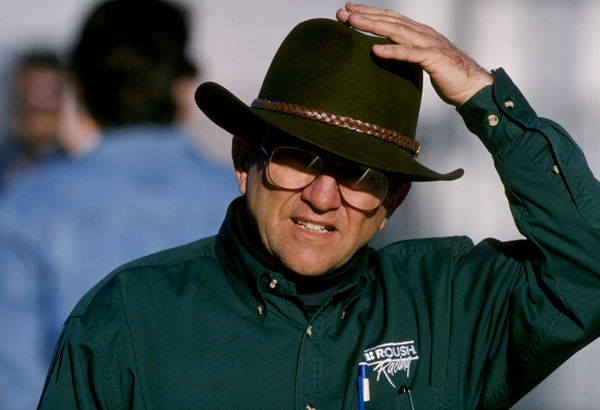
NASCAR, Motorsport, USA Cup Practice and Qualifying Sep 14, 2024 Watkins Glen, New York, USA NASCAR Cup Series owner Jack Roush stands on pit road during practice and qualifying for the Go Bowling at The Glen at Watkins Glen International. Watkins Glen Watkins Glen International New York USA, EDITORIAL USE ONLY PUBLICATIONxINxGERxSUIxAUTxONLY Copyright: xMatthewxO Harenx 20240914_gma_bm2_0071
Imago
NASCAR, Motorsport, USA Cup Practice and Qualifying Sep 14, 2024 Watkins Glen, New York, USA NASCAR Cup Series owner Jack Roush stands on pit road during practice and qualifying for the Go Bowling at The Glen at Watkins Glen International. Watkins Glen Watkins Glen International New York USA, EDITORIAL USE ONLY PUBLICATIONxINxGERxSUIxAUTxONLY Copyright: xMatthewxO Harenx 20240914_gma_bm2_0071
“The Cat in the Hat” is hard to miss in NASCAR lore, even when Jack Roush isn’t hanging around the garage. Rarely spotted without his trademark Panama hat, Roush, founder, CEO, and co-owner of Roush Fenway Keselowski Racing, was recently honored with the Bill France Award of Excellence. As this brings his legacy once again into the spotlight, it naturally raises curiosity about his wealth, earnings, and how a lifetime in racing has paid off until 2025. Let’s find out all about that.
What is Jack Roush’s net worth?
Watch What’s Trending Now!
Jack Roush’s net worth is estimated to be around $300 million, built through a mix of racing success and smart business moves well beyond the track. A significant portion comes from decades in NASCAR with RFK Racing, but the real financial backbone is Roush Enterprises, where he serves as chairman.
The engineering and manufacturing giant operates across automotive, aerospace, and defense sectors. Add in long-term investments and ownership stakes, and Roush’s fortune reflects a lifetime of calculated risks paying off.
What is Jack Roush’s salary?
Jack Roush’s exact salary has never been publicly disclosed, which isn’t unusual for team owners of his stature. That said, industry estimates suggest top NASCAR team owners and executives earn high six to low seven figures annually, depending on team performance, sponsorship deals, and business operations.
For Roush, that figure likely fluctuates year to year, especially since much of his income is tied to ownership profits, dividends, and long-term business ventures rather than a fixed paycheck.
Jack Roush’s career earnings
These too have never been publicly broken down, but the scale of his success makes one thing clear: they’re massive. Since entering NASCAR in 1988, RFK Racing has piled up 300+ wins and eight championships, generating hundreds of millions in prize money alone.
Beyond the track, Roush Enterprises serves as the umbrella for Roush Racing, Roush Industries, Roush Performance, and ROUSH CleanTech. Headquartered in Livonia, Michigan, these companies employ over 2,000 people across North America and Europe, forming the backbone of Roush’s long-term financial empire.
Jack Roush’s professional career
Jack Roush’s professional journey reads like a masterclass in how engineering brains can reshape motorsports. He attended Berea College, earning a bachelor’s degree in Mathematics, before completing a master’s in Mathematics at Eastern Michigan University in 1970. Decades later, Eastern Michigan honored him again with an honorary doctorate in Commercial Science in 2020, recognizing his lasting impact on automotive development.
Roush began his career at Ford Motor Company in 1964 as a quality control engineer, where he crossed paths with coworkers campaigning drag cars known as the “Fastbacks.” Racing quickly became more than a hobby for him. In 1970, he teamed up with Wayne Gapp, and the duo went on a tear, winning multiple NHRA, IHRA, and AHRA Pro Stock championships between 1970 and 1975.
In 1976, Roush founded Jack Roush Performance Engineering, supplying engines and components across drag racing, oval-track competition, hill climbs, and even offshore powerboats. He later partnered with Bob Corn and Ron Woodard to form ECS/Roush, the foundation of today’s Roush Industries.
By 1984, Ford tapped Roush to develop cars for Trans-Am and IMSA, where his teams won over 100 national events and multiple championships. That success paved the way for NASCAR in 1988, where Roush-built teams would go on to claim multiple titles. Beyond wins, Roush also left a safety legacy, including helping develop roof flaps to prevent rollovers, cementing his influence far beyond the finish line.
Jack Roush’s brand endorsements
Jack Roush doesn’t personally endorse brands. But his career has been defined by a decades-long partnership with Ford Motor Company, spanning engine development, racing programs, and his leadership as a NASCAR team owner.
Jack Roush’s investments and business ventures
Roush’s investments are anchored under Roush Enterprises, the parent company overseeing Roush Racing and several diversified businesses. These include Roush Industries for engineering and manufacturing, Roush Performance in automotive aftermarket development, ROUSH CleanTech focusing on alternative fuel systems, and RFK Racing.
Jack Roush’s house and cars
Jack Roush’s personal and professional worlds are rooted in Michigan and North Carolina, where he splits time between business operations and racing commitments. While Roush keeps his private life relatively low-key, his passion for automobiles is anything but quiet. His most prized assets live at the Roush Automotive Collection in Livonia, Michigan, a public-facing garage museum housing more than 150 vehicles.
The collection traces the evolution of Ford performance and racing innovation through the decades. Standout pieces include the legendary “Old Crow” Mustang, the rare 1995 Cobra R, a 1918 Rauch electric car, early Model Ts, and several historically significant race cars tied to Roush’s career.
Wrapping up
From building race-winning engines to shaping modern NASCAR and global automotive engineering, Jack Roush’s legacy extends far beyond the balance sheet. His wealth reflects decades of innovation, risk-taking, and relentless competitiveness. Whether in the garage or the boardroom, “The Cat in the Hat” remains one of motorsports’ most influential architects.
Related Newsletters