
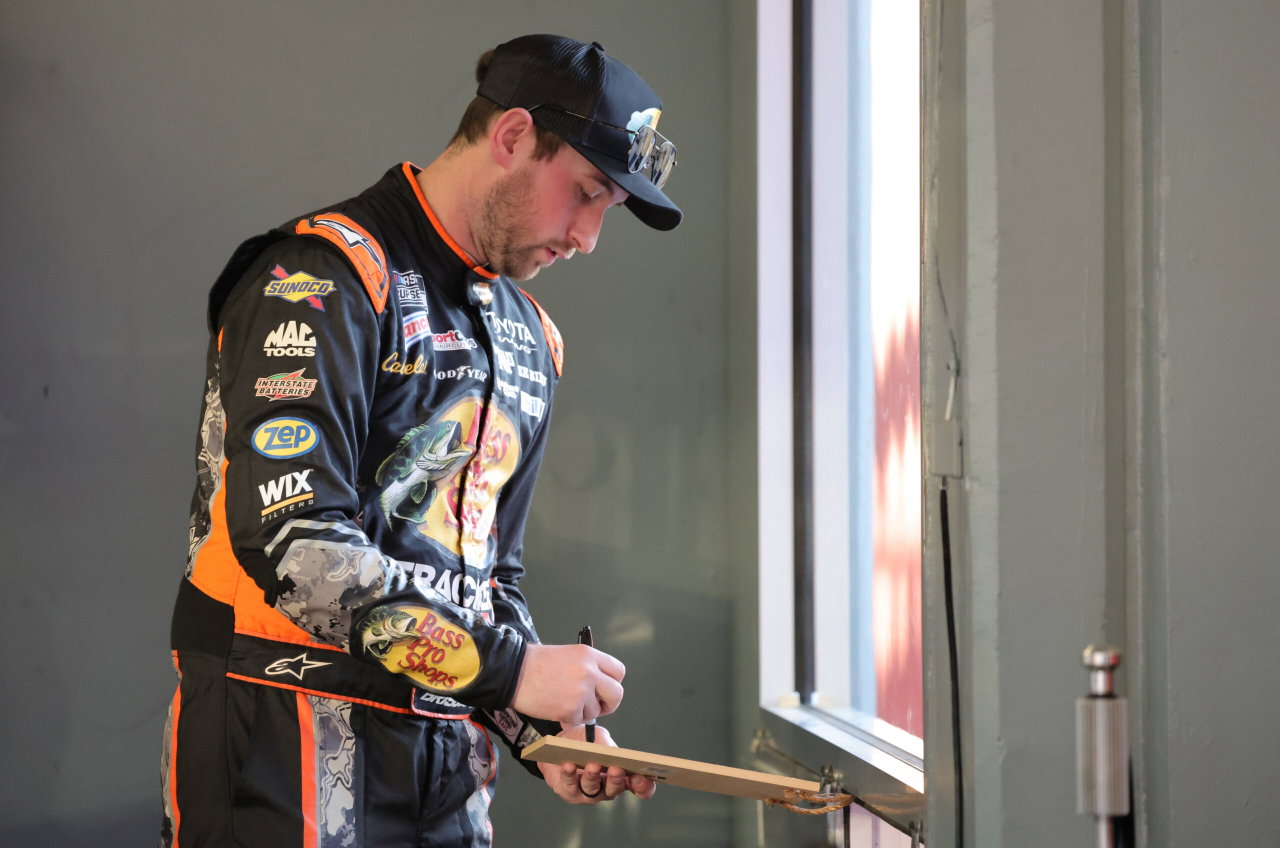
James Small had a fairly simple explanation for what might have happened if Chase Briscoe had lost at Las Vegas. His driver had already let one win slip away at Kansas Speedway, and another defeat would have made for an uncomfortable week at Joe Gibbs Racing. Asked by Jeff Gluck how angry he would have been, Small had a rather blunt answer. Briscoe, he joked, would have survived him, but perhaps not his wife. The exchange drew a laugh, yet it said plenty about a relationship built around high expectations.
“He would have been fine. If I didn’t kill him, I think his wife would’ve. So, glad he got it done.” James Small disclosed on The Dirty Mo Media.
Small could afford to laugh because Briscoe had given him the result he wanted. At Las Vegas Motor Speedway, the No. 19 Toyota led 175 of 267 laps, won both stages, and held off Kyle Larson for the victory. A week earlier, Briscoe had finished fourth at Kansas after hitting the wall while trying to keep pace late in the race.
The difference between those two Sundays was significant, and it raised a familiar question about Small’s demanding personality: how much pressure can a crew chief put on a driver before it starts working against him?
Gluck raised that concern when the conversation turned to their working relationship. A driver who takes criticism personally might not last long with a crew chief who is willing to be blunt.
Small, however, said he does not believe one approach works for everybody.
“Yeah, definitely. I think we work well together in that sense. We are two completely different things, and I think every situation is different. If I had somebody with a completely different personality from him, then I would adjust to that as well.”
That last point is easy to overlook. Small is not saying every driver needs to be yelled at or pushed to the same degree. He is saying he has learned how Briscoe operates, and that knowledge shapes how he handles him.
There is a difference between a crew chief losing his temper and one knowing when a driver needs a hard conversation.
Their understanding did not begin after a few difficult races. Small said the team knew enough about Briscoe before he arrived at Joe Gibbs Racing, and two seasons together have given him a clearer idea of how to get through to him. More importantly, Briscoe himself wants to be challenged.
“I think we knew enough about him and learned enough before he even came here. Even in our two years together, I’ve learned enough about how he best responds and reacts to things. There’s a certain level that he needs to be pushed to and held accountable to, and he asks for that as well. That’s something he wants, to be honest.”
That changes the way Small’s reputation should be understood. His bluntness is not necessarily a source of friction between the two men. According to the crew chief, it is part of an arrangement that both understand.
Briscoe knows what Small expects, and Small knows that protecting his driver from every uncomfortable conversation will not necessarily help him improve.
The timing of the exchange made it particularly revealing. At Kansas, Briscoe had a car capable of fighting Larson for the win, but the closing laps did not go his way. His Toyota became loose, he hit the wall, and he fell back to fourth.
It was the kind of finish that leaves a team replaying decisions and wondering what might have been different.
Las Vegas gave Briscoe the chance to answer that disappointment himself. He controlled much of the race and finished the job when Larson challenged him late. The victory did not erase the Kansas mistake, but it showed how quickly a driver can change the conversation by responding on the track.
Small believes keeping Briscoe motivated requires more than celebrating the good Sundays. He wants the driver to remain accountable when things go wrong, especially when the margins are small and the championship pressure is growing.
“It’s shown to get the best out of him. We’ve got to keep him motivated, keep him accountable, and keep him on his toes. I think that, with his personality type, draws the best out of him. Some people may not think it’s great or like it, but internally, we all see the fruits of his labor.”
There is still a risk in that approach. A driver can accept criticism one week and struggle with it the next, particularly when results refuse to come. Small’s method depends on maintaining the trust that allows difficult conversations to remain productive.
He acknowledged that his style will not suit everybody, which is precisely why he places so much importance on understanding Briscoe.
For the No. 19 team, the real measure will come when another race goes wrong. Las Vegas showed what the partnership can produce when Briscoe responds with a victory.
The harder test is whether the same trust holds after another costly mistake. Small has made his position clear: he intends to keep pushing, and he believes Briscoe wants him to. Now the driver has to keep turning that pressure into results.