
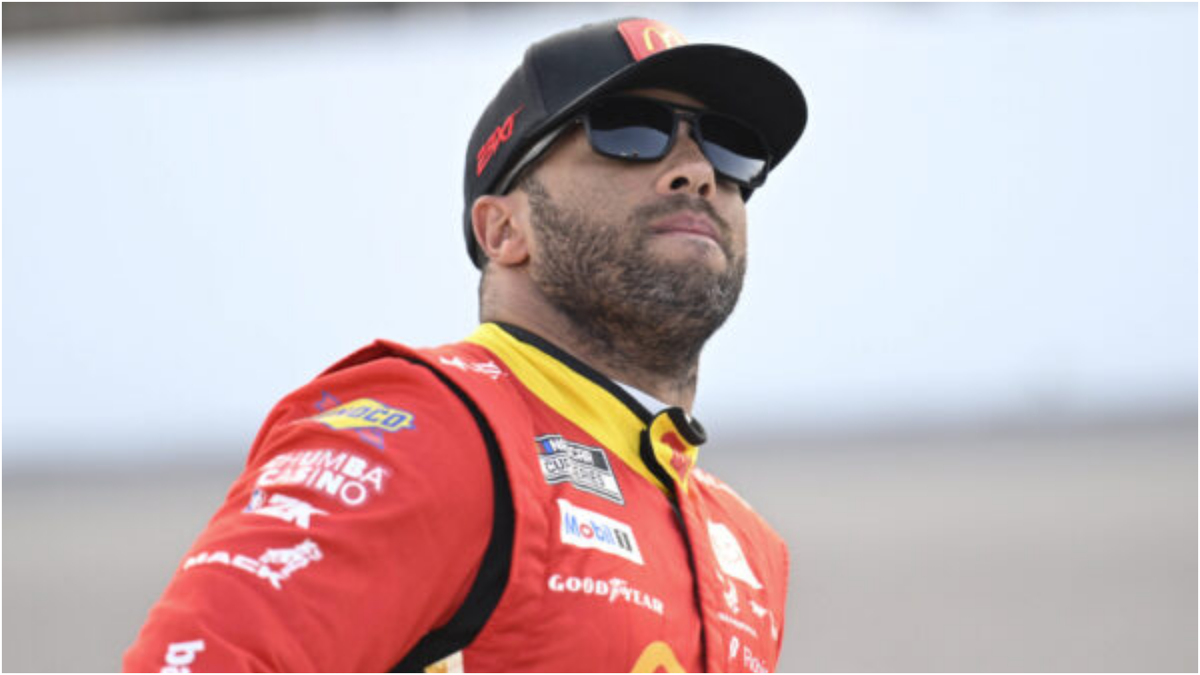
Bubba Wallace’s first Cup win at Talladega got dismissed as a rain-shortened fluke. His radio comments about not helping Tyler Reddick set off another wave of accusations about his attitude. Even his on-track confrontations become ammunition for personal attacks. That is the Bubba Wallace most critics think they know. Someone who has worked alongside him for 17 years has a very different perspective.
Watch What’s Trending Now!
“I’ve never fist-fought anybody for him. I’ve said some things to people that, you know, just there’s a lot of ignorance out there. People believe what they hear or read someplace, and it’s not true. Usually, you know, I’ve had to correct. Most of the time, I don’t care,” Freddie Kraft told Kenny Wallace.
Kraft has become accustomed to the criticism surrounding Bubba Wallace. As his spotter for nearly 17 years, he has watched the 23XI Racing driver become a frequent target of online abuse, sometimes for his performances and sometimes for controversies that have little to do with racing.
Kraft rarely engages with the negativity, but he admits that certain claims have forced him to speak up. His perspective comes from knowing Wallace long before millions of NASCAR fans formed an opinion about him.
Their relationship began in 2010, when Wallace was just about 17 and preparing for his first K&N Series race at Greenville-Pickens Speedway. Kraft was living in New York at the time and traveled south to scout for the young driver. Wallace ended up winning that race, giving the two an unforgettable start to their partnership.
They continued working together through the Truck and Xfinity Series before eventually reaching the Cup level. Over the years, their connection developed beyond the spotter-driver relationship. Kraft has described them as family, comparing Wallace to an annoying younger brother.
Wallace’s position in NASCAR makes the hostility surrounding him more complicated than ordinary driver criticism. In 2020, he became the most prominent voice calling for NASCAR to ban Confederate flags at its events, arguing that their presence made some fans uncomfortable and discouraged them from attending races. As the only full-time Black driver in the Cup Series at the time, he found himself representing a much larger conversation about race, inclusion, and the sport’s history.
His advocacy earned support from fans who wanted NASCAR to change, but it also triggered backlash from those who viewed his efforts as an attack on their traditions. Consequently, criticism of Wallace increasingly became intertwined with disagreements about the direction of the sport itself.
One of the biggest examples came in 2020, after Wallace publicly supported NASCAR’s decision to ban Confederate flags at its events. A few days later, a noose-shaped garage pull was discovered in his assigned stall at Talladega. The FBI investigation determined that the rope had been there since at least October 2019, before Wallace was assigned the garage. But the findings did not stop the accusations that he had fabricated the incident.
Wallace refused to let those allegations define him. He admitted that the reaction made him angry, particularly because people were questioning his character and integrity. However, he also made his position clear: “This will not break me.” He said the accusations would only fuel his competitive drive to silence his critics on the racetrack. When Donald Trump subsequently demanded an apology, Wallace responded by urging young fans to meet hatred with love, writing, “Love over hate every day.”
The hostility resurfaced in another disturbing form after the 2023 All-Star Race at North Wilkesboro. Wallace had just finished second when an unidentified person accessed the No. 23 team’s radio channel and delivered a racist, derogatory message. The driver did not hear it himself, but members of his team did. NASCAR investigated the unauthorized access, emphasizing that interference with team communications could also create competition-related concerns.
Years of such experiences have also changed how Wallace handles social media. In 2026, he revealed that he stayed away from the platforms for roughly the first four months of the season, possibly longer. Although he eventually returned to his personal accounts, he continued avoiding his professional pages, 23XI-related pages, and fan accounts because that was where the toxicity was most concentrated. He also questioned whether many people criticizing his driving had ever climbed into a race car themselves.
Kraft appears to share that approach to a certain extent. He says he sometimes likes insulting comments about himself and Wallace simply to let the people behind them know he has seen their remarks. He does not consider anonymous criticism worth losing sleep over. His rule is simple: do not take criticism from someone whose advice you would never seek.
However, he does not pretend that his relationship with Wallace is free of disagreements. After nearly 17 years together, the two have had difficult conversations, and Kraft admits there have been moments when he has been frustrated enough to want to “kill Bubba” himself. That honesty is precisely what makes his defense more interesting. He is not claiming Wallace never makes mistakes or that fans must approve of everything he does.
His point is that there is a difference between disagreeing with a driver’s decisions and deciding you understand his character from a distance. “If you don’t like Bubba, that’s because you never met him,” Kraft told Kenny Wallace. After years of traveling, racing, and working through disagreements together, he believes the person he knows is considerably different from the version often portrayed by online critics.