
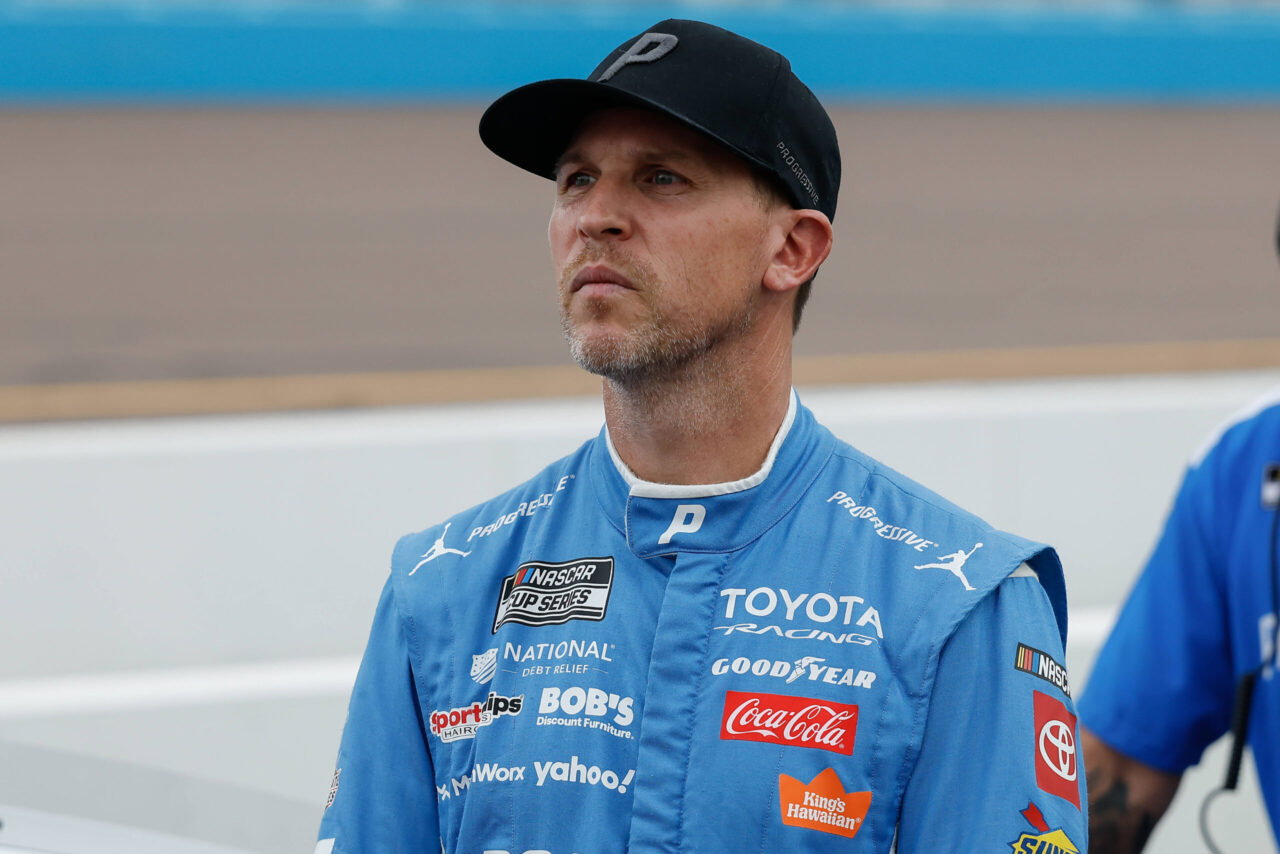
Denny Hamlin had done almost everything NASCAR could ask of a regular-season champion. He had built an 89-point lead, secured the No. 1 seed before the regular season ended, and given Joe Gibbs Racing a reason to feel confident heading into the Chase. Then came the points reset. Suddenly, that commanding advantage was worth just 25 points over the second seed. The difference between Denny Hamlin’s season-long dominance and his actual postseason advantage has now prompted an interesting discussion about whether NASCAR is rewarding its best-performing drivers enough.
Andrew Kurland offered a possible solution on PRN Live, suggesting that NASCAR should retain its 25-point minimum but allow the regular-season champion to carry back a percentage of their actual points advantage.
“Say, all right, number one seed gets a minimum of a 25-point buffer, but any extra points, like if you win it by a race, or if you clinch or lock this thing up by a bunch, you get a percentage of those points back. So it’s not like a set thing. Like, that would give you incentive to keep dominating.”
The distinction is important because NASCAR’s 2026 championship format was designed to bring consistency back into the title conversation. After 26 regular-season races, the top 16 drivers advance to a 10-race Chase. There are no eliminations or additional resets. Every point earned during those final 10 races counts toward the championship.
However, the initial reseeding changes the value of everything drivers accumulated beforehand.
Which Racetrack Deserves a Spot Back on the Cup Series Schedule?
Denny Hamlin’s numbers show exactly why Kurland is questioning that approach. He finished the regular season with 1,027 points, while the gap between him and second-place Ryan Blaney stood at 89. Yet, after Daytona, Hamlin started The Chase with 2,100 points and Blaney with 2,075. The other 64 points of separation had effectively vanished.
Under Kurland’s suggested model, half of Denny Hamlin’s 89-point advantage would have given him approximately 45 points instead of 25. That is an additional 20 points to protect across the 10-race championship battle. More importantly, every extra point earned during the regular season would have had a purpose beyond simply securing the top seed.
Kurland also pointed out that such a system could make the Daytona finale more meaningful for drivers already secure in the Chase. Rather than having little left to gain in the standings, the regular-season leader would still have something to fight for.
But there is a catch, and Kurland did not overlook it.
“It was, what if you get 50% of your points lead to start the Chase? And I’m just throwing that number out there. That would give the number one seed a little bit more of an incentive to keep trying to put their foot on people’s throats during the regular season.”
The bigger concern is what happens when that advantage becomes large enough to affect the championship itself. Kurland used Kyle Larson as an example, suggesting that a dominant regular season could give him such a substantial starting cushion that he might clinch the title at Martinsville.
“Well, now he clinches it at Martinsville,” Kurland said.
Interestingly, the actual 2026 championship offered a glimpse of that concern. Larson clinched his third Cup Series title at Homestead-Miami Speedway, securing enough points after the opening stage. He eventually finished 49 points ahead of Christopher Bell and 56 ahead of Hamlin.
That outcome also shows why the discussion cannot simply be about giving the regular-season champion more points. NASCAR wanted a format where consistency mattered across the entire year, without making the final stretch irrelevant. A larger carryover could reward dominance, but it could also make an early championship decision more likely.
For Denny Hamlin, the question is particularly interesting after another championship campaign ended without the trophy. Kurland’s proposal would not guarantee him a title, nor would it take anything away from Larson’s achievement. It would, however, give greater weight to the 26 races that determine who enters The Chase with the best record.
And that is the real issue behind the debate. If NASCAR wants drivers to keep building points advantages instead of simply protecting their positions, perhaps the regular-season champion should have more than a fixed 25-point reward.