
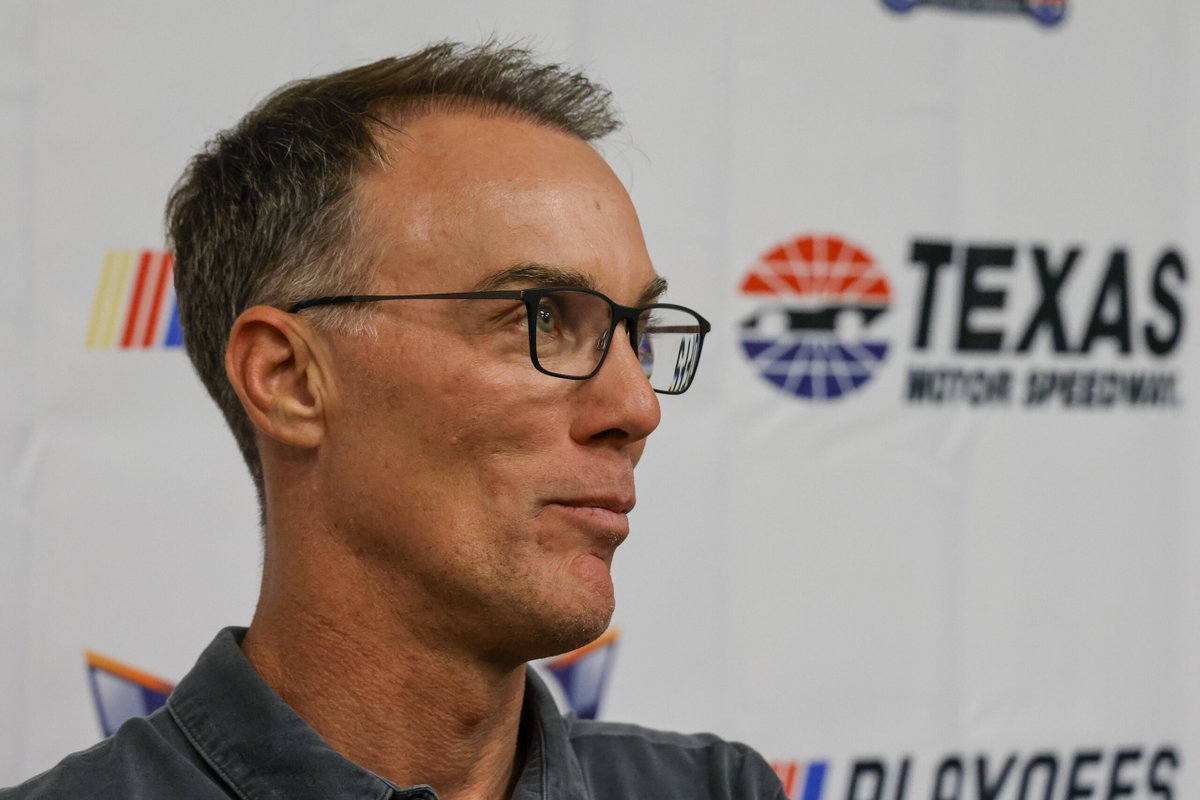
NASCAR is targeting something rarely seen at Daytona in recent years: Cup cars exceeding 200 mph in single-car qualifying. Kevin Harvick has now offered a closer look at the changes designed to make that possible.
Watch What’s Trending Now!
Speaking on SPEED With Harvick and Buxton, the former Cup champion said the qualifying specification for the 2027 Clash will feature a change to the rear spoiler and a horsepower increase. The Lexan section will be removed, leaving only the base of the spoiler on the back of the car.
“The unique part about this is they’re going to take the Lexan piece of the spoiler off,” Harvick explained. “So it should just have the base of the spoiler on the back of the car, and it’s going to have a little more horsepower.”
Harvick did not give a figure for the power increase. NASCAR’s official announcement has not published a detailed horsepower number either, but it confirmed that teams will use a qualifying-specific specification separate from the race setup.
Simulations suggest those cars could exceed 200 mph, and it is not a guarantee that every qualifying lap will reach that number.
Who Is the Poster-Child of Modern-Day NASCAR?
That would be a notable jump from the 2026 Daytona 500 pole speed. Kyle Busch secured the top spot with a lap at 183.651 mph in February. It is not a direct comparison given the new qualifying specification, but it shows the increase NASCAR is targeting.
Harvick believes fans should welcome the change. He pointed to IndyCar’s qualifying approach at Indianapolis, where teams use a different aerodynamic configuration and tweaked engine settings to chase higher speeds than they would with their race setup. NASCAR is looking to bring some of that spectacle to superspeedway qualifying.
“I think NASCAR is looking for a way to spice up superspeedway qualifying,” Harvick said. “I think that’s a good thing for everybody. Everybody likes fast cars, and everybody wants to see the drivers on edge and be able to manage a car that’s going 200-plus miles an hour on a qualifying lap, like it used to be.”
The qualifying package is part of a wider overhaul for the 2027 Clash, which returns to Daytona’s 2.5-mile oval for the first time since 2020. After using Daytona’s road course in 2021, the event spent five seasons at the Los Angeles Memorial Coliseum (2022-24) and Bowman Gray Stadium (2025-26).
The 2027 edition is scheduled for Saturday, Feb. 13, opening Speedweeks ahead of the Daytona 500.
The invitation list is limited to 2026 Cup race and pole winners, past Daytona 500 winners who competed full-time last season, and past Cup champions who also raced full-time. Dodge receives an OEM provisional, allowing a maximum field of 22 drivers.
The race will remain a 70-lap contest using the regular Cup car setup, with a competition caution on Lap 30 and a mandatory four-tire change. The departure comes in qualifying: teams can use a separate specification and simulation tools to develop a setup focused on one-lap speed.
Qualifying will also demand more than one flat-out lap. Drivers complete a green-flag lap before entering pit road on Lap 2 for a four-tire stop with simulated fuel. The pit-road speed limit applies, and speeding or pit-stop infractions bring time penalties. The final time is measured from green to checkered flag, making the stop part of the qualifying result.
For Harvick, the package could offer a glimpse of what superspeedway qualifying might become if NASCAR expands the idea. He wants to see drivers managing cars at more than 200 mph on the edge, rather than simply settling for a safe lap.
“I think this is a great way to give us a little bit of insight as to what this might look like as we go to superspeedway races down the road,” he said.
NASCAR has not confirmed a wider rollout. But the 2027 Clash will test whether a faster, purpose-built qualifying formula can bring back the spectacle Harvick wants to see.