
Gone are the days of photo finishes at Daytona International Speedway. Back in 2016, Denny Hamlin clinched the win by just 0.010 seconds, the closest finish in the history of the race. But in the Next Gen era, tactical execution has replaced race craft, and the focus isn’t on who puts down the fastest lap, but on who conserves the most fuel.
Watch What’s Trending Now!
NASCAR hasn’t made any major changes to the superspeedway package, but at the Coke Zero 400, they made a big leap. In theory, the new package was supposed to reduce drag and disrupt fuel-saving tactics. But the outcome wasn’t what everyone expected. With the Cup garage divide, Kevin Harvick highlighted what’s holding NASCAR to make meaningful change that reflects on the racetrack.
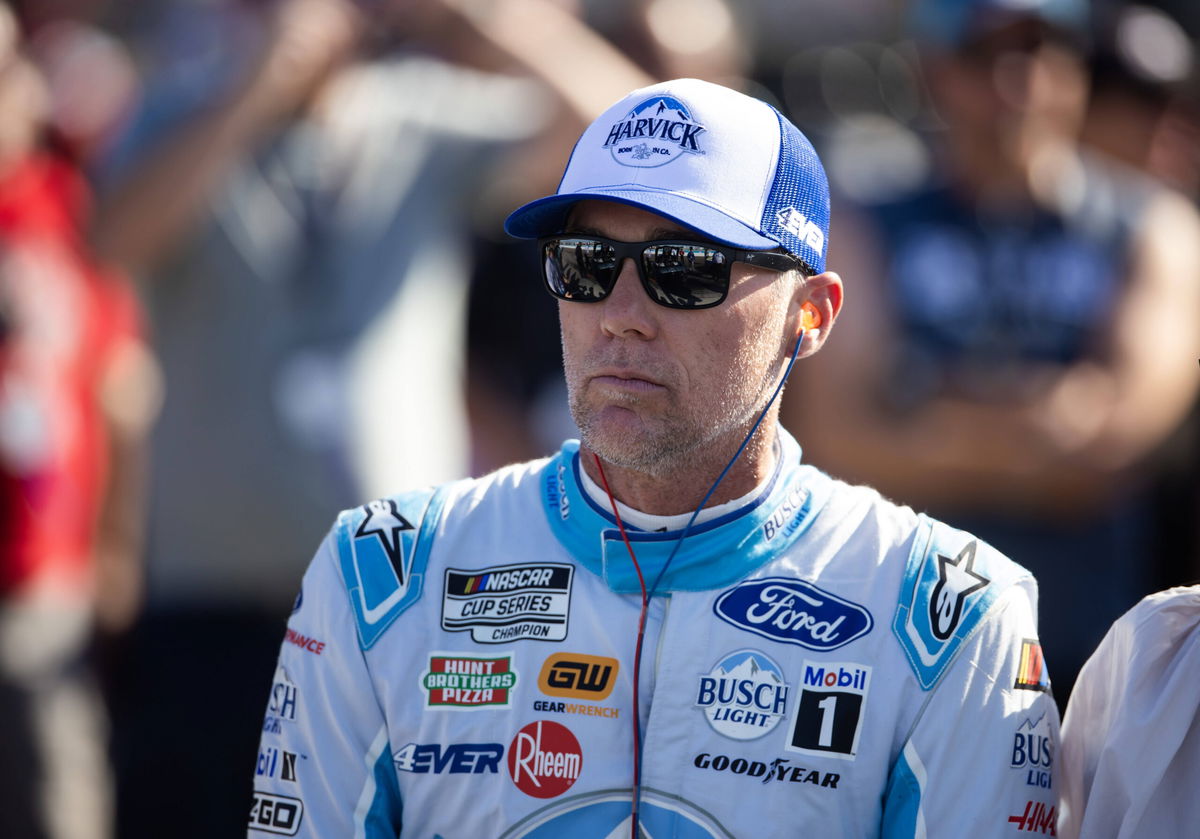
“It’s tough,” Harvick, who drove the Next Gen car in 2022 and 2023, explained. “This part of the sport is really tough. It’s not a new car now, but the Gen 7 car is still a new car. And it’s totally different than anything else that we’ve ever raced in NASCAR with the underbody of the car. I just don’t know that, that is the style of car that we need for NASCAR racing.
“I think that with the diffuser changes and the spoiler changes and all the things that we’ve changed, the real next step to this is getting the stuff off the bottom of the car. To be able to figure out how to do that.”
At Daytona, NASCAR reduced the spoiler length from 7 inches to 4 inches, similar in size to the intermediate package. Another major change was decreasing the engine output from 510 to 465 horsepower. This was supposed to balance out the lower downforce. And while the first stage was entertaining, with Kyle Larson and SVG battling it out for a stage win, the latter half of the race turned into a fuel-saving battle.
The race winner, Ryan Preece, banked on fuel-saving tactics and found himself in the right place at the right time when the last-lap caution came out. Harvick’s argument was that the changes NASCAR brought in were quickly figured out by the engineers.
“The changes have to be big enough to where the engineers can’t figure it out. And that’s what happened here,” said Harvick. “They all figured out how to make this car drive just as good as what they had.”
Interestingly, fans enjoyed what they saw on the racetrack with this new package. Jeff Gluck’s post-race poll indicated that 80% of fans liked the Daytona race. The poll had more than 15,000 responses. However, the response within the Cup garage was divided.
Drivers take on the new Daytona package
It is a long road to bring the racing at superspeedways back to how it was when drivers were able to generate runs and detach from the packs. But for the likes of Chase Elliott and Denny Hamlin, there were enough positives to build on for future races.
“It seemed like you could do more with runs when you had them,” said Elliott. “The cars were definitely edgier as the runs would go on, like really, really easy to get out of shape. But I thought the overall ability to kind of get momentum … it seemed like it was better to me.”
Denny Hamlin worked alongside NASCAR to make these changes to the Next Gen car, and according to him, this new package was a step in the right direction.
“I think that this is a superspeedway package that I could live with going forward. Could we do more? Absolutely. And would it make it even better? Probably.”
On the flip side, drivers like Christopher Bell and Brad Keselowski couldn’t make out any notable difference in how their cars drove.
“It wasn’t any different at all, which I was really disappointed in because I really bought into it. I thought it was going to be a lot different, and it didn’t play out any different at all. The cars drove the exact same. So, very perplexing,” Bell noted.
And while Preece from the RFK Racing camp bagged the win, Keselowski didn’t shy away from sharing his honest opinion.
“I could not tell a difference. I couldn’t tell they changed the rules at all. My car drove almost identical to what it did.”
NASCAR will have some work to do with this feedback, and there is a possibility that this same package could be used for the Talladega Chase race. Given how open and receptive NASCAR has been regarding the package changes, we could see some more changes moving forward.