
The Enjoy Illinois 300 at Gateway proved to be an entertaining affair for the fans. Aggressive restarts, multiple cautions, and, finally, Hendrick Motorsports regaining their lost spark. But in the aftermath of the race, the brake failure issue became a big talking point. And, like always, NASCAR was questioned on whether they could’ve avoided the carnage with better package changes.
Watch What’s Trending Now!
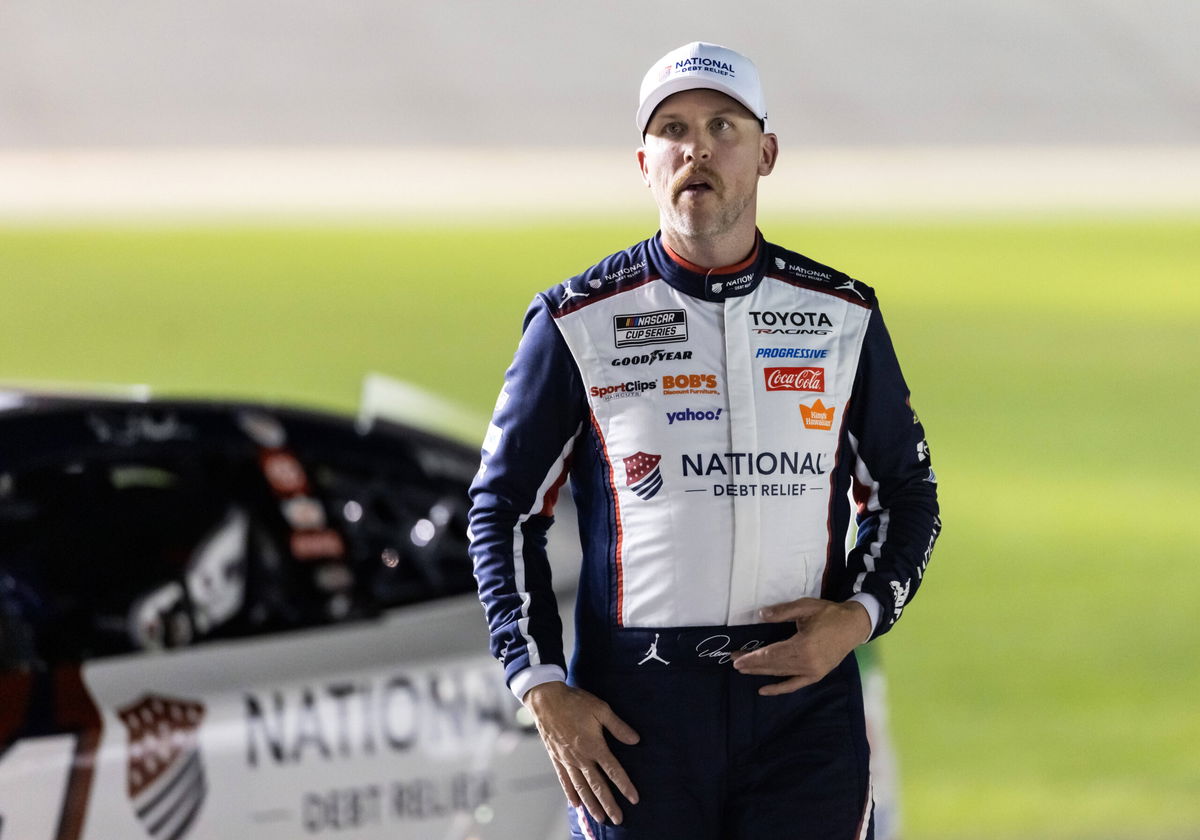
However, Denny Hamlin, who himself endured the long race on Sunday, didn’t agree with the general sentiment. “What I think hurt was the cautions. The reason cautions or red flags are bad for brakes is that it actually soaks, it gets hotter. You have no airflow. I could just feel it when we stopped on the back straightaway. I could feel the whole interior of the car just getting way hotter than what it was,” Hamlin said on Actions Detrimental.
For context, Sunday’s race at Gateway included 18 cautions, making it the most chaotic race in the Next Gen era. It matched the 2022 Coca-Cola 600 event, which had a similar number of cautions. The race also featured two red flags, which halted the race, and it only added to the issues the teams were dealing with rising brake temperatures.
Three Chase contenders, Ryan Blaney, Chase Elliott, and Chris Buescher, suffered brake rotor failures. Blaney took a tumble in the points standings, dropping to fourth, whereas Elliott lost two positions and is placed 11th. It would be a fair argument to demand a better cooling package from NASCAR, given that the Next Gen cars have a new low-downforce and increased-horsepower package. But according to Hamlin, the brake rotor failure was on the teams and not on NASCAR entirely.
“But everyone’s trying to get the best performance of the race car. And putting tape on your front nose gives it more down force, hurting the cooling of the brakes… So I think it’s more of a team decision that leads to brake failures,” Hamlin added.
The tape on the front nose of the car is a simple hack to adjust cooling and adjust the downforce of a race car. But there’s a fine line or a balance every team is trying to achieve. In case they are off, the temperature on the brake rotors can increase, leading to brake failures, like we saw at Gateway.
Hamlin knows how these tape gambles can go wrong. During the 2019 championship race in Homestead, his then crew chief, Chris Gabehart, made a bold call by adding a foot-long piece of tape across the front grille of the No. 11 car. The idea was to maximize the downforce and gain track position to seal the championship. But the idea backfired. The tape was too long, and it restricted airflow to the radiator, causing the engine to overheat.
Hamlin was forced to make an unscheduled pit stop later in that race and saw another championship slip away. As we can see, the teams are trying their best to gain extra performance out of the car with these garage tricks, even in the Next Gen era. Blaney’s crew chief felt the No. 12 team made enough adjustments to avoid a brake failure, but they hoped for better cooling systems.
“Gateway has always been a place that’s tough on brakes. We’ve been on the good side of it before, but we knew there was a little more demand with this (higher-horsepower) package. We certainly were trying to be conservative, but still didn’t give it enough cooling, I don’t think,” Jonathan Hassler told NASCAR.com.
As things stand, the teams will keep trying to gain an edge over the track with the tape tricks. And it is necessary in the Next Gen car, as they have a small playing ground in terms of setting cars up. On the flip side, NASCAR can come up with better cooling solutions, especially on tracks where they are running with the new high-horsepower package.