
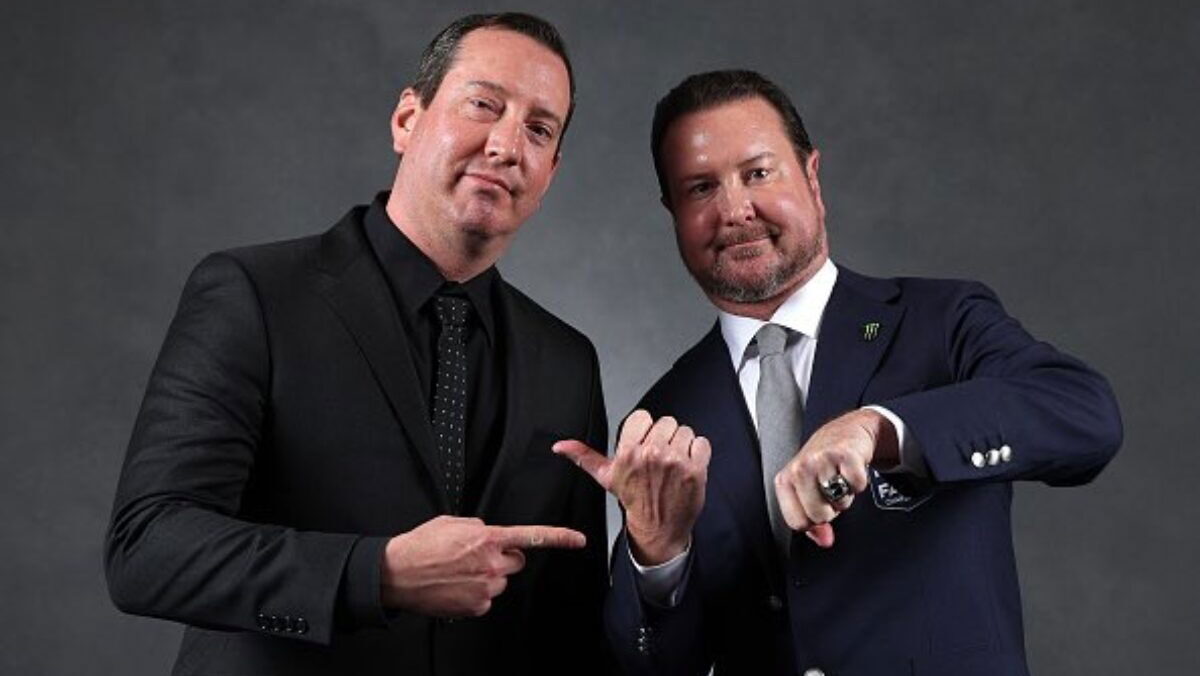
“You think I’m a pretty good race car driver? Wait until you see my brother. He’s the best driver in the family.” Back in 2001, Kurt Busch said those words with utmost pride, long before the entire world knew just how right he would be. But since his brother’s untimely passing, he had remained largely silent publicly. But when he finally spoke, he didn’t talk about championships, rivalries, or records. He went back to where it all started – just two brothers racing anything they could get their hands on and building a bond that lasted far beyond the racetrack.
Watch What’s Trending Now!
Kurt Busch pays tribute to his little brother
“Thank you, everyone, for the well wishes, support, & love for my brother and our family. I reflect back on the days Kyle and I raced anything we could get our hands on. I will forever be grateful for the memories we made, the lessons you taught me, and the brotherhood we shared.”
Long before NASCAR knew the Busch surname, Kurt and Kyle Busch were already competing every chance they got. Kyle was seven years younger, and he grew up watching his older brother set the standard – one he had to eventually chase.

Thank you, everyone, for the well wishes, support, & love for my brother and our family. I reflect back on the days Kyle and I raced anything we could get our hands on. I will forever be grateful for the memories we made, the lessons you taught me, and the brotherhood we shared.


Their early racing life looked nothing like the polished development programs of today. The Busch family, instead, built makeshift tracks in cul-de-sacs and parking lots. Go-karts came first. Then came Legends Cars at the Vegas Bullring. Then full-bodied Late Models.
Kyle followed the same blueprint that had worked for Kurt Busch. But following in Kurt’s footsteps didn’t mean staying behind him, and naturally, Kyle’s rise accelerated quickly. At just 16 years old, he signed with team owner Jack Roush for Truck Series competition while still in high school.
Unfortunately, that opportunity ended almost immediately when NASCAR increased its minimum age requirement for national-series racing to 18. For most teenagers, that would’ve slowed momentum or maybe pushed their careers on a completely different trajectory. But not for Kyle, not for the ‘Rowdy’ title he was about to claim. For him, it became a detour.
His breakthrough came on May 24, 2003, when he made his now O’Reilly Series debut for Hendrick Motorsports at Charlotte Motor Speedway and finished second behind Matt Kenseth. Then came 2004. Kyle entered full-time and immediately exploded onto the scene.
He won five races and finished second in the championship behind Martin Truex Jr. Meanwhile, Kurt Busch had already reached NASCAR’s summit as he captured that year’s now Cup Series championship. However, Kyle wasn’t gonna be left behind. He arrived full-time in the Cup in 2005, and suddenly, the little brother wasn’t chasing anymore.
Kyle won twice as a rookie, earned Rookie of the Year honors, and became one of the rare drivers to win across all three national touring divisions. That’s when one of NASCAR’s most famous sibling dynamics changed. Because Kurt Busch and Kyle Busch weren’t just brothers anymore.
They became rivals. Their personalities couldn’t have been more different. Kurt was fiery and intense. Kyle was aggressive, emotional, and carried what many jokingly called “little brother syndrome,” with a constant need to prove he belonged.
And as you may remember, the rivalry peaked at the 2007 All-Star Race at Charlotte. Battling for a million-dollar prize, Kyle attempted an aggressive three-wide move. The result was that both Busch brothers crashed out. What followed became NASCAR folklore.
Kyle and Kurt Busch reportedly didn’t speak for nearly a year and a half. Eventually, their grandmother had had enough and forced the family to reconcile at Thanksgiving. And over time, something changed inherently. The rivalry softened, and respect replaced competition.
Together, they became one of only two pairs of brothers to each win NASCAR Cup championships. They worked together more. Kurt even drove for Kyle Busch Motorsports, giving the brothers something they never really had while racing against each other – a chance to actually build together.
That’s why Kurt’s message hit differently. Because behind the 200-plus wins, championships, and Hall of Fame careers, he wasn’t remembering a NASCAR icon. He was remembering the kid who grew up chasing him around parking-lot racetracks and eventually became exactly what Kurt Busch once promised everyone he would be.