Imago
Image Credits: Imago
Imago
Image Credits: Imago
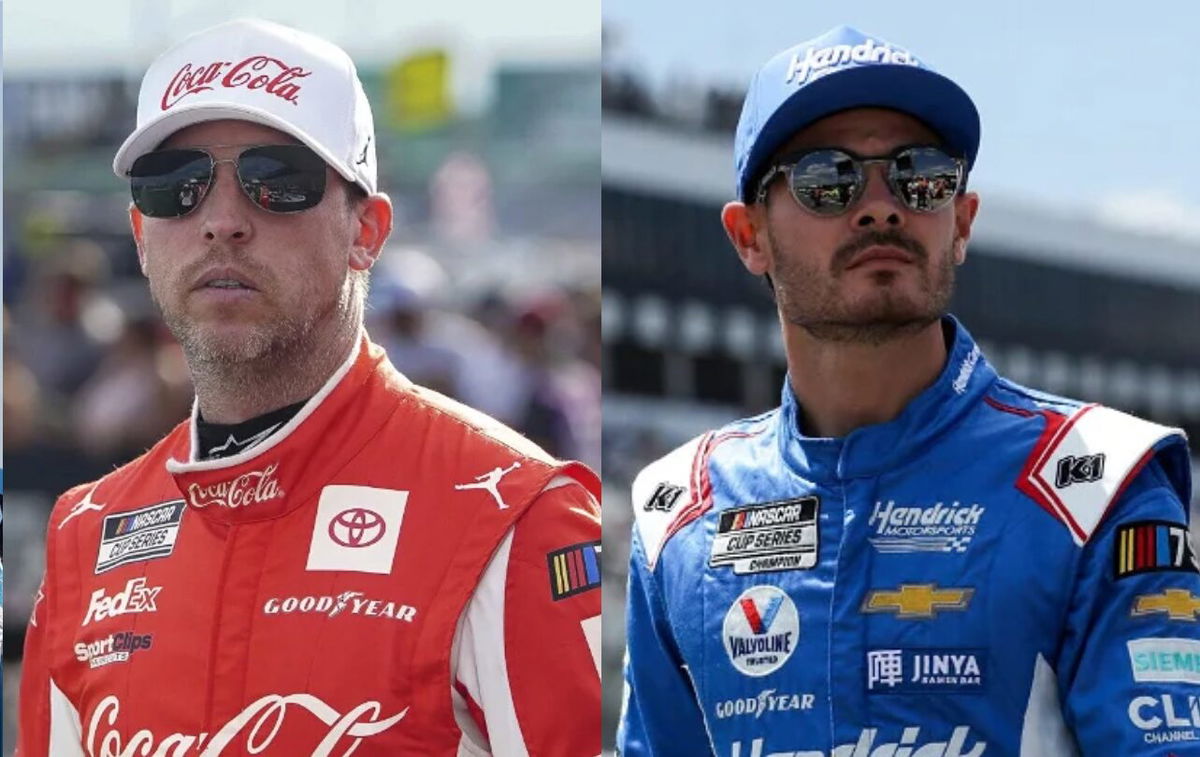
“The field is running the same speed,” Denny Hamlin bluntly said back in August, summing up what many drivers have quietly grumbled about since NASCAR’s Gen-7 era began. On Actions Detrimental, Hamlin has repeatedly pushed back against the Next Gen car, arguing that forced parity has dulled race craft, strategy, and passing.
Watch What’s Trending Now!
Now, that frustration has a new voice. And it’s a big one! Kyle Larson, the sport’s most versatile driver, isn’t outright torching the car, but he isn’t defending it either. His recent comments cut right down the middle, acknowledging the benefits of parity while questioning whether the racing itself has paid the price.
Parity wins numbers, but racing pays the price
“I think we all just had the same car now,” Kyle Larson recently shared his opinion on the Gen-7 car. “Now the sport’s cool because of more winners than we ever have before, and the parity is much better. But at the same point, it’s like, it’s made the racing a little bit worse. I feel like it’s harder to pass.”
Kyle Larson’s assessment neatly captures the contradiction at the heart of the Next Gen era. On paper, NASCAR has never looked healthier. For the third straight year in 2025, the Cup Series produced 14 different winners, spread across seven organizations. That kind of balance would’ve been unthinkable a decade ago.
The standardized Gen-7 car has done exactly what it was designed to do: close the gap, level the field, and make results hinge more on driver execution than engineering muscle. But numbers don’t always tell the full story. While parity has created unpredictability in the victory lane, it has also produced races where track position matters more than raw speed.
Imago
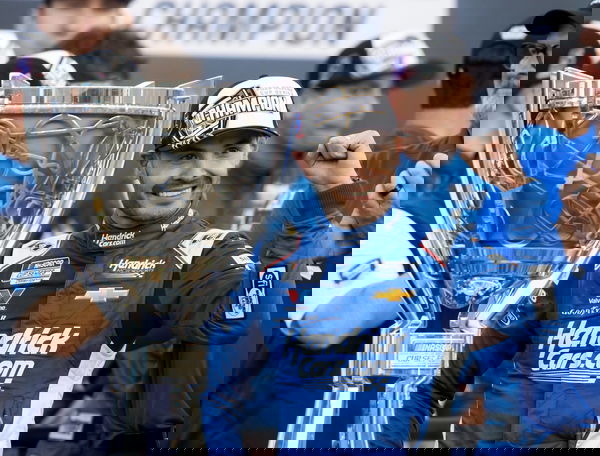
NASCAR, Motorsport, USA NASCAR Cup Series Championship Nov 2, 2025 Avondale, Arizona, USA NASCAR Cup Series driver Kyle Larson 5 celebrates with the Bill France Cup trophy after clinching the 2025 NASCAR Cup Series Championship following the NASCAR Championship race at Phoenix Raceway. Avondale Phoenix Raceway Arizona USA, EDITORIAL USE ONLY PUBLICATIONxINxGERxSUIxAUTxONLY Copyright: xMarkxJ.xRebilasx 20251102_mjr_su5_065
Clean air has become king, and dirty air has turned into a brick wall, especially on short tracks where passing used to be the heartbeat of NASCAR racing. The April Bristol race was the clearest example. Kyle Larson was flawless, dominant, and untouchable. He led 411 of 500 laps, sweeping both stages and cruising to the win.
Yet the race itself left fans split. Impressive? Absolutely. Entertaining? That’s where the debate starts. Cars simply couldn’t move forward, even when they were faster. Denny Hamlin put it bluntly during Richmond weekend:
“The field is just now running the same speed, and at a track where you have to have three to three and a half tenths of speed to overtake the car in front of you, that means that the first-place fastest car is going to struggle to pass the 25th if he just gets put behind him.”
That’s the tension NASCAR now faces. Parity has delivered fairness and fresh winners. However, it’s also stripped away the mechanical separation that once made comebacks, battles, and bold moves possible.
On top, even as the game gets harder
“It’s just a different race car and a different style of racing we have to adapt to it. And we still, I would say, stats would say we are still the best team, over the course of the next-gen era, we won the most races, probably the most top-5s, most top-10s, most DNFs probably too. It’s just gotten tougher for sure,” Kyle Larson further added.
And he isn’t wrong, as the numbers back him up. Since the introduction of the Next Gen car, Hendrick Motorsports has been the benchmark organization in the Cup Series. Over that span, the team has stacked 40 wins, 166 top-five finishes, and 277 top-10s, numbers no other organization can touch.

Imago
INDIANAPOLIS, IN – JULY 26: Kyle Larson 5 Hendrick Motorsports HendrickCars.com Chevrolet watches the on track action during qualifying for the NASCAR, Motorsport, USA Cup Series Brickyard 400 on July 26th, 2025 at Indianapolis Motor Speedway in Speedway, IN.Photo by Jeffrey Brown/Icon Sportswire AUTO: JUL 26 NASCAR Cup Series Brickyard 400 EDITORIAL USE ONLY Icon076525011400
That consistency peaked in 2025, when Kyle Larson capped the season with a Cup Series championship, reaffirming Hendrick’s ability to adapt better than anyone else to NASCAR’s new reality. But dominance doesn’t mean comfort. The margin for error has shrunk, and competition at the top has become brutal.
Team Penske has owned the championship conversation in recent years, winning three straight titles from 2022 to 2024. Joey Logano did it in 2022 and 2024. On the other hand, Ryan Blaney captured it in 2023. Meanwhile, Joe Gibbs Racing continues to apply pressure, especially in 2025, when Denny Hamlin led the series with six wins and Christopher Bell added four more, proving JGR’s depth is very real.
That’s the other unintended consequence of the Next Gen car. While it was designed to level the field, power has quietly consolidated among the sport’s elite three. Yep, you guessed it right – Hendrick Motorsports, Joe Gibbs Racing, and Team Penske. These teams have the resources – engineering talent, simulation tools, and sheer manpower to extract every last tenth from a tightly regulated car.
It’s why Michael McDowell, now with Spire Motorsports, joked earlier this month that the only way to close the gap was to “steal their people.” In the Next Gen era, adapting isn’t optional. And even the best teams are fighting harder than ever to stay on top.