Mark Martin Reminds NASCAR Teams What It Lost After Veteran Crew Chief’s Cup Series Exit

ADD US ON GOOGLE
Jan 7, 2026 | 12:53 PM EST
Imago
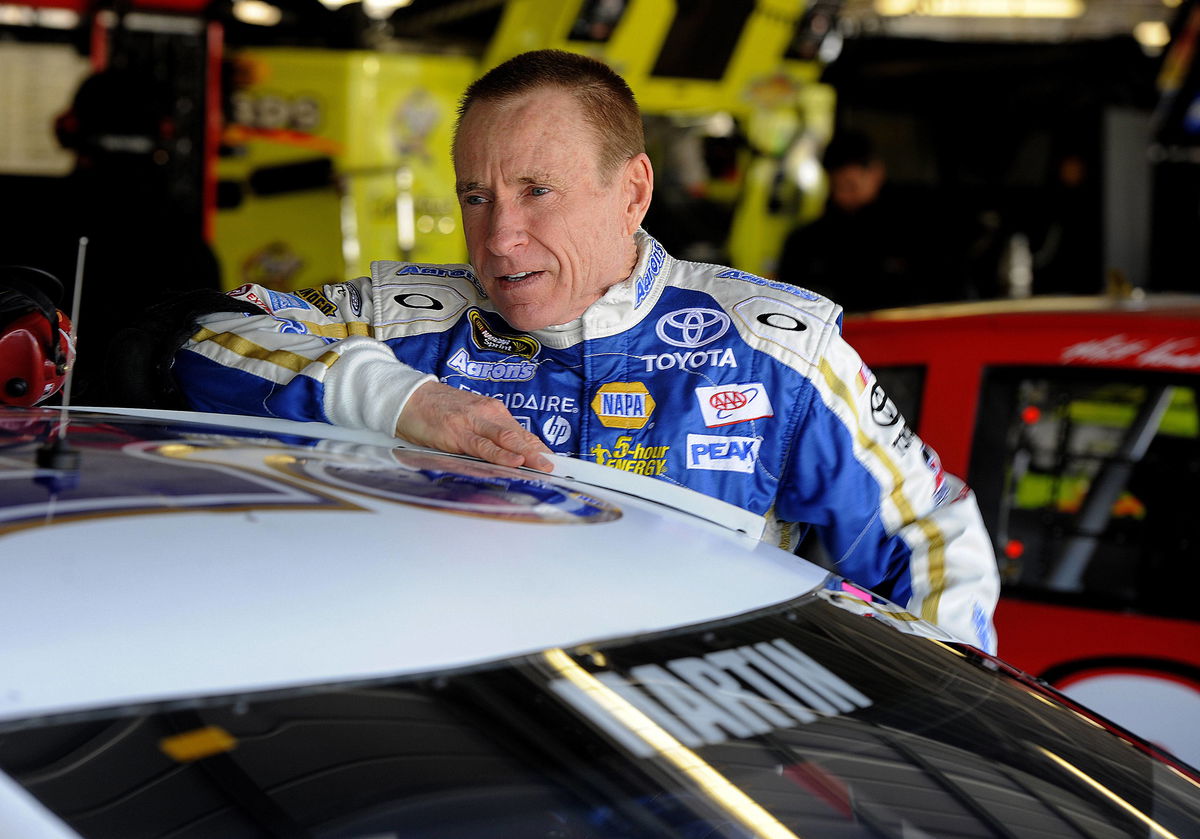
Bildnummer: 13418618 Datum: 19.04.2013 Copyright: imago/Icon SMI April 19, 2013: NASCAR Motorsport USA driver Mark Martin climbs into his race car to take practice laps for the Third Annual STP 400 at Kansas Speedway in Kansas City, KS., April 19, 2013. AUTO: APR 19 NASCAR Motorsport USA – Sprint Cup Series – STP 400 – Practice PUBLICATIONxINxGERxSUIxAUTxHUNxRUSxSWExNORxONLY Icon130419400002; Motorsport Nascar USA xcb x0x 2013 quer Image number 13418618 date 19 04 2013 Copyright imago Icon Smi April 19 2013 Nascar motor aviation USA Driver Mark Martin climb Into His Race Car to Take Practice laps for The Third Annual STP 400 AT Kansas Speedway in Kansas City KS April 19 2013 Car APR 19 Nascar motor aviation USA Sprint Cup Series STP 400 Practice PUBLICATIONxINxGERxSUIxAUTxHUNxRUSxSWExNORxONLY motor aviation Nascar USA x0x 2013 horizontal
Imago
Bildnummer: 13418618 Datum: 19.04.2013 Copyright: imago/Icon SMI April 19, 2013: NASCAR Motorsport USA driver Mark Martin climbs into his race car to take practice laps for the Third Annual STP 400 at Kansas Speedway in Kansas City, KS., April 19, 2013. AUTO: APR 19 NASCAR Motorsport USA – Sprint Cup Series – STP 400 – Practice PUBLICATIONxINxGERxSUIxAUTxHUNxRUSxSWExNORxONLY Icon130419400002; Motorsport Nascar USA xcb x0x 2013 quer Image number 13418618 date 19 04 2013 Copyright imago Icon Smi April 19 2013 Nascar motor aviation USA Driver Mark Martin climb Into His Race Car to Take Practice laps for The Third Annual STP 400 AT Kansas Speedway in Kansas City KS April 19 2013 Car APR 19 Nascar motor aviation USA Sprint Cup Series STP 400 Practice PUBLICATIONxINxGERxSUIxAUTxHUNxRUSxSWExNORxONLY motor aviation Nascar USA x0x 2013 horizontal
Imago
Bildnummer: 13418618 Datum: 19.04.2013 Copyright: imago/Icon SMI April 19, 2013: NASCAR Motorsport USA driver Mark Martin climbs into his race car to take practice laps for the Third Annual STP 400 at Kansas Speedway in Kansas City, KS., April 19, 2013. AUTO: APR 19 NASCAR Motorsport USA – Sprint Cup Series – STP 400 – Practice PUBLICATIONxINxGERxSUIxAUTxHUNxRUSxSWExNORxONLY Icon130419400002; Motorsport Nascar USA xcb x0x 2013 quer Image number 13418618 date 19 04 2013 Copyright imago Icon Smi April 19 2013 Nascar motor aviation USA Driver Mark Martin climb Into His Race Car to Take Practice laps for The Third Annual STP 400 AT Kansas Speedway in Kansas City KS April 19 2013 Car APR 19 Nascar motor aviation USA Sprint Cup Series STP 400 Practice PUBLICATIONxINxGERxSUIxAUTxHUNxRUSxSWExNORxONLY motor aviation Nascar USA x0x 2013 horizontal
Imago
Bildnummer: 13418618 Datum: 19.04.2013 Copyright: imago/Icon SMI April 19, 2013: NASCAR Motorsport USA driver Mark Martin climbs into his race car to take practice laps for the Third Annual STP 400 at Kansas Speedway in Kansas City, KS., April 19, 2013. AUTO: APR 19 NASCAR Motorsport USA – Sprint Cup Series – STP 400 – Practice PUBLICATIONxINxGERxSUIxAUTxHUNxRUSxSWExNORxONLY Icon130419400002; Motorsport Nascar USA xcb x0x 2013 quer Image number 13418618 date 19 04 2013 Copyright imago Icon Smi April 19 2013 Nascar motor aviation USA Driver Mark Martin climb Into His Race Car to Take Practice laps for The Third Annual STP 400 AT Kansas Speedway in Kansas City KS April 19 2013 Car APR 19 Nascar motor aviation USA Sprint Cup Series STP 400 Practice PUBLICATIONxINxGERxSUIxAUTxHUNxRUSxSWExNORxONLY motor aviation Nascar USA x0x 2013 horizontal

Mark Martin’s Hall of Fame career is often remembered through close finishes and near-misses, but behind almost every one of those moments stood a crew chief shaping the outcome. From Jimmy Fennig’s calm precision to Steve Hmiel’s engineering edge, from Robin Pemberton’s adaptability to Ben Leslie’s short-track instincts, Martin worked with some of the sharpest minds the Cup Series ever produced.
Watch What’s Trending Now!
Each partnership taught him something different about speed, balance, and survival at NASCAR’s highest level. That’s why, when Martin recently reflected on a lesser-discussed but deeply influential crew chief relationship, it carried extra weight. In revisiting Rodney’s Cup Series exit, Martin wasn’t just telling an old story. He was quietly reminding NASCAR what it lost when experience, feel, and hands-on brilliance walked out the garage door.
A crew chief who saw speed before others did
Mark Martin’s reflection on Rodney Childers isn’t just nostalgia. It’s a masterclass in how elite racers recognize brilliance before the stat sheet ever does. Looking back, Martin admitted he initially didn’t connect the dots, even as lesser-funded teams kept punching above their weight.
“Cars like the 55, you know, I don’t know, 77, 55, a bunch of these cars, you know, Rodney had worked on were rocket ships and I didn’t recognize it. So, as soon as I got to know Rodney, I mean, the first time we sat down, I was like, man, this is really awesome to work with a driver who understood how to couple technology with dirty hands because he had done his own work,” Martin revealed on the Mark Martin Archive podcast.
That realization came during their time together at Michael Waltrip Racing in 2013, when Childers served as Martin’s crew chief. For Mark Martin, what stood out wasn’t just speed.


But it was why the cars were fast. Childers understood the theory, the data, and the tools, but he also knew how setups felt from behind the wheel. That blend is rare, and Martin immediately saw it.

Imago
via Imago
Their partnership didn’t last long, but it proved pivotal.
One year later, Childers joined Kevin Harvick at Stewart-Haas Racing, and the results spoke loudly. The No. 4 team became an instant powerhouse, culminating in a 2014 Cup Series championship. It was a validation of everything Mark Martin had sensed early on.
Childers’ depth came from his own racing background.
Before becoming a crew chief, he was a successful racer himself, starting in World Karting Association competition at age 12. He won seven South Carolina state championships and five national titles before moving into Late Model Stock Cars in 1997. Between 1999 and 2002, he raced in the Slim Jim All Pro Series and Hooters Pro Cup, later making his Busch Series debut in 2000 at Myrtle Beach Speedway. He stepped away from driving in 2003 to focus on becoming a mechanic.
In an era where crew chiefs are increasingly data-bound, Mark Martin’s comments land as a reminder: NASCAR didn’t just lose a veteran when Childers left one garage. In fact, it lost a rare translator between feel and formula.
Rodney Childers on Mark Martin vs. Kevin Harvick
Rodney Childers has worked with two of the sharpest minds NASCAR has ever seen, and when he talks about Mark Martin and Kevin Harvick, the contrast is as fascinating as it is revealing. Reflecting on his time as Martin’s crew chief, Childers made it clear that the experience left a lasting impression.
“The first time I got to sit down with him and talk to him. It didn’t take me long to figure out that he was a racer from the core. He knew a lot more about things than I thought he would. It’s a lot of fun to work with him.”
According to Childers, Martin’s approach was rooted in precision and preparation. Every detail mattered. Practice sessions weren’t just warm-ups; they were strategic battlegrounds. Martin wanted the fastest car immediately, one capable of charging to the front right after the green flag. That mindset demanded constant tweaking, constant feedback, and a relentless pursuit of perfection. For a crew chief, it meant being locked in from the first lap of practice to the opening moments of the race.
That philosophy shifted dramatically when Childers teamed up with Kevin Harvick.
Comparing the two, he explained, “Kevin’s probably a little bit the opposite. He doesn’t really care if he runs fast at the beginning, runs fast at the end.”
Harvick’s focus leaned toward the long game. Rather than burning everything early, he prioritized race-ending speed, managing the car over long runs and trusting adjustments to bring the No. 4 alive when it mattered most. Still, Childers was quick to emphasize that the end goal never changed.
“Both of them have the same mentality. Both of them want to be fast and win races, but it was just that practice sessions were a little bit different between them,” Childress concluded.
For Childers, working with Martin sharpened his attention to detail, while Harvick refined his patience and strategic thinking. Two legends. Two approaches. One crew chief – fortunate enough to learn from both.
Related Newsletters