Imago
Credits: IMAGO
Imago
Credits: IMAGO
Essentials Inside The Story
- Michael Jordan has some X factors which other owners don't.
- Kenny Wallace explains why Jordan is the right guy to take NASCAR head-on.
- NASCAR has their own points in defense about why charters cannot be made permanent.
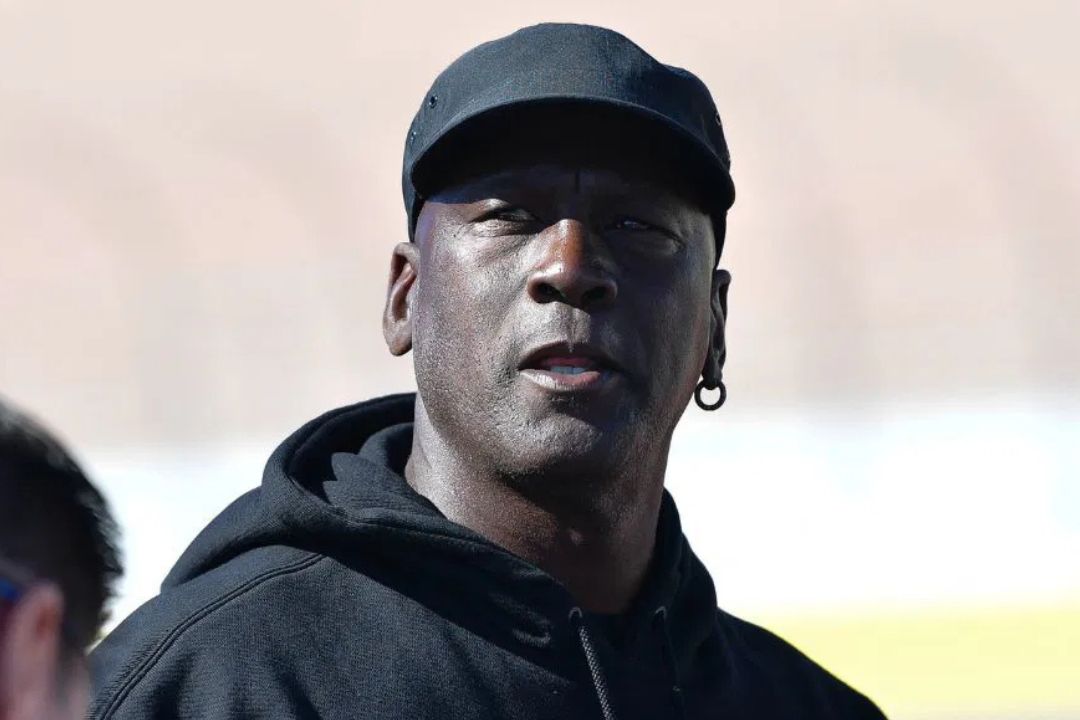
When NBA legend and 23XI co-owner Michael Jordan walked into a packed courtroom on Friday, in every way, he tried to explain why the teams had no choice but to challenge NASCAR’s charter system head-on. But outside the courtroom, someone else was hanging onto every word: Kenny Wallace. And as he later admitted, he agreed with Jordan completely. Because to Wallace, Jordan wasn’t attacking the sport. In fact, he was trying to save it from a system that’s been grinding down team owners for decades.
Watch What’s Trending Now!
Kenny Wallace backs Michael Jordan
“Someone had to step forward and challenge the entity,” Michael Jordan told the jury. “I sat in those meetings with longtime owners who were brow-beaten for so many years trying to make change. I was a new person, I wasn’t afraid. I felt I could challenge NASCAR as a whole. I felt as far as the sport, it needed to be looked at from a different view.”
Coming from anyone else, those words would have sounded bold. Coming from Jordan, they felt seismic. Because he wasn’t speaking as a celebrity, but as a team owner who had finally seen enough. As he says, as an outsider, only he could challenge the sport thoroughly and fairly. Only he can save the sport from itself.
And in the moments that followed, Kenny Wallace was one of the first to stand up and say Jordan got it absolutely right.
“Michael Jordan, what he said was heartfelt. It wasn’t bad. I wasn’t mad at Michael Jordan. I thought what he was saying was heartfelt,” Wallace said, echoing the sentiment of thousands of fans who felt Jordan had simply verbalized what team owners had been silently carrying for years.
“Coffee with Kenny”
Michael Jordan said he is suing @NASCAR because “someone had to do it”. pic.twitter.com/dl0fm2ef1a
— Kenny Wallace (@Kenny_Wallace) December 6, 2025
Wallace explained why he feels Jordan is the right person to do this. This is because the other big titans of the sport are not in a position to do that in the same way. Whether you talk about Roger Penske or Rick Hendrick, these owners have their own livelihood to take care of. They can’t sue NASCAR. But Jordan can. He has the power and the money for it. Plus, for those owners, their first business is not NASCAR, it’s the business of cars. But for Jordan, it’s different.
Today, Jordan is in that age and position that he can devote his full time to NASCAR the way no other owner can. He’s already built his legacy in NBA, and now he could make one as a NASCAR titan too.
That word “brow-beaten” that Jordan said struck a nerve across the industry. Michael Jordan didn’t use it lightly. He was describing a culture where speaking up meant being put back in your place, a dynamic that became painfully clear during Heather Gibbs’ testimony. She revealed that NASCAR gave teams a 6 p.m. deadline in September 2024 to sign the new charter agreement. Just six chaotic hours to review a 112-page document.
Her exact description? It was a “gun to your head.” Sign it, or lose everything. Now, that wasn’t negotiation. Instead, it was pressure disguised as procedure. And that moment, that ultimatum, in a way, is exactly why the charter system now sits at the center of one of the biggest legal battles in NASCAR’s modern era.
Ultimately, this lawsuit isn’t just about money anymore. Rather, it’s about power, fairness, and whether teams should finally have the ability to stand on equal footing with the sanctioning body that controls their survival. Michael Jordan says the sport needs a new view. Wallace says he’s right. And for the first time, the industry isn’t backing away from the conversation.
Meanwhile, NASCAR defends its stance
As the courtroom drama intensified, NASCAR President Steve O’Donnell wrapped up his testimony by laying out the sanctioning body’s core reason for refusing to grant permanent charters. He argued that NASCAR’s business landscape is too fluid for long-term guarantees.
“We need the ability to be flexible,” O’Donnell said.
He pointed to the fluctuating media rights, schedule changes, and economic uncertainty as justification for keeping teams on short, renewable agreements rather than giving them the franchise-style permanence they’ve been fighting for.
But the second half of the day shifted sharply back toward the teams when John Marshall, the Executive Director of the Race Team Alliance (RTA), took the stand for cross-examination. The RTA, a non-profit collective representing nearly all NASCAR Cup Series teams, was formed to give owners a united negotiating voice.
Marshall began by comparing NASCAR’s model with franchise structures in other sports leagues, highlighting how NFL, NBA, and MLB teams own equity in their leagues and enjoy measurable franchise valuations that grow over time. By contrast, NASCAR’s charters offer teams limited security and far less leverage.
However, under cross-examination, Marshall was forced to acknowledge the fundamental difference: NASCAR remains a privately owned, family-run enterprise. It’s not a league collectively owned by its teams. The tense exchange continued as attorneys pressed Marshall on the RTA’s trademark filing for the term “U.S. Racing League.”
Marshall admitted the RTA had indeed secured the name, hinting at the theoretical possibility of a breakaway series. However, he emphasized that the group never pursued creating an actual rival league. The filing, he suggested, was more of a protective measure than a declaration of intent.
When the trial resumes on Monday, Marshall will return to the stand. His testimony is poised to play a pivotal role in defining just how deep the rift between NASCAR and its teams truly runs.
Related Newsletters