
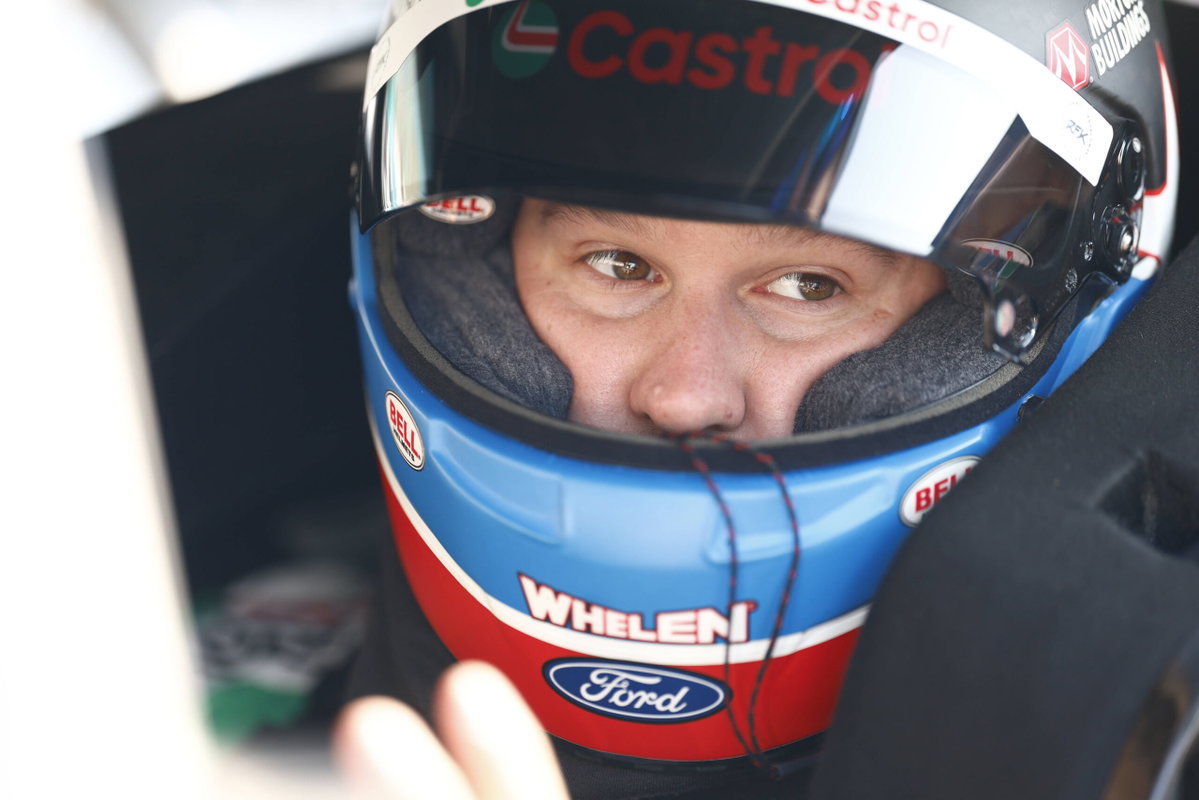
To gamble everything on a tiny window of opportunity in NASCAR; who knows better about that than Ryan Preece? Before establishing himself as a Cup driver, Preece put roughly $80,000 of his own money into getting two O’Reilly Auto Parts Series starts with Joe Gibbs Racing in 2017. He knew this was it, there could be no room for error.
Watch What’s Trending Now!
Looking back, he believes that decision worked because he already had the experience to make the most of a fast car.
Years later, and especially after his maiden points victory at Daytona this season, Preece has offered young drivers a more nuanced version of the same advice: finding a top-tier car can change a career, but the risk only makes sense when the driver is ready to capitalize.
“Winning fixes everything. Winning fixes a lot of problems in life or in your racing career,” Preece said in The Athletic’s 12 Questions interview, as shared by Jeff Gluck on X. “So positioning yourself around a team that has the people, the infrastructure and the race cars to go do that is important — just as important as being a race car driver who makes smart decisions.”
Preece’s argument is based on his unusual route through NASCAR. He returned to racing Modified cars after running the full 2016 Xfinity season, in which he drove for JD Motorsports, and simultaneously also looked for another shot at NASCAR’s national ranks.
Then, he got his shot in 2017, when Joe Gibbs Racing offered him two Xfinity starts in the No. 20 Toyota. The first was at his home track, New Hampshire Motor Speedway, followed by Iowa Speedway shortly afterwards.
Preece was coming off of stellar performances, having already won the Whelen Modified Tour championship in 2013 and accumulated significant success in short-track racing. But, needless to say, the stakes were enormous from Preece’s perspective.
“I had plenty of experience as a race car driver. I was successful in everything I got in outside of (O’Reilly). I knew that if I had a fast race car, I could execute all the things that needed to be done. And we did,” Preece said.
The first race provided immediate evidence that the gamble could pay off. Preece qualified sixth at New Hampshire and stayed inside the top 10 for much of the event, eventually finishing second behind his teammate, the late Kyle Busch.
What made that performance more notable is that Preece finished ahead of established Cup stars, such as Kyle Larson and Brad Keselowski. One could say that race was some type of a major audition for his future Cup aspirations.
Preece then won the second race of the deal at Iowa, giving him exactly the kind of result he believed the opportunity demanded.
It is also part of why Preece believes young drivers should understand the difference between having an opportunity and being ready for it. He is not suggesting abandoning a full season in lesser equipment and betting everything on two or three races with a top organization.
“You cannot drive a slow car fast,” Preece said in the interaction with The Athletic, recalling a familiar Kevin Harvick line. For Preece, the key qualification is whether the driver is actually ready to perform in the better machinery.
“So I would tell them to do the exact same thing I did — as long as they’re in the same position I was in,” he said.
Preece’s path was different because he felt he was at that point where the next opportunity had to be converted immediately. That does not mean every young driver should emulate his approach, as teams are willing to give developing drivers more opportunities and more time to learn.
“Yeah, but some people are blessed where you get those opportunities to be in fast cars and you’re given more leash than most. My situation was I had two races, and I had to win. There are situations we see today where there’s a lot more room for growth. There’s a lot more time to develop. They’ll wreck a lot of race cars. Sometimes it depends on the situation you’re in. Mine just happened to be a little bit harder than most.”
Preece’s career progression since those two JGR races illustrates just how impactful those opportunities were. Besides his maiden points win at Daytona, he also claimed the final spot in the 2026 Chase.
The Daytona breakthrough also gave Preece another chance to reflect on the unconventional route he had taken. He has repeatedly emphasized that his career was not built through the traditional progression from lower series to Trucks to Xfinity and then Cup. Instead, he relied on short-track success, opportunities in faster equipment and the ability to deliver when those opportunities arrived.
That is the lesson Preece now wants younger racers to take from his story. The fastest car can provide an opportunity that a slower car simply cannot, but the driver still has to be ready when the moment arrives.