
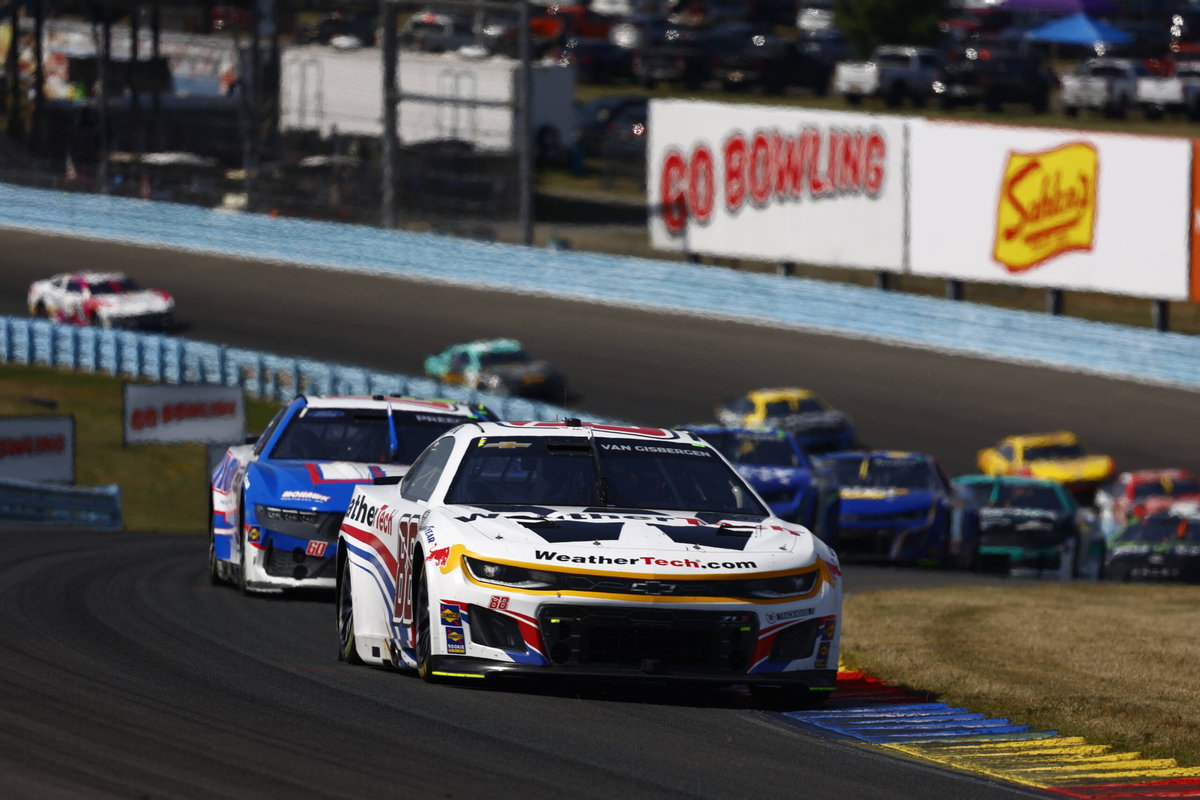
Scheduling might not be the only change we see at Watkins Glen International. In the past, there have been multiple incidents where drivers used the runoff pavement to gain time, avoid contact, or aggressively re-enter the racing surface during restarts and deep battles in the field. However, that may no longer be the case.
Watch What’s Trending Now!
NASCAR’s track prep team has been making physical changes to the racing circuit itself, and Brad Moran, speaking on SiriusXM NASCAR Radio, explained what is being done and why.
“The grooves that were put in last year, we thought would slow them down more,” Moran said. “These guys are pros at finding speed. That’s what they do, and it really didn’t change much.”
The main changes are in Turn 1. Coming off the corner, drivers have been using the runoff area to get extra speed rather than staying on track. NASCAR installed grooves previously to discourage it, but it did not work. This year, they’ve taken a different approach. Turn one will now have three to four tire bundles placed in the runoff. Tire bundles are the ones that create physical boundaries that drivers actually respond to.
“The drivers tend to like that way of controlling some of the track limits,” Moran said, pointing to a similar track setup at COTA and Mexico City.

Brad Moran says the newly placed tire packs at @WGI were an ask from competitors themselves. 🛞 "The drivers tend to like that way of controlling some of the track limits, and that's what we've done." More with the #NASCAR Cup Series Managing Director → sxm.app.link/NASCARIntervie…
This race change essentially came from some of the drivers’ voiced concerns. They wanted to stay on the racing surface rather than running wide and risking a penalty. The bundles give them a clear, visible line to work with. Final placement will also be adjusted once the drivers arrive and assess the corners.
“We go out, we look at the track, we listen to all the drivers on the locations,” Moran said, “see if we have to bump them a little bit, push them together, spread them apart, whatever we need to do to get the location right.”
The second change is at the carousel. NASCAR added a new tire barrier and a safer wall about 255 feet into that section on the driver’s left.
“We wanted to do something to correct that area,” Moran said, “keep them on track a little bit as well as protect some of the things going on at that carousel area.”
These changes, however, come when the race’s place on the calendar is also affecting what happens on the track.
Watkins Glen International has been the summer tradition in this NASCAR race since 1986. For decades on end, fans made the trip to New York’s Finger Lakes region every August. The ground was firm, the weather warm, and the conditions could be called ideal for camping across the sprawling infield.
However, in 2024, NASCAR moved that race to September to slot it into the Cup Series playoffs. Then, for 2026, they changed it again, this time to Mother’s Day weekend in May. The goal was to balance the road course schedule and attract a new crowd before the college semester ended.
However, May in upstate New York is still considered mud season, and the campground turns into a swamp. The ground has barely thawed from winter and remains soft and saturated. More than 600 vehicles got stuck axle-deep in the mud while trying to reach their camping spots. Tractors and dozers worked around the clock to get RVs in.
In August, the traditional slot, cockpit temperatures exceeded 130 degrees Fahrenheit, while tire wear and driver fatigue were the primary concerns. But in May, with temperatures ranging from 45 to 50 degrees Fahrenheit, those challenges take on a unique form.
However, Thursday’s update ensures this will no longer be a problem. One of the first pieces of the 2027 NASCAR schedule fell into place with Watkins Glen International announcing that its race weekend will move to September next year. Though an exact date was not specified, officials indicated that the race will occupy one of the earliest slots in the 10-race Chase next season.
September is right in the middle, cool enough for engines to produce strong power, warm enough for tires to grip consistently. Drivers will face a lower sun coming out of Turn 7, which is also a big visibility change and did not happen during the traditional August start.
Imago
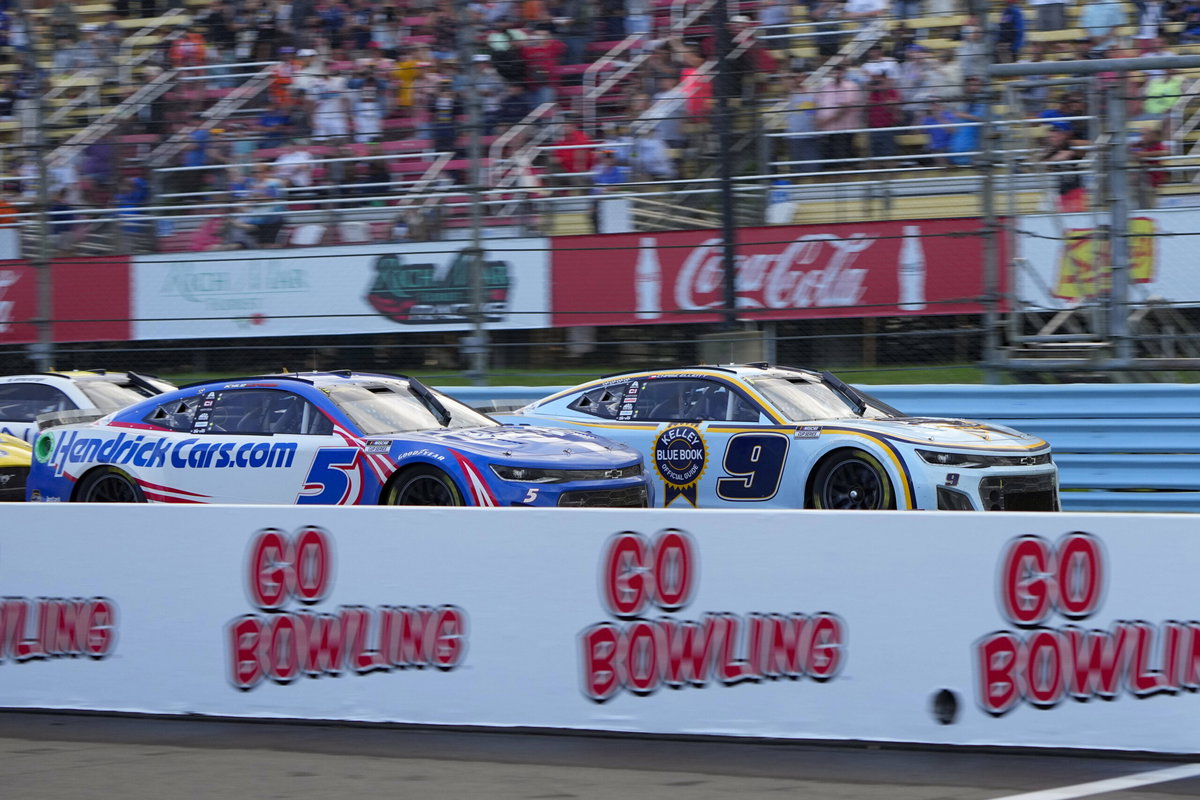
WATKINS GLEN, NY – AUGUST 21: Chase Elliott 9 Hendrick Motorsports Kelley Blue Book Chevrolet and Kyle Larson 5 Hendrick Motorsports HendrickCars.com Chevrolet race for the lead during the NASCAR, Motorsport, USA Cup Series Go Bowling at the Glen on August 21, 2022, at Watkins Glen International in Watkins Glen, NY. Photo by Gregory Fisher/Icon Sportswire AUTO: AUG 21 NASCAR Cup Series Go Bowling at The Glen Icon220821032
NASCAR has even confirmed that the May slot is only a one-time experiment. But it wasn’t the only change.
How NASCAR plans on changing one traditional rule at a time
The 2026 and 2027 seasons could be considered a period of major change in NASCAR. The season finale is moving after Phoenix Raceway hosted the championship race since 2020. On November 8, the role will pass to Homestead-Miami Speedway. NASCAR is also working toward adopting a rotating model for the title race.
Additionally, two of the street events have also been reshuffled. The Chicago Street Race, which ran from 2023 to 2025, has been replaced by a race at Naval Base Coronado in San Diego on June 21. The date ties directly into America’s 250th birthday and fills the Southern California gap left by the closure of Fontana’s Auto Club Speedway.
Chicagoland Speedway, on the other hand, returns on July 5 after a seven-year absence. Roughly $5 million to $10 million in renovations were required to make that happen. Fan demand for 1.5-mile oval racing with the Gen-7 car helped drive the decision forward.
Off the track, the Xfinity Series was rebranded as the NASCAR O’Reilly Auto Parts Series. Amazon Prime Video will exclusively carry five races, beginning with the Coca-Cola 600.
While all this change may feel like a whirlwind, the mud at The Glen is the biggest noise through the second week of May.