
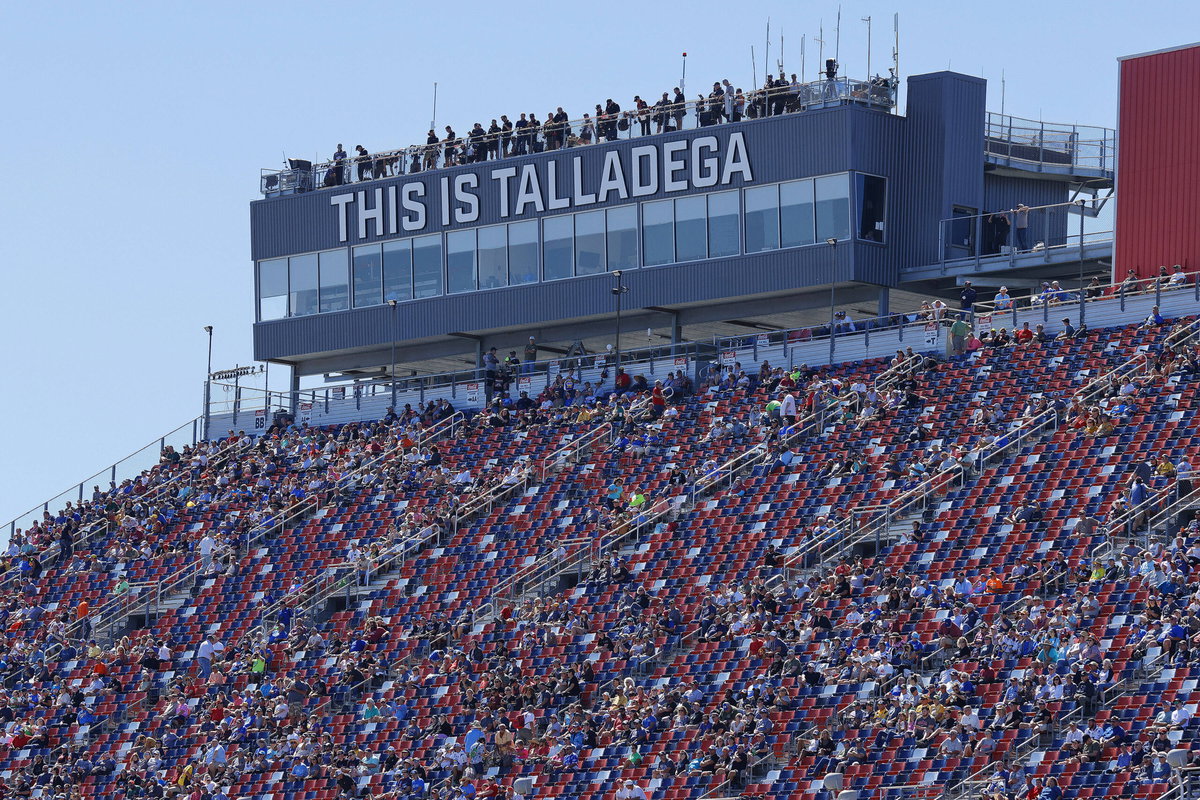
NASCAR made some meaningful changes to the superspeedway package for the Daytona race. They dropped the horsepower from 510 to 465 and cut down the spoiler from 7 to 4 inches. Nothing really changed drastically on track, but it was a step in the right direction. And it looks like they are continuing to tweak this package with the new changes for Talladega.
Watch What’s Trending Now!
The YellaWood 500 will feature a 3.5-inch rear spoiler, down from the 4-inch version used at Daytona in August. This represents the second major reduction to the superspeedway setup in 2026. NASCAR had already cut the rear spoiler from seven inches to four inches for Daytona.
NASCAR journalist Toby Christie posted about the rule change on his official X account and added that the cars will otherwise remain unchanged from their Daytona-spec configuration.
Back to the Talladega-specific rule change. The aim was to reduce drag and make it easier for drivers to maneuver through the pack rather than relying heavily on track position and fuel-saving tactics.
Jamie McMurray believes the next step could make the racing even more competitive. Speaking to NASCAR.com, the former Daytona 500 winner highlighted drivers’ response to the Daytona experiment and argued that another reduction should create more passing opportunities.
“It seemed like it was a win at Daytona,” McMurray said. “All the drivers thought they could build a bigger run at Daytona than they had in the past. I applaud NASCAR for taking a little bit more off, taking that next step.”
McMurray also highlighted a key difference in dimensions between the two superspeedways, which could potentially free up more passing opportunities.
“The other thing to consider is that Talladega is about eight feet wider than Daytona, so this gives you a little more options if you can generate a run to be able to make a pass. So my anticipation is fairly high for seeing how this works out.”
While the spring race featured the original seven-inch spoiler, the fall race will see the height reduced by three and a half inches in total. McMurray noted that the new 3.5-inch spoiler will be smaller than the support structure on Carson Hocevar’s spring-race winning car. That said, aerodynamics is not the only area where NASCAR has focused for this race.
The stage structure for the playoff race has also been reworked, after Daytona produced a heavy emphasis on conserving fuel. The original Talladega schedule was set to feature 60 laps in Stage 1, another 60 in Stage 2 and 68 in the final stage. That has now been changed to 98, 45, and 45 laps, respectively.
This means that the first stage will run deep enough to require a green-flag pit stop, while the second and third stages can be completed on fuel under normal conditions. NASCAR says it wants to encourage drivers to race harder through the stages, especially since stage points have added importance in the current playoff format.
“We haven’t had stage points in a Chase format, and as we’ve seen this year, the stage points make a huge difference. You can have an average finish at the end if you’re able to capitalize on those stage points,” McMurray added.
A stage win equals 10 points, and knowing that attrition can be high on tracks like Talladega, stage points will be in focus. And with only superspeedway races as a part of the Chase, these changes truly make it a wild card event. But new changes don’t necessarily mean improved on-track product.
The stage adjustment addresses one of the biggest concerns surrounding the Daytona experiment. NASCAR had hoped the shorter spoiler would create more maneuverability and reduce the importance of fuel-saving strategies, but the race still developed into a contest where fuel mileage played a major role.
This is exactly why NASCAR decided to roll out these changes now, instead of waiting for the post-season. The shorter spoiler should likely create more opportunities to build runs, while the 98-45-45 stage structure should make fuel conservation less influential, thus making stage points more valuable.
Will these changes produce the type of racing NASCAR is aiming for? We can’t say just yet. As McMurray himself acknowledged, teams will inevitably search for ways to exploit any new rules package. But for the Talladega Chase race, NASCAR is once again trying to shift the balance by allowing drivers to create their own opportunities on the track.