
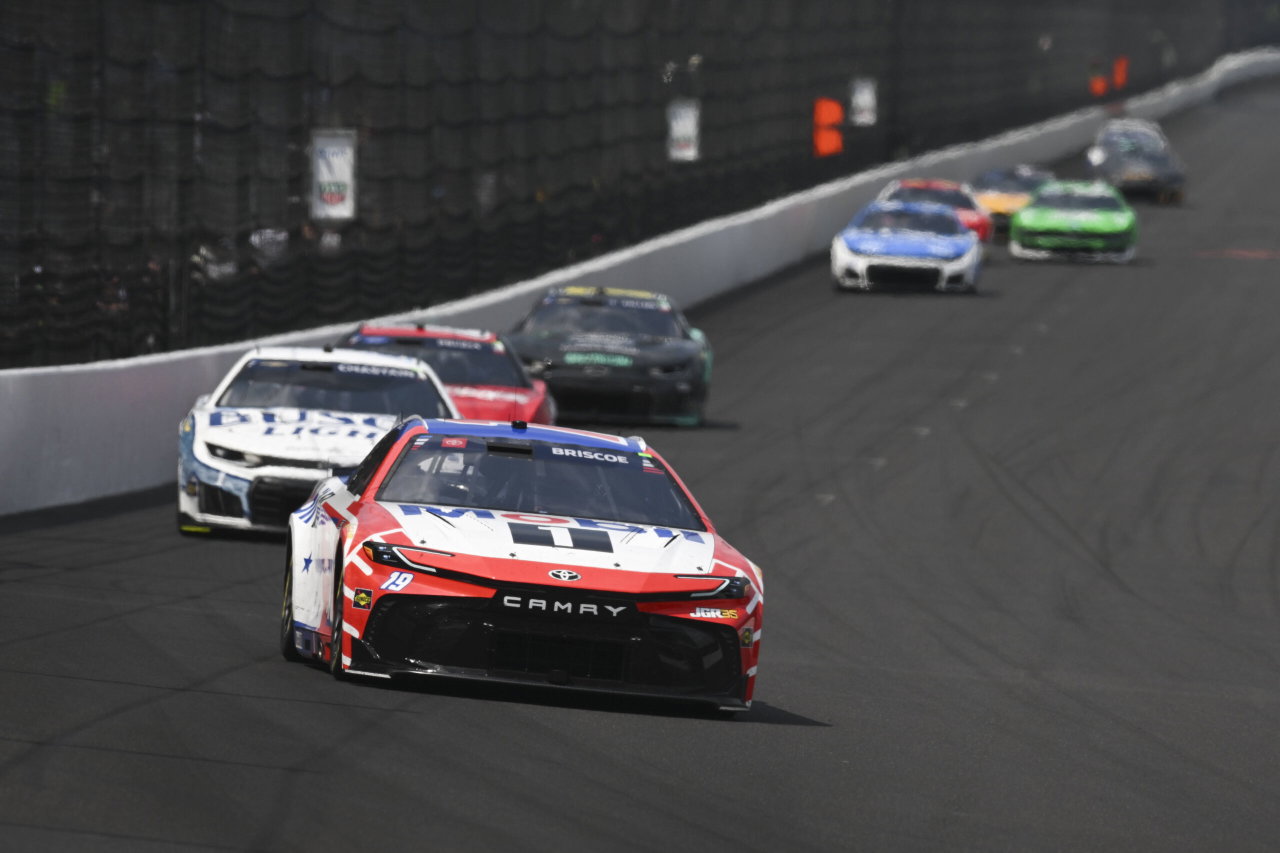
NASCAR came into 2026 with a clear plan. After more than a decade of elimination-style playoffs, the sport scrapped that format. It brought back a modified version of the original Chase. Sixteen drivers, ten races, no eliminations once the Chase begins. Whoever accumulates the most points across those postseason races wins the title. Three races in, the standings are as tight as they can be. But the moments that have defined this postseason have had very little to do with where anyone is on the scoreboard.
Watch What’s Trending Now!
The old playoff structure had urgency piped into it. Every few races, a group of drivers was eliminated. Fans knew what it meant to be below the cutline. Fall below at the wrong time, and the championship was over. That format gave every race a clear stakes question before it even started. The 2026 Chase removes that entirely. A bad race now creates a deficit, but does not end a season.
The points structure changed too. A Cup Series win is now worth 55 points, up from 40 previously. Stage points remain unchanged. The regular-season champion enters the Chase at 2,100 points. Second place starts at 2,075. The third seed starts at 2,065, after which each successive seed drops by five points, with the 16th seed beginning at 2,000. NASCAR built that gap in to preserve the value of 26 weeks of regular-season work once the Chase began.
The goal was a championship earned through sustained performance across ten races, not one where a driver survives elimination rounds and wins a single event to take the title. So far, the format is producing exactly the open points race it was designed for. Whether the story around that competition stays equally focused on the standings is a separate matter.
The NASCAR Chase standings after three races
After Bristol Motor Speedway, Kyle Larson leads Denny Hamlin by one point. Joey Logano is 16 behind. Christopher Bell sits 17 back. Ty Gibbs is 42 points down. Ryan Blaney has dropped to sixth, now 52 behind Larson. Tyler Reddick is 61 back. Carson Hocevar is eighth, 85 points off the lead.
The movement at the top has been considerable. Larson entered the Chase as the seventh seed and is now leading it. Hamlin came in with the largest starting advantage in the field and has since lost the lead by a single point. Logano spent most of the regular season outside the title picture. He is now third after winning at Bristol.
All 16 drivers remain in contention. Seven races remain. The gap between first and eighth is 85 points, and one strong weekend changes everything. The format is functioning. But the championship is not the only conversation this postseason has been producing.
Darlington and a threat that set the tone
The Chase opened at Darlington Raceway in South Carolina on September 6. The most replayed exchange from that night had nothing to do with who moved in the standings.
On Lap 107, Hocevar washed up the track and made contact with Brad Keselowski’s No. 6 RFK Racing Ford. Keselowski spun and finished 23rd. Hocevar, who started 34th, came back to 11th. As a racing incident, it was brief. What Keselowski said afterward gave it a longer life.
“His day is coming and it’s coming hard. Watch out, Carson,” Keselowski said.
Asked if the two had prior history, he added: “No, but there will be.”
Hocevar’s response was three words. “I’ll tighten my belts.”
Those exchanges were replayed and shared well after the broadcast ended. There is one piece of context that makes it more interesting than a standard post-race comment: Keselowski is not in the Chase. He had no championship on the line that night. Yet his conflict with a Chase driver became one of the biggest stories from the opening postseason round.
A few days later, Hocevar explained that he and Keselowski had been racing tightly for an extended stretch, with both driving at the limit, and that contact eventually came as the intensity increased. That kind of story is something no points system was built to manage.
Kyle Larson ends the drought at Gateway
The second Chase race was at World Wide Technology Raceway in Madison, Illinois, on September 13. Larson won. That was a significant championship development. But the win came with something else attached.
The victory ended a 51-race Cup Series winless streak. His last win had come at Kansas Speedway in May 2025, 490 days earlier. He has two championships. He is consistently placed among the best in the sport. The drought had been its own story long before the Chase started, and it did not simply disappear when he crossed the finish line.
Competitively, the picture was clear. Larson moved from seventh to second in the standings and cut Hamlin’s lead to nine points. But the post-race conversation split. The championship angle was there. So was the personal one: was Larson back? He addressed it directly, saying he was not fully back to his 2021 or 2023 level but that the team had been building toward this. That measured answer gave the title race another human dimension alongside the pure points math.
The race itself had company beyond Larson’s win. Two overtime restarts. Hamlin finished ninth after a pit stop problem on Lap 199 of 247. Blaney suffered brake issues. Several Chase drivers got caught up in late-race incidents. Larson survived it all and held off Logano and Alex Bowman at the finish.
Coming away from Gateway, a viewer could have been talking about any number of things. The 51-race drought finally ending, the two overtimes, the brake failures, or Hamlin’s pit stop trouble. All of those are legitimate stories from the same afternoon. The championship is one layer of a larger picture, and several others were competing with it.
Then came NASCAR’s Bristol
The third Chase race was at Bristol Motor Speedway in Tennessee on September 19. It is where the distance between what matters for the championship and what people were actually discussing became the most visible.
Blaney was running the best race of his postseason. He led 202 laps. With 43 laps remaining, he was still on track for a result that could have meaningfully shrunk his points deficit. Contact ended his night.
Blaney passed Hocevar for second on Lap 457 and moved to the inside lane. Hocevar came back alongside. They touched on Lap 458. Blaney’s No. 12 Team Penske Ford hit the outside wall and was done. He finished 33rd and fell to sixth in the Chase standings, 52 points off the lead.
What followed happened on pit road. Blaney walked over to Hocevar near the No. 77 car and pushed him. Hocevar threw two punches. Blaney went to the ground, got back up and landed his own punch before officials and crew members stepped in. FOX Sports reporter Bob Pockrass reported that Hocevar’s explanation was that he saw Blaney coming toward him fast, understood it was not going to be a conversation, and decided to act first.
Throughout all of this, Logano had just won his 40th career Cup Series race. He led 93 laps, made a decisive move on Lap 494, with six laps remaining, and recorded his third win of the 2026 season.He was eighth after Darlington and third after Bristol. He entered the Chase as the No. 9 seed. Bristol was also Hocevar’s best career finish at the track, coming in third. By any competitive measure, the race delivered major championship movement.
The fight became what most people were talking about when it was over.
One detail from the end of the night is worth noting. Logano received boos as he pulled into Victory Lane. Hocevar, heading out of the track, was cheered by fans in the backstretch crowd. That is one crowd on one Saturday night, not a measurement of NASCAR’s broader audience. But it reflected where the emotional energy in the building was sitting.
On Monday, Blaney appeared on Hamlin’s “Actions Detrimental” podcast and gave a fuller account. He acknowledged both drivers shared some responsibility for the contact. He said he regretted going over to Hocevar. Families and children watch NASCAR, he said, and he holds himself to a standard. On the fight itself, he said plainly: “I got my ass kicked.”
NASCAR chief executive Steve O’Donnell confirmed that neither driver would be penalized. He drew a distinction between drivers settling something personally after a race and drivers using a car as a weapon on the track. He said NASCAR does not encourage fighting but does encourage passion. Crew members who had joined the altercation were still under review.
The championship moved at Bristol. Larson took the lead. Logano jumped to third. Blaney fell significantly in the standings. All of that changed the title picture in real and measurable ways. The fight came after the checkered flag, and it defined the weekend’s coverage.
Hocevar as a story in NASCAR
Hocevar is 23, from Portage, Michigan, in his third full Cup Series season with Spire Motorsports in the No. 77 Chevrolet. He races aggressively. He speaks directly. By any reasonable measure, he has become the most discussed person in the sport right now.
That did not start at Bristol.
After Darlington, NASCAR cited Racing Insights data on Hocevar’s history. It showed involvement in driver incidents across 16 Cup race weekends since the start of the 2025 season, within a 63-race window. That is roughly one in every four race weekends. The drivers involved have included Keselowski, Logano, Blaney, Kyle Busch, Bubba Wallace and Corey Heim.
The June 7 race at Michigan International Speedway showed how one contact cascades. On Lap 83, Hocevar clipped John Hunter Nemechek sideways. Nemechek hit Wallace. Wallace moved into Ty Gibbs. Gibbs then collected Reddick, who spun and backed into the inside wall before Austin Dillon struck him. Hamlin was also caught in the aftermath. One contact, multiple drivers affected.
After that race, Wallace confronted Hocevar on the pit wall. NBC Sports reported that Hocevar stayed composed, nodded, smiled at moments and patted Wallace on the shoulder. That reaction was almost as discussed as the crash itself.
At the Brickyard 400 at Indianapolis Motor Speedway earlier this season, another chapter opened. Hocevar and Heim have a history going back to the Truck Series, and it followed them into 2026. Hocevar started from pole at Indianapolis. Heim won. As Heim headed to pit road afterward, Hocevar gave him a one-finger salute. Heim responded on TNT’s broadcast: “Handed him a big fat L.”
Hocevar’s first Cup Series win came at Talladega Superspeedway in Alabama in April, in his 91st Cup start. After winning, he drove down the frontstretch with his body hanging out of the driver’s-side window, waving to the crowd. Sports Business Journal reported that his personal merchandise site made nearly $500,000 in sales during the first month after the victory.
His Lionel Racing die-cast sales in the first 24 hours after Talladega broke records. They were the highest first-day figures for any NASCAR race win since NASCAR and Lionel began their partnership in 2010, surpassing the numbers from the day after Earnhardt Jr. won the 2014 Daytona 500.
His combined social media following on Facebook, Instagram and X grew by 70.6% from January through May, adding close to 200,000 followers. By late August, he topped the NASCAR Shop’s online retail rankings and sat inside the top five for trackside sales.
After Darlington, he turned the Keselowski exchange into a direct promotion. He offered a 23% merchandise discount because he had gained 23 positions in the race. When Keselowski’s comments kept circulating, he added a 6% discount for six hours, a nod to Keselowski’s car number. Sports Business Journal reported that promotion came close to $200,000 in sales over 24 hours.
He appeared at the Met Gala. He attended the TIME100 Sports Gala. TIME included him in its 2026 TIME100 Most Influential People in Sports. Motorsport.com wrote in July that he had become recognizable to people who do not regularly follow NASCAR, describing his transition from local tracks to appearing alongside major celebrities as genuinely surreal.
A NASCAR profile published in May made his approach clearer. Hocevar said Dale Earnhardt Jr. was his favorite driver growing up. Not only for how he drove, but because Earnhardt Jr. appeared on MTV and mainstream platforms away from the track. Hocevar grew up thinking that was what NASCAR drivers were supposed to do. He also studies how older drivers connected with fans, not just how they raced.
He did not stumble into a personality-driven following. He built toward one deliberately.
Zane Smith addressed his feelings about Hocevar on the “Racin’ With The Boys” podcast in July. NASCAR.com covered it as another chapter in a growing list of public conflicts involving Hocevar. The list keeps expanding. So does his audience.
Jayski posed the question directly in August: does everybody hate Carson Hocevar? What it found was no. The criticism is vocal but not uniform. He has real fans alongside real critics. He can be the driver another competitor attacks publicly on a podcast. A fan buys his jersey the same afternoon. Commercially, those two things reinforce each other rather than cancel out. That is an unusually useful place for a driver to be.
The championship and everything around it
The 2026 Chase standings are genuinely compelling. One point separates first from second. Logano, barely a title factor two months ago, is now 16 back and coming off a race win. Bell has been consistent throughout and sits 17 behind. Blaney has 52 points to recover but seven races to do it. The format is delivering the sustained, open points race NASCAR designed it to be.
What it cannot deliver is exclusive ownership of the conversation around those races.
Part of that comes from what the format removed. The old playoff structure had built-in urgency through elimination. Cutlines told fans exactly what mattered before the first lap. The 2026 Chase asks for something more patient: follow the points through ten weeks. That rewards careful attention. It does not produce an immediately shareable moment the way a punch on pit road does.
Hamlin’s “Actions Detrimental” podcast reflects something broader. He is a championship contender, a team owner and a media platform running simultaneously. Blaney’s fuller post-Bristol account came through Hamlin’s show. Drivers are no longer only subjects of coverage. They publish and interpret the sport themselves, and that brings audiences in through routes the points table cannot touch.
Kansas Speedway is next on September 27, followed by Las Vegas Motor Speedway and Charlotte Motor Speedway. Intermediate 1.5-mile tracks are where Hendrick Motorsports teams like Larson and William Byron, and Joe Gibbs Racing teams like Hamlin, Bell and Gibbs, historically perform well. Team Penske’s Blaney and Logano also have strong records on that layout. The points will shift considerably over those three races.
The points values, seeding, ten-race window and regular-season advantage were all built with purpose. The title should be meaningful and earned. What NASCAR could not engineer was a guarantee that the championship would own the weekend’s biggest story on its own.
At Bristol, Logano won his 40th career race. Larson took the championship lead. Blaney dropped significantly in the standings. Hocevar finished third. All of that changed the title picture in ways that will matter in November.
The first image most people carried out of that Saturday night was two drivers throwing punches under the Bristol lights.
Seven races remain. The standings are as close as they have been all season. How much space the championship gets to be the primary story from week to week is not something the points system can answer on its own.