Imago
@JimCrooks7/X
Imago
@JimCrooks7/X
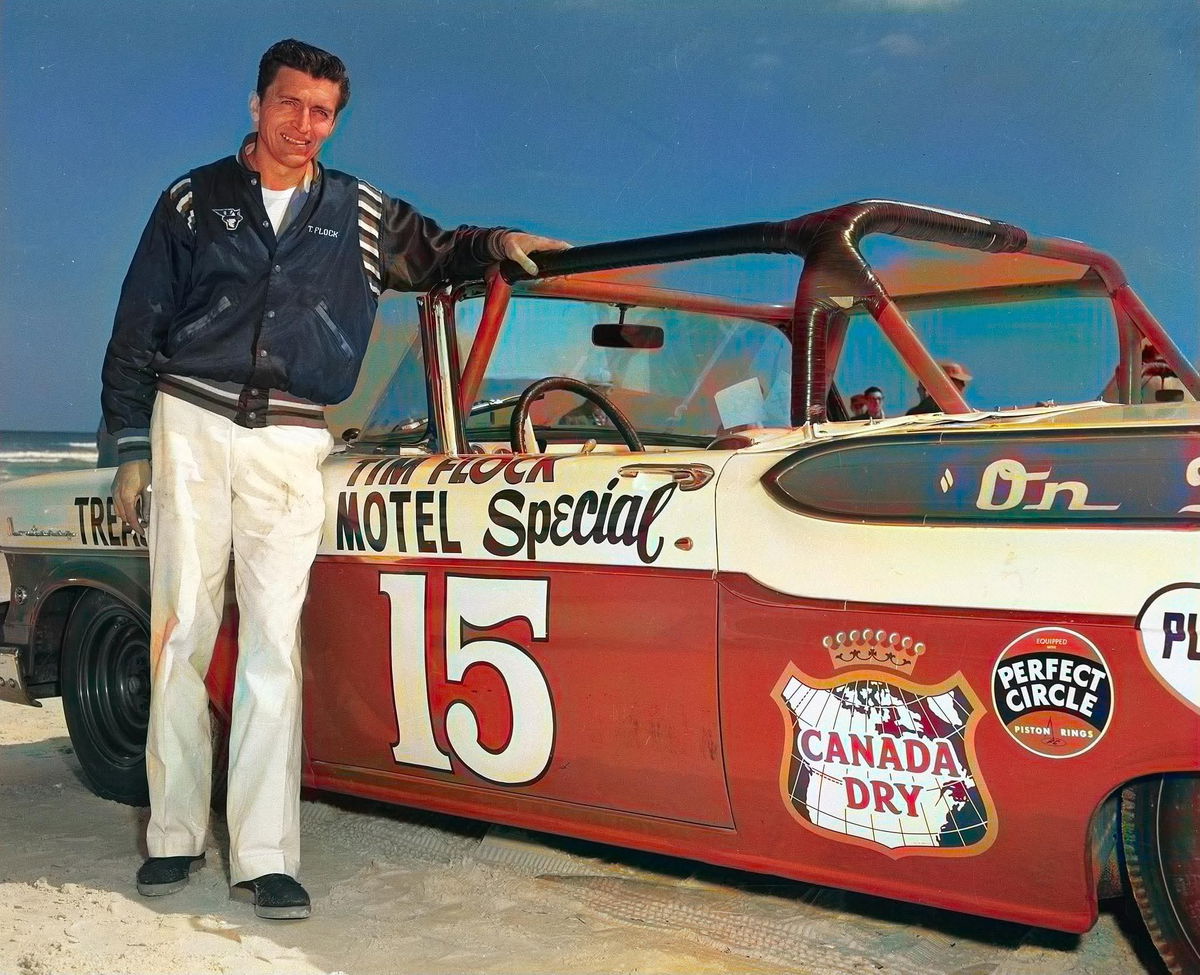
To be able to beat NASCAR legend Lee Petty seemed near impossible, but one 29-year-old driver from Alabama stood in Petty’s way. Tim Flock, the two-time NASCAR series champion, posed a serious threat at the 1954 Daytona Beach race on February 21. Flock set a record of 90.40 mph to keep Petty at bay, and thanks to one technical invention, Flock gained the upper hand.


When the checkered flag waved, Tim Flock roared across the finish line first and grabbed the winner’s trophy like a man who had just won the lottery.
Watch What’s Trending Now!
Legend has it that the first driver to use a two-way radio in his car was chatting with his crew while tearing around Daytona Beach’s wild 4.1-mile mix of sand and asphalt.
Getting to talk to your crew in real time was a big deal back in the day. Constant updates on fuel, tire wear, and repositioning helped adjust strategies.
Moreover, the live updates about changing conditions also helped to predict and maneuver around the racetrack. This would’ve also helped Flock make faster decisions than his rivals.
But before Flock could even celebrate, the victory began to slip away.
69 years ago today, #42 Lee Petty won the 1954 NASCAR Grand National race @ Daytona Beach, #88 Tim Flock got disqualified for solder on one of the screws in the carburetor.
Flock was so mad @ NASCAR that he quit racing, but returned in September. pic.twitter.com/DGyZedVHpc
— Andrew (@Basso488) February 21, 2023
Lee Petty, driving his Chrysler, had led most of the 39-lap, 160-mile race from the pole and looked like the real one now. And then the plot twist hit: Flock was disqualified. Not for crashing or cheating on the track, but for a technicality under the hood.
A day later, NASCAR officials tore down Flock’s Ernest Woods-owned Oldsmobile and discovered his carburetor had been polished and the butterfly shaft soldered, a clear rule violation. Flock was ultimately disqualified, and the win was given to Lee Petty.
It was the second time in three years that a Daytona win had been taken from him, after a similar disqualification in the 1952 Modified-Sportsman race. Flock fought for it, saying that he didn’t use that to his advantage, and that, the soldering was only to prevent any potential problems that could arise. But NASCAR didn’t listen.
The then-NASCAR president, Bill France, admitted it was a tough call but made one thing crystal clear: the rules apply to everyone, even the biggest names in the sport. If a car doesn’t meet the rulebook, the checkered flag doesn’t matter, and the disqualification stands.
This loss had hurt Flock so badly that he swore to never return to NASCAR again. He sat out for most of the season, but eventually, the competitive spirit of the sport couldn’t keep him away for too long.
And while this stands as one of the most interesting stories in the NASCAR Classics, one cannot help but wonder when and how the two-way radios came to life in the sport.
When were two-way radios legal in NASCAR?
Before radio communication became standard in NASCAR, teams were already experimenting with it in the early 1950s. Team owner Raymond Parks famously outfitted his crew with surplus WWII walkie-talkies around 1950, but the early technology was viewed as an unfair advantage and led to protests from rival teams.
The first recorded use of a two-way radio in a NASCAR race came in 1952 during a Daytona Modified event. Driver Al Stevens used a radio to communicate with his crew chief, Cotton Bennett, while racing, a true first in the sport.
At NASCAR’s top level, the earliest known example of radio communication directly influencing a win came on July 4, 1960. Jack Smith stayed in contact with crew chief Bud Moore via radio during the Firecracker 250, helping him secure the victory and proving just how valuable the technology could be in a racing setting.
Radio communication wasn’t approved through a single, definitive rule change. Instead, it clearly became accepted as the technology improved and teams realized the strategic edge it provided.
By the mid-1970s, two-way radios were commonplace in pit stalls and cars, and real-time communication between drivers, crew chiefs, and dedicated spotters became standard practice. Today, the two-way radios are required equipment in NASCAR, playing a crucial role in strategy, safety, and coordination.
Related Newsletters