Watch What’s Trending Now!
Dale Earnhardt’s father, Ralph Earnhardt, never chased the spotlight, yet he kept finding it anyway. Long before his last name became synonymous with NASCAR superstardom, Ralph carved out a bruising, blue-collar legacy of his own, winning more than 350 races across NASCAR’s lower divisions, short tracks, and regional tours. He was relentless, feared, and deeply respected in the garage, a driver who let trophies do the talking.
But one win stands apart from all the rest, not for the margin of victory, but for where and when it was seen. On a day dominated by college football’s grandest stage, Ralph Earnhardt quietly became the star of NASCAR’s only race ever broadcast against the Rose Bowl – captured on tape, delayed, and nearly lost to time.
When Ralph Earnhardt took center stage
On October 16, 1965, Ralph Earnhardt did what he had done hundreds of times across the Southeast. He showed up, unloaded fast equipment, and quietly dominated a NASCAR field at the Charlotte 250 race on the Charlotte Motor Speedway. What made the event different, however, was what happened months later.
The race, held as a Modified-Sportsman support event during the National 400 weekend, became the only NASCAR race Ralph Earnhardt ever had televised nationally, airing on ABC’s Wide World of Sports on January 1, 1966, directly opposite the Rose Bowl. It was the 52nd edition of the bowl and was played between the UCLA Bruins and Michigan State Spartans, in which the former won 14-12.
On the other hand, the 250-mile contest on Charlotte’s 1.5-mile oval showcased NASCAR’s rugged, blue-collar backbone. Modified-Sportsman cars were lighter, twitchier, and far less forgiving than the Grand National machines headlining the weekend. Starting from the pole in his Ford, Earnhardt controlled the pace, methodically stretching his advantage while others battled tire wear, mechanical failures, and the demands of the high-banked tri-oval.
January 1, 1966: ABC broadcast the Sportsman race at Charlotte filmed 3 months earlier. The Rose Bowl was shown on NBC at the same time, but those who watched racing saw Ralph Earnhardt’s only televised win pic.twitter.com/nzyYiKW6xq
— nascarman (@nascarman_rr) January 1, 2026
By the time the checkered flag fell, he had effectively lapped the field, finishing ahead of Sonny Hutchins, Bobby Allison, and Friday Hassler in a race that saw attrition claim several contenders. Initially, LeeRoy Yarbrough was credited as the winner of the race.
However, a post-race technical inspection disqualified him for an illegal wheel on his car, officially handing the victory to Earnhardt. It was a result that fit Ralph’s career perfectly: dominant, precise, and earned without spectacle.
When ABC aired the race months later, it introduced a national audience to a driver whose résumé already included 350 NASCAR victories across multiple divisions. Yet whose name rarely traveled far beyond regional short tracks. That broadcast, tucked between bowl games and New Year’s tradition, preserved a rare moving snapshot of the Earnhardt legacy, years before Dale Earnhardt Sr. would turn the family name into a household fixture.
A legacy Dale Earnhardt spent a lifetime chasing
Long before Dale Earnhardt became The Intimidator, he was just a kid trying to measure up to a man whose approval came hard and quiet. In 1963, at just 12 years old, Dale secretly climbed into his father Ralph’s race car. And he nearly beat one of Ralph’s fiercest rivals, a moment that hinted at the fire already burning inside him.
Nearly a decade later, in 1972, father and son lined up against each other at Metrolina Speedway in a mixed-field race featuring semi-modified and sportsman cars. This marked an unmistakable passing of eras, even if Ralph never intended it that way.


Ralph Earnhardt didn’t want Dale chasing the same unforgiving path. Racing had been brutal, consuming, and financially draining, and he knew exactly what it demanded. Dale ignored those warnings, dropped out of school, and committed fully to racing, even as Ralph remained a stern teacher, rarely offering praise and never making the road easier.
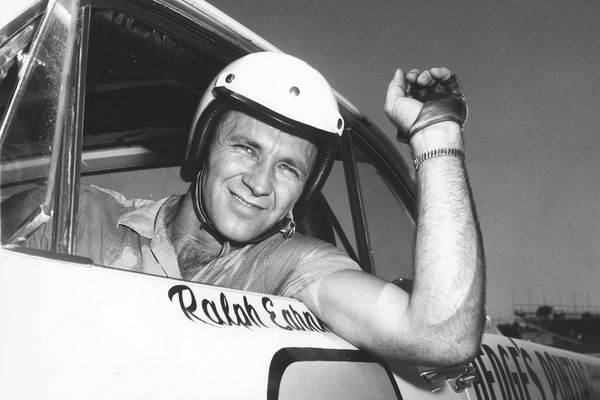
That chance for reconciliation never came. In 1973, Ralph died suddenly of a heart attack at just 45 years old, leaving Dale without closure (and with a lifelong weight on his shoulders). Years later, Dale Earnhardt reflected on that loss with haunting clarity:
“He had just got the house paid for and he didn’t have no bills on his racing equipment. He was gonna lay back and take it easy. And then he had a heart attack… and was gone. He had worked so hard. I think the racing, all the hard work and the worry, caused the strain and the heart attack.”
Ralph’s absence became Dale’s quiet motivator. Every championship, every win, every hard-earned milestone was part of an unspoken conversation with his father. And even after seven Cup titles, it took Dale many years before he finally felt he had proven himself. Not to the world, but to the man who shaped him most.
Related Newsletters