While often marketed as, the Rolex 24 at Daytona has always been more than just an endurance race. It’s a proving ground where legends are tested, careers intersect, and history tends to repeat itself in unforgettable ways. As the 64th running of the event gets underway in 2026, with cars battling from Saturday afternoon, January 24, through Sunday afternoon, January 25, the spotlight naturally turns to the past as much as the present, particularly a father-son duo’s iconic run.
Watch What’s Trending Now!
This year marks a special milestone. While it seems like just yesterday, it’s actually the 25th anniversary of one of the most emotionally charged entries the race has ever seen, when the late legend Dale Earnhardt and his son crossed disciplines and left a lasting imprint on Daytona’s 24-hour classic.
ADVERTISEMENT
When the Earnhardts took on Daytona
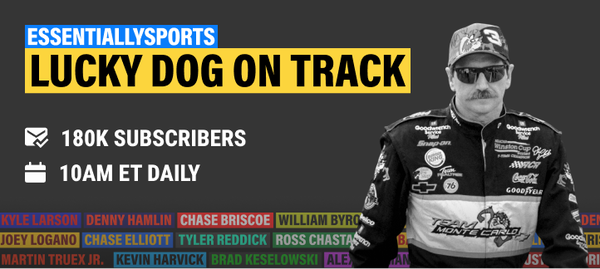
The 2001 Rolex 24 at Daytona remains one of the most unforgettable crossover moments in modern motorsports, largely because it brought NASCAR stars Dale Earnhardt and Dale Earnhardt Jr. together on the same endurance racing stage. Driving the iconic No. 3 Chevrolet Corvette C5-R for Corvette Racing, Earnhardt teamed up with his son, along with seasoned road racers Andy Pilgrim and Kelly Collins, to take on the grueling 24-hour test.
Against a stacked international field, the quartet delivered an impressive performance, finishing fourth overall and second in the GTS class. Corvette Racing’s strength was on full display that weekend, with the No. 2 sister car claiming the overall victory and securing a dominant 1–2 class finish for the program.
For Earnhardt, however, results were always measured by wins. On the podium, he reportedly leaned over to Pilgrim and quipped, “Second sucks, doesn’t it, son?” a line that perfectly captured both his competitive fire and dry humor. Listen to him racing:
ADVERTISEMENT
Hard to believe it’s been 25 years since Dale Earnhardt competed in the ROLEX 24 at Daytona.
Listen to him go to work in that Corvette. 😍 pic.twitter.com/k3aJDlcMfV
— Motorsport (@Motorsport) January 5, 2026
The father-son pairing instantly turned the Rolex 24 into must-watch motorsport. Media attention followed every stint, every driver change, and every lap Jr. completed alongside his legendary father. It was a rare glimpse of Earnhardt outside his NASCAR comfort zone, adapting to endurance racing while still carrying the same edge that defined his Cup career.
ADVERTISEMENT
Adding to the race’s lasting legacy, the very Corvette Earnhardt drove that weekend still exists today. The No. 3 C5-R is owned by Lance Miller, promoter of the annual Corvettes at Carlisle show in Central Pennsylvania, where it remains a treasured piece of racing history.
Tragically, the 2001 Rolex 24 marked Dale Earnhardt’s only start in the event and his final completed race. Just two weeks later, motorsports lost one of its greatest icons at the Daytona 500, forever cementing that January endurance run as a poignant final chapter.
Top Stories
Iconic Winston Ownership Returns to NASCAR as $50B Partner Inks Multi-Year Deal Ahead of 2026

Greg Biffle’s House Burglary Suspect Identified After Officials Release Security Camera Footage – Report
“I Got My A** Kicked”: Jeff Gordon Sets Aside Past Regrets to Issue Rare Support for NASCAR
Rick Hendrick Forever Indebted to Ray Evernham Over Major $70M Announcement
Kurt Busch’s Hall of Fame Moment Turns Emotional as Brother Kyle Drops an Unfiltered Tribute
ADVERTISEMENT
Daytona’s darkest day
Just two weeks after the checkered flag fell on the 2001 Rolex 24, Daytona International Speedway became the site of one of NASCAR’s most devastating moments. On February 18, 2001, Dale Earnhardt lost his life on the final lap of the Daytona 500, a race he had spent the afternoon doing what he always did best – protecting his team and racing with relentless intensity until the very end.
Running third coming off Turn 4, Earnhardt was guarding the lead duo of Michael Waltrip and Dale Earnhardt Jr. when contact with Sterling Marlin and Ken Schrader sent his No. 3 Chevrolet hard into the outside wall. The impact proved fatal, instantly shocking the sport and forever altering NASCAR’s trajectory. Victory lane celebrations that day were replaced by silence, disbelief, and grief that rippled far beyond the garage.
The timing made the loss even more haunting. Just days earlier, fans had watched Earnhardt share a car with his son at the Rolex 24, laughing on pit road and cracking jokes on the podium. It was a rare, almost poetic moment. Father and son were racing side by side at the very track that would soon define the sport’s greatest tragedy.
ADVERTISEMENT
Earnhardt’s death became a turning point. NASCAR responded with sweeping safety reforms, including the mandatory adoption of the HANS device, SAFER barriers, and major changes in car construction. Those changes have since saved countless lives, forming part of the legacy Earnhardt left behind.
Yet beyond the safety advancements, his final weeks remain etched in memory. The Rolex 24, the Daytona 500, and that unmistakable No. 3 became linked forever. They collectively became symbols of both his unmatched competitiveness and the profound void his passing created. At Daytona, Earnhardt’s presence is still felt, not in laps run, but in the lasting impact he left on the sport he helped define.
ADVERTISEMENT
ADVERTISEMENT
ADVERTISEMENT
Related Newsletters