
After two years of broader fields, NASCAR is tightening the Clash’s invitation list. After shifting to the Daytona road course, the Los Angeles Memorial Coliseum and Bowman Gray Stadium, NASCAR’s preseason exhibition is set to race on the 2.5-mile Daytona superspeedway again on February 13, 2027. The series has now confirmed the format and eligibility rules, setting a maximum field of 22 drivers. With several different paths into the exhibition, the announcement has also addressed demands from across the racing community.
Watch What’s Trending Now!
NASCAR set 21 drivers for the 2027 Wheatley Vodka Clash and reserved the 22nd spot for a full-time Dodge driver. That is a manufacturer carve-out in an eligibility system otherwise built on poles, wins, Daytona 500 titles and Cup championships. The rest of the field earned its way in. One seat is being held, and whoever takes it will do so under a rule that exists for a single badge.
“The Clash format and eligibility is out. Criteria has 22 drivers qualified: pole winners from this year, race winners from this year, past Daytona 500 winners and past champions (who raced full time this season). Also Dodge gets one spot,” reporter Jeff Gluck posted on X.
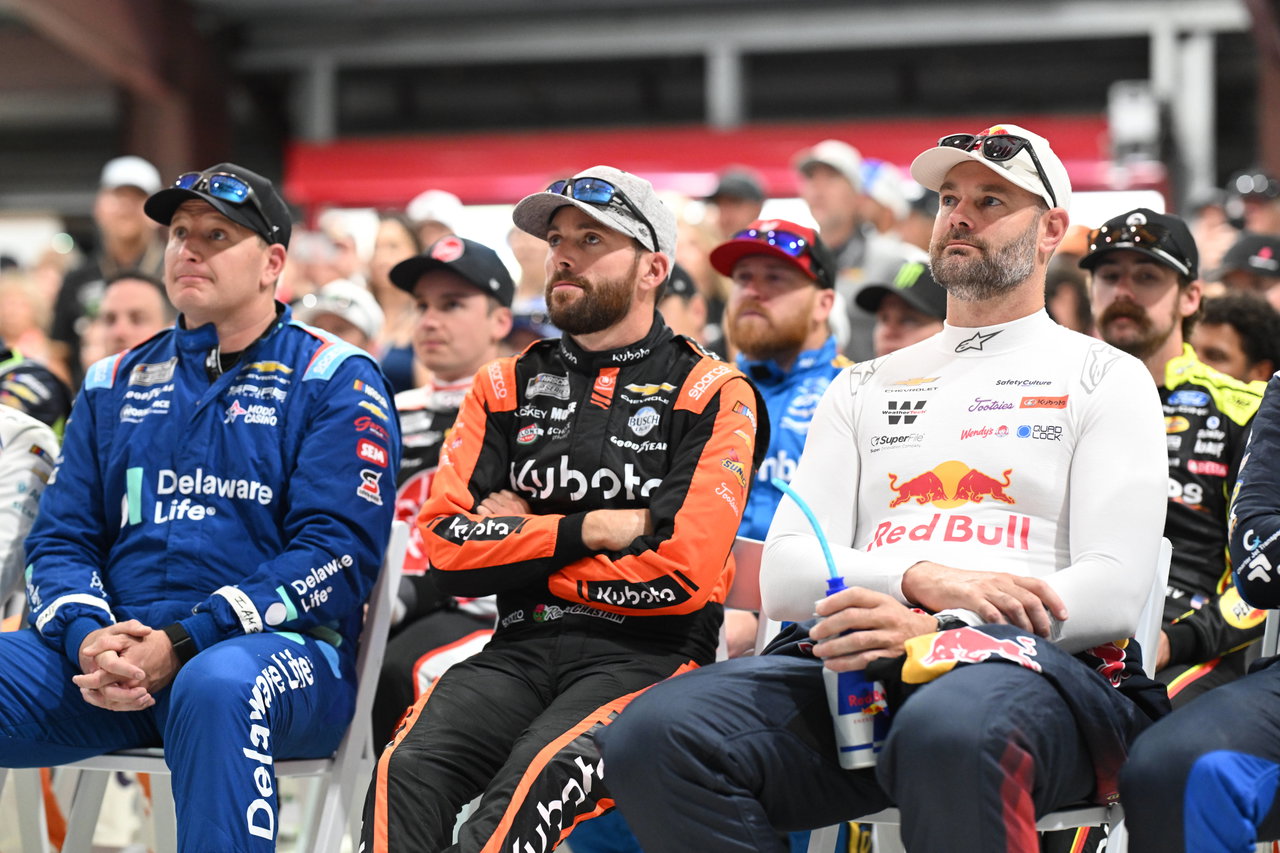
Christopher Bell, Ryan Blaney, Chase Briscoe, William Byron, Ross Chastain, Austin Cindric, Austin Dillon, Chase Elliott, Ty Gibbs, Denny Hamlin, Corey Heim, Carson Hocevar, Brad Keselowski, Kyle Larson, Joey Logano, Michael McDowell, Ryan Preece, Tyler Reddick, Ricky Stenhouse Jr., Daniel Suárez and Shane van Gisbergen have qualified. The rules bring back a more selective field, with the manufacturer provisional completing the 22-car lineup.
The race itself will follow a straightforward 70-lap format, with a competition caution scheduled for Lap 30. Teams must make a mandatory four-tire change during that break. However, the biggest technical talking point comes before the race. NASCAR will allow teams to prepare separate specifications for qualifying and race day, with simulations suggesting single-car qualifying speeds could exceed 200 mph.
Drivers will complete one full green-flag lap before heading to pit road on the second lap. Crews must execute a four-tire stop with simulated fuel before drivers return to the track and cross the finish line. Any speeding or pit-stop violations will result in time penalties.
The format also gives qualifying a different dimension. Instead of the heat races and Last Chance Qualifier used at Bowman Gray, the 2027 field is determined through season-long achievements and the Dodge provisional. That makes the exhibition more exclusive before teams even unload at Daytona. It also gives the qualifying session a technical challenge of its own, with teams balancing outright speed against executing a clean pit stop.
NASCAR’s decision follows a difficult final outing at Bowman Gray. The 2026 Clash was postponed twice because of heavy snowfall before Ryan Preece finally secured the victory on Wednesday, February 4. He led the final 45 laps and held off William Byron by 1.752 seconds in a race featuring a record 17 cautions. Preece became the ninth consecutive different Clash winner, extending a streak that underlined the event’s unpredictable nature. The move back to Daytona therefore brings a familiar setting.
The Clash began in 1979 as a 20-lap, 50-mile sprint featuring only the previous season’s pole winners. Just nine drivers made the inaugural field, and Buddy Baker took the victory in the No. 28 Oldsmobile. Over time, NASCAR expanded the eligibility pool to include former Clash winners, Daytona 500 winners and pole winners, and drivers who qualified for the Chase.
By 2021, the criteria had grown to include race and stage winners, among other categories. The event’s field then became far more open when NASCAR moved to the Los Angeles Memorial Coliseum in 2022, allowing all chartered teams to participate and others to fight for remaining places. Bowman Gray continued that broader approach in 2025 and 2026.
That history helps explain why the 2027 announcement has attracted attention from Dale Earnhardt Jr. Before NASCAR revealed the rules, Freddie Kraft questioned whether the sport should return to a smaller field. Earnhardt Jr. responded with three words: “Less is more.” Kraft also welcomed the reported 22-driver limit, saying he liked that NASCAR was not simply putting everyone in the race. Fans echoed that sentiment, with some specifically asking for pole winners and past champions to receive invitations.
Dale Jr.’s latest reaction also fits his earlier support for restoring the event’s original identity. When NASCAR brought back the Clash name and a smaller invitational field for 2017, he celebrated the decision, writing that pole winners and fans could rejoice.
The 2027 criteria do not return entirely to the original pole-winner-only format, but they revive the idea that a Clash berth should be earned rather than automatically granted. With Daytona back as the host, NASCAR has given the exhibition a more traditional setting and a field structure that reflects the demands its fans have been making.