Imago
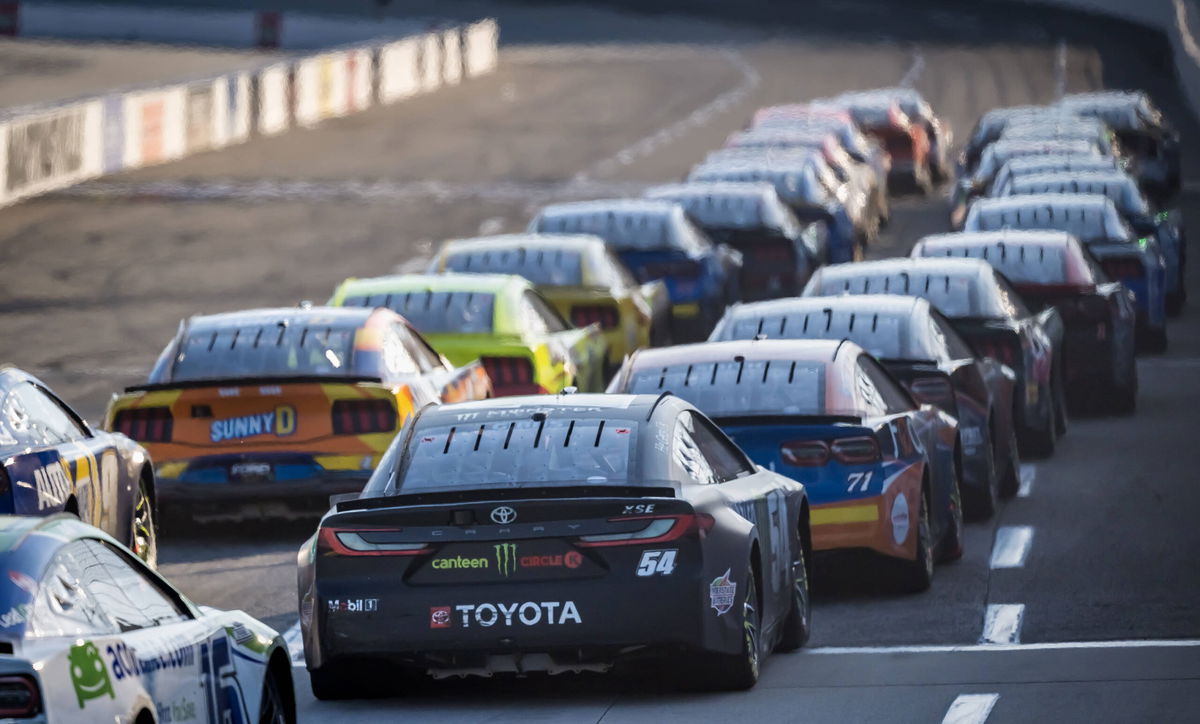
November 3, 2024, Ridgeway, Va, USA: NASCAR, Motorsport, USA Cup Series driver, TY GIBBS 54 of Charlotte, NC, races through the turns during the Xfinity 500 at Martinsville Speedway in Ridgeway, VA. Ridgeway USA – ZUMAa161 20241103_aaa_a161_010 Copyright: xWalterxG.xArcexSr.x
Imago
November 3, 2024, Ridgeway, Va, USA: NASCAR, Motorsport, USA Cup Series driver, TY GIBBS 54 of Charlotte, NC, races through the turns during the Xfinity 500 at Martinsville Speedway in Ridgeway, VA. Ridgeway USA – ZUMAa161 20241103_aaa_a161_010 Copyright: xWalterxG.xArcexSr.x
Martinsville had its own perks this Sunday, but there was one thing that was bugging both fans and drivers. The stage cautions were way too long at Martinsville. It was almost as if NASCAR and its broadcast partners were unable to work together. The fans have been actively protesting this issue since last weekend, and NASCAR has finally decided to do something about it.
Watch What’s Trending Now!
NASCAR acknowledges fan frustration over stage cautions
After hurting fan sentiments multiple times, it is clear that the sport is starting to take them very seriously nowadays. So when they came to know that the Martinsville stage cautions were causing unrest among the fans, NASCAR immediately reacted to the same and jumped into the fray to try and explain themselves to the fans.
“We certainly did not like how long it took us at Martinsville, and we’re aware of it for sure. And we are working with broadcast partners to try to minimize it the best we can,” NASCAR Cup Series Managing Director Brad Moran said in an interview with SiriusXM earlier this week.
They seem to have singled out the issue that is causing these stage cautions to extend for longer periods of time. Apparently, it’s all related to the broadcast partners and their commercial breaks. While trying to throw in their quota of advertisements, they also try to make sure that the fans are able to catch a glimpse of the pit stops happening during the caution.
They were unable to handle it easily at Martinsville, and the subsequent fallout led to the fans noticing that the stage cautions were going longer than expected. Brad Moran directly addresses this issue as he tries to single out the possible explanations and solutions for the same.
#NASCAR‘s Brad Moran weighs in on the stage caution conversation ⬇️
⏱️ “We certainly didn’t like how long it took us at Martinsville. We’re aware of it for sure, and we’ll work with the broadcast partners to try and minimize it the best we can.”
More → https://t.co/MKhd9eLpQA pic.twitter.com/1Cx5dksGFe
— SiriusXM NASCAR Radio (Ch. 90) (@SiriusXMNASCAR) April 1, 2026
“So we kind of had the perfect storm at the end of stage 1. I think we had a caution with, I believe, three to go in the stage. When that happens, it puts our broadcast partners in a bit of an awkward position because our goal—NASCAR’s and any broadcast’s goal—is to try to get as much green flag racing as possible.
“They want to get the pit stops televised for the fans that are at home watching the race, you know, try to show all the pit stops. It was a caution-free stage—that doesn’t really help us; that doesn’t help all the TV windows, either. They have partners and sponsorships as well that they have to please…”
Now, mid-race cautions usually offer the broadcasters an opportunity to complete their sponsor obligations with advertisements. Since the Martinsville race was rather clean and did not need any such cautions, they were stripped of that crucial window and had to shift it to the stage cautions instead.
Moran goes on to detail that with the next race coming up, they are trying to shift the broadcast advertisements and sponsorship sections to a point in the race that does not affect the viewers or unnecessarily extend the race.
He also believes that while it was hard to work it out last weekend, owing to Martinsville being such a strong track, their ultimate goal is to ensure maximum viewing time for the audience. While these words indicate NASCAR’s opinion towards the issue, how do the drivers feel about the Martinsville stage cautions being that long?
Denny Hamlin advises NASCAR to work on stage cautions immediately
“Apparently, what’s happening is Fox feels they need to see the pit stops. So, the end of the stage break happens, the green checkered flag (stage break flag) is raised, and boom, we’re under caution. The pace car comes out, they catch us, and we’re under commercial.
“We’re going to get our commercials in; they’re going to get them in, all five minutes of it,” Denny Hamlin tries to dissect the Martinsville issue in his podcast. And then, Hamlin goes on to voice his frustrations about the same, asking NASCAR to come to an agreement with FOX and get rid of the tedious and long stage caution process.
“When you come back from the commercials, just do a recap because we’re running too long under caution. We have to find a way to shorten them up and we won’t shorten them up as long as we’re doing what we’re doing in the sense of, ‘Well, TV has to catch the pit stops live.’
“So okay, well, you have to shorten your commercials or something because we’re under caution too long,” he continued. Not only that, he was also raising questions about the sudden caution flag that cost him his race victory at Martinsville.
While agreeing to NASCAR’s explanation of justifying the money spent on broadcast rights, Hamlin also warns about the fans getting angry at the sport if they do not try to address the situation urgently. In his opinion, what use are broadcast rights if there are no viewers tuning in to the broadcast?
Written by

Edited by

Suyashdeep Sason